Many coastal risk maps are built around a line most people never see. It is the “zero” line that says where the ocean begins, and a new analysis suggests that line has been set too low in many studies.
The result does not mean the sea suddenly jumped this week. It means hundreds of assessments may have started with the wrong baseline, so more land and more people may already sit closer to today’s sea level than earlier maps showed.
A hidden zero line
Every coastal map needs two basic numbers. How high is the land, and how high is the water next to it?
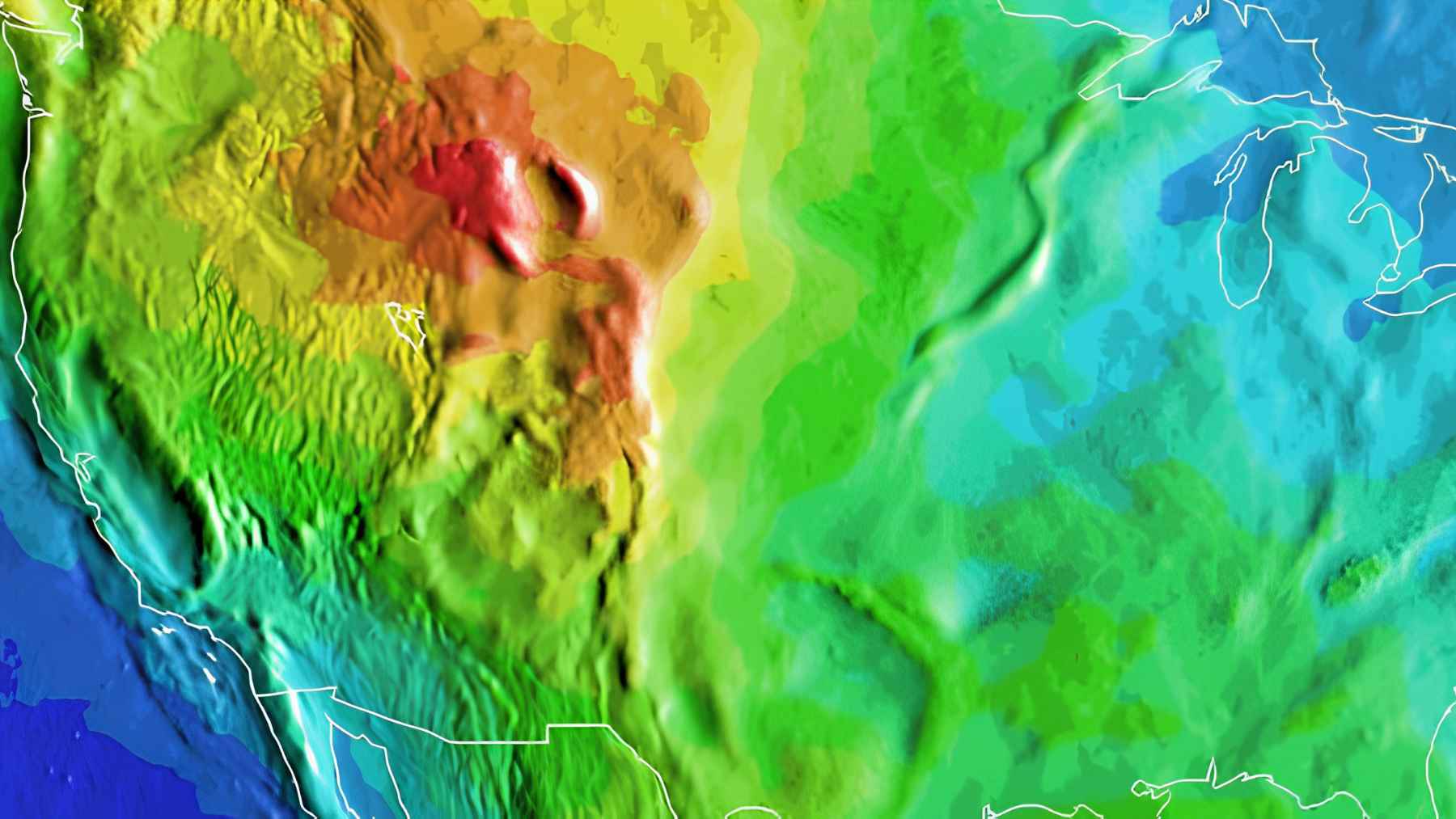
In many studies, researchers treated a global gravity-based model as if it were the local sea surface. That model is called a geoid, a smooth reference map shaped by Earth’s gravity and rotation, but a real shoreline is messier than that.
Winds, currents, tides, water temperature, and saltiness can push local sea levels away from that neat reference. In practical terms, the ocean outside a fishing town, a port, or an island village may not line up with the same “zero” used in the map.
What researchers checked
Katharina Seeger and Philip S. J. Minderhoud, affiliated with Wageningen University & Research, the University of Cologne, the University of Padova, and Deltares Research Institute, reviewed 385 coastal hazard assessments published from 2009 to 2025.
The work found that more than 99 percent handled land elevation and sea level in a way that could misjudge the true distance between land and water.
About 90 percent of the studies did not use measured sea-level data for the coast in question. Instead, they leaned on geoid models, which can work fairly well in some places but can miss the local water level in others.
That sounds like a technical bookkeeping problem. But for anyone living near a low seawall, a drainage canal, or a road that floods during high tides, the starting line is not a small detail.
Where the maps were most off
The mismatch was not spread evenly around the world. The eastern United States and parts of Europe showed better agreement in many cases, partly because those regions have denser measurements and longer records.
The gaps were larger across Southeast Asia, Pacific islands, parts of Africa, Latin America, and the wider Indo-Pacific. In some of those places, measured coastal sea level was more than 3.3 feet above the level assumed by earlier mapping approaches, and the global average difference was roughly one foot.
That matters because many of the biggest blind spots sit near crowded deltas and low islands. These are places where a few extra inches can turn a nuisance flood into water in the street, with traffic, noise, exhaust fumes, and emergency crews suddenly part of daily life.
More land in the risk zone
When the researchers corrected the baseline and then tested about 3.3 feet of relative sea-level rise, the picture changed sharply. Compared with older geoid-based assumptions, the land falling below sea level increased by 31 to 37 percent, while the exposed population rose by 48 to 68 percent.
That would place an estimated 77 million to 132 million people below sea level under that scenario. These numbers do not predict which block floods first after a storm, but they do suggest many maps have been too optimistic about the height of coastal land.
The timing also matters. The Intergovernmental Panel on Climate Change says global mean sea level is likely to rise from about 11 inches to about 3.3 feet by 2100, depending on emissions. If some shorelines already started from a higher water level than assumed, local planners may have less room for delay.
The Mekong warning
This problem did not come out of nowhere. A 2019 study of the Vietnamese Mekong Delta found its average elevation was only about 2.6 feet above local sea level, far below the roughly 8.5 feet suggested by some previous satellite-based maps.
That delta is home to farms, roads, towns, and waterways that millions of people depend on. What once looked like a troubling regional case now looks more like an early warning for other low, crowded coastlines.
The new review also shows how an assumption can spread quietly. Once one study uses a convenient baseline without fully explaining it, later researchers may copy the method, and the error starts to look normal.
What changes now
For city officials, engineers, insurers, and emergency planners, the message is blunt but useful. Flood maps, evacuation routes, levee plans, and climate adaptation budgets may need a second look, especially in regions where local sea-level measurements were sparse.
The authors also released corrected coastal elevation datasets that combine land height with measured sea levels. Minderhoud said the work could “save many researchers complicated calculations” and help make future analyses more realistic.
This is not a reason to panic, and it is not a claim that every coastal map is useless. It is a reason to check the ruler before measuring the room, because the ruler may have been off for years.
The official study has been published in Nature.