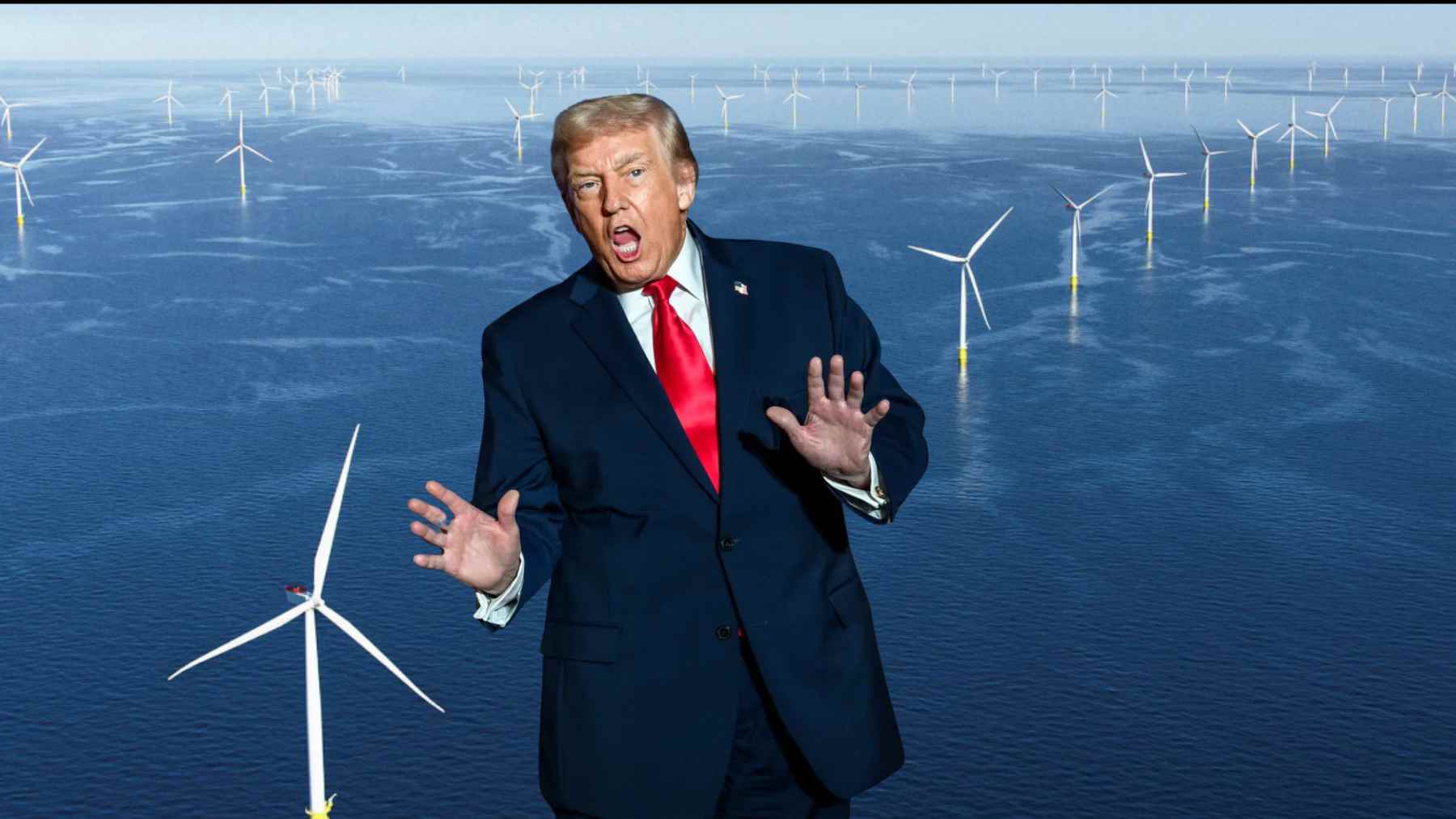
Just days after Donald Trump mocked European wind farms as “losers” in a fiery Davos speech at the World Economic Forum in Davos, ten European countries quietly signed a sweeping offshore wind pact in Hamburg. Their Hamburg Declaration commits them to build 100 gigawatts of shared offshore wind in the North Sea by 2050, enough electricity for about 143 million homes.
Instead of backing away, European leaders are treating offshore wind as a pillar of both climate policy and national security. They see the North Sea turning into a giant shared power plant that helps cut dependence on Russian gas and avoids a new reliance on imported fuel from the United States.
What the Hamburg Declaration actually promises
The pact was signed at the latest North Sea Summit by Britain, Belgium, Denmark, France, Germany, Iceland, Ireland, Luxembourg, the Netherlands and Norway. Together they promise to deliver 100 gigawatts of offshore wind projects in shared North Sea waters by the middle of the century.
Many of these projects will be so-called hybrid assets, offshore wind farms that plug into more than one country through high-voltage power cables laid on the seabed. That setup lets clean electricity flow to whichever grid needs it most instead of wasting surplus power in one country while neighbors still burn gas.
From climate pledge to security plan
This new deal builds on earlier North Sea summits that focused mainly on climate. In 2022, leaders met in Esbjerg, where Danish prime minister Mette Frederiksen and three neighboring governments agreed to scale offshore wind in the region to at least 150 gigawatts by 2050 and help the European Union reach climate neutrality.
Since then, the war in Ukraine has turned electricity supply into a front line security issue. EU energy chief Dan Jorgensen warns that Europe is now in a very serious situation and argues that offshore wind and shared grids are ways to avoid trading old dependence on Russian gas for new dependence on any single fuel supplier in Ukraine’s neighborhood and beyond.
Trump’s attack on “loser” wind turbines
At Davos, Trump told his audience there were windmills all over Europe and insisted that countries investing heavily in wind were losing money and falling behind. In another part of the speech he said that turbines ruin landscapes, labeled the European Green Deal a scam and added that “stupid people” buy windmills.
Fact checks from European outlets and climate analysts say many of those claims are wrong. They point out that China now has more wind capacity than any other country and that in 2025 wind and solar together produced a larger share of European Union electricity than fossil fuel plants.
What offshore wind could mean for households
Offshore wind farms are clusters of very tall turbines fixed to the seabed out at sea, where stronger and steadier winds spin their blades almost all day. The electricity travels back to shore through thick cables and into the same power grid that keeps lights on and fridges cold.
If the Hamburg plans are delivered, the 100 gigawatts of joint projects could power around 143 million homes across Europe. In everyday terms, that level of clean power could help smooth the wild price swings that families saw during the recent energy crisis, when gas costs pushed many power bills to painful levels. For most people, the real question is simple: will this ever show up as a lower electric bill?
A big bet that still faces big risks
There are still major hurdles. Offshore wind projects demand huge upfront investment, long permitting processes and specialized ships and ports, and in the last few years some auctions have stalled or been canceled as rising costs rattled investor confidence.
Earlier ideas such as building a large artificial energy island in the North Sea have already been dropped as too expensive according to Danish officials. Danish climate minister Lars Aagaard says no country can solve the challenge alone, and whether this new wave of offshore wind succeeds will be felt in the stability of Europe’s power grid and the size of people’s monthly energy bills.
The main official declaration has been published by the UK government.