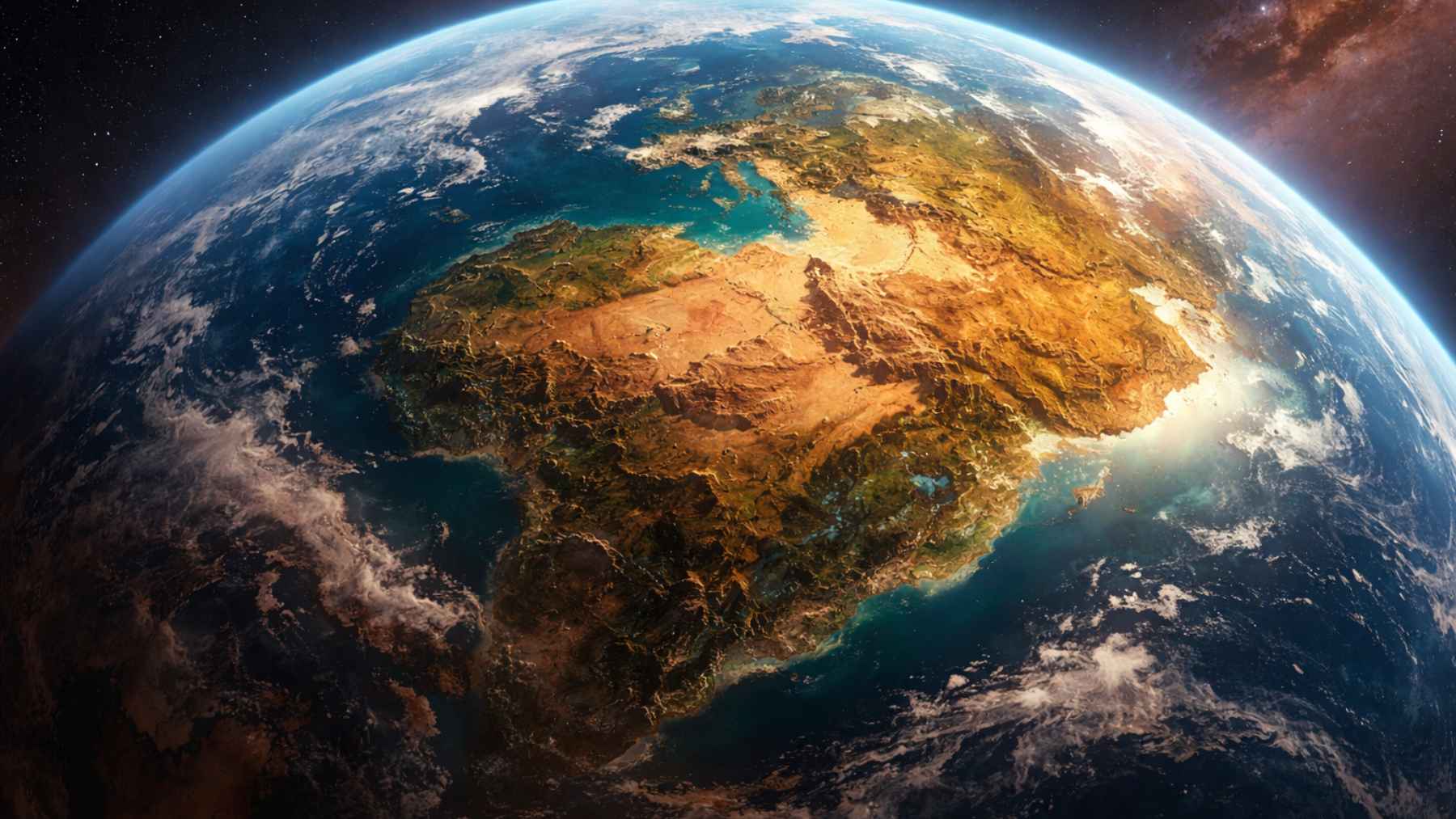
In roughly 200 to 250 million years, Earth’s scattered continents are expected to merge again into a single giant landmass. For geologists, that is the natural continuation of a planet that never really stops moving. For future life on Earth, though, new research suggests it could be a turning point that many land animals, including humans, might not survive.
A group of scientists has now combined plate tectonic models with powerful climate simulations. Their conclusion is sobering. Depending on how the next supercontinent forms, our planet could tip into either a deep freeze or an extreme greenhouse, with only narrow coastal strips or polar refuges remaining comfortable for complex land life.
Four possible maps of future Earth
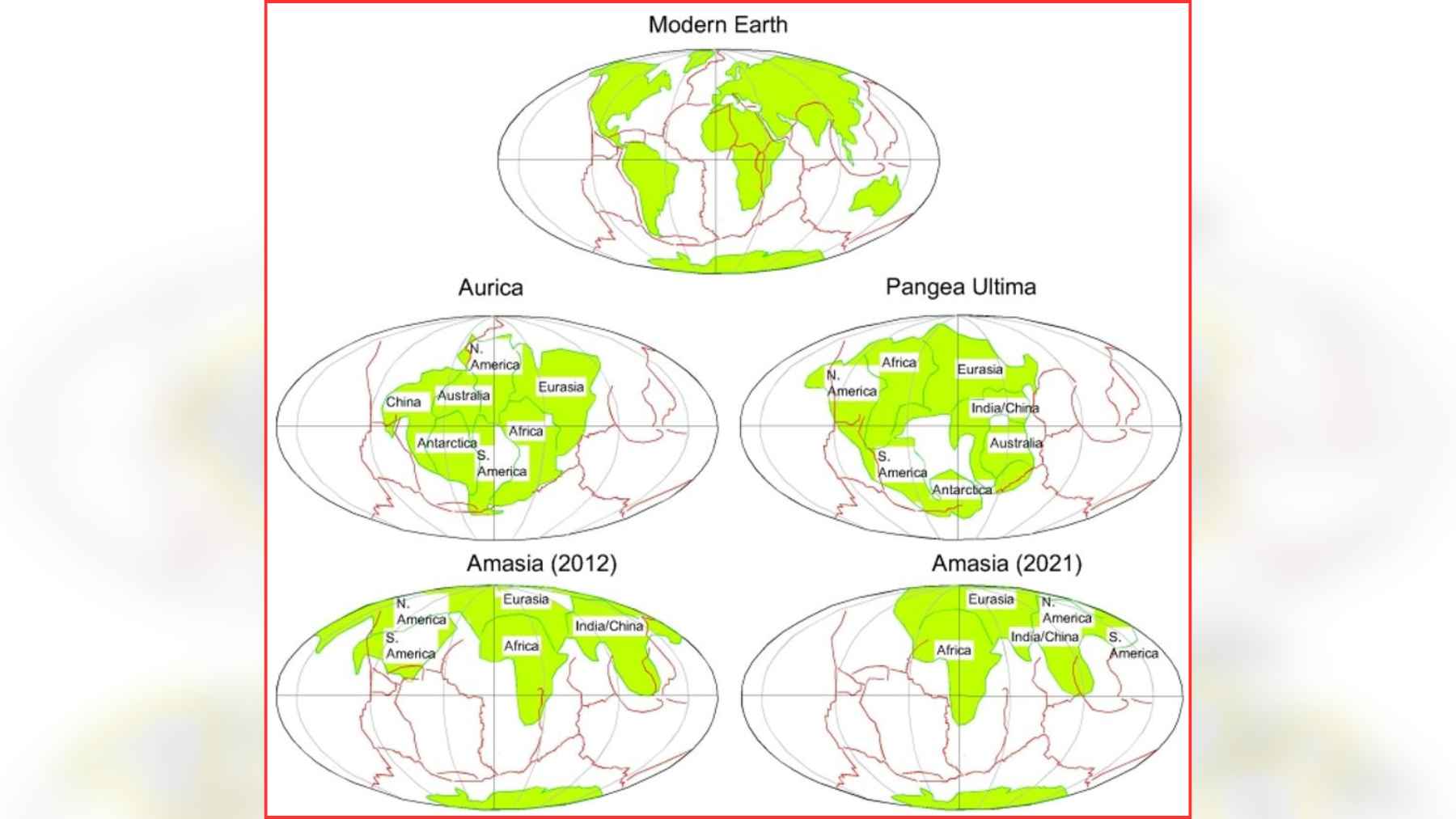
We tend to picture ancient Pangea as a one-time oddity. In reality, Earth moves through a long supercontinent cycle. Continents come together, then slowly drift apart again. Researchers led by Hannah Sophia Davies have outlined four main ways the next gathering could happen, using plate tectonic rules and reconstructions that project hundreds of millions of years ahead.
One option, often called Novopangea, keeps the Atlantic Ocean open while the Pacific closes. The Americas would eventually slam into a block made from Africa, Europe and Asia. Another possibility, Pangea Proxima or Pangea Ultima, has the Atlantic and Indian oceans closing again, so the continents wrap around a smaller interior sea in a rough ring.
The scenario that has attracted special attention comes from Portuguese geophysicist João C. Duarte and colleagues. In their model, both the Atlantic and Pacific shut, while the Indian Ocean opens wider. The result is a supercontinent straddling the equator, known in the scientific literature as Aurica.
A final configuration, called Amasia, pushes almost all the continents north so that they clump around the North Pole. Antarctica stays parked in the south, alone in a vast ocean. Four different maps, four very different climates.
Ice age world or overheated desert
To see what those maps might mean for real weather, a team led by Michael J. Way at NASA Goddard Institute for Space Studies used a three-dimensional global climate model. They tested two of the supercontinent layouts, Aurica and Amasia, while also accounting for a slightly brighter future Sun and subtle changes in Earth’s rotation.
Aurica, where the continents crowd the tropics, turns out surprisingly warm and dry. Global average temperatures in the simulations rise by about three degrees Celsius compared with today. Much of the coastline stays humid and mild, with long beach-lined margins that scientists liken to parts of modern Brazil, but the continental interior becomes hot, arid and vulnerable to drought.
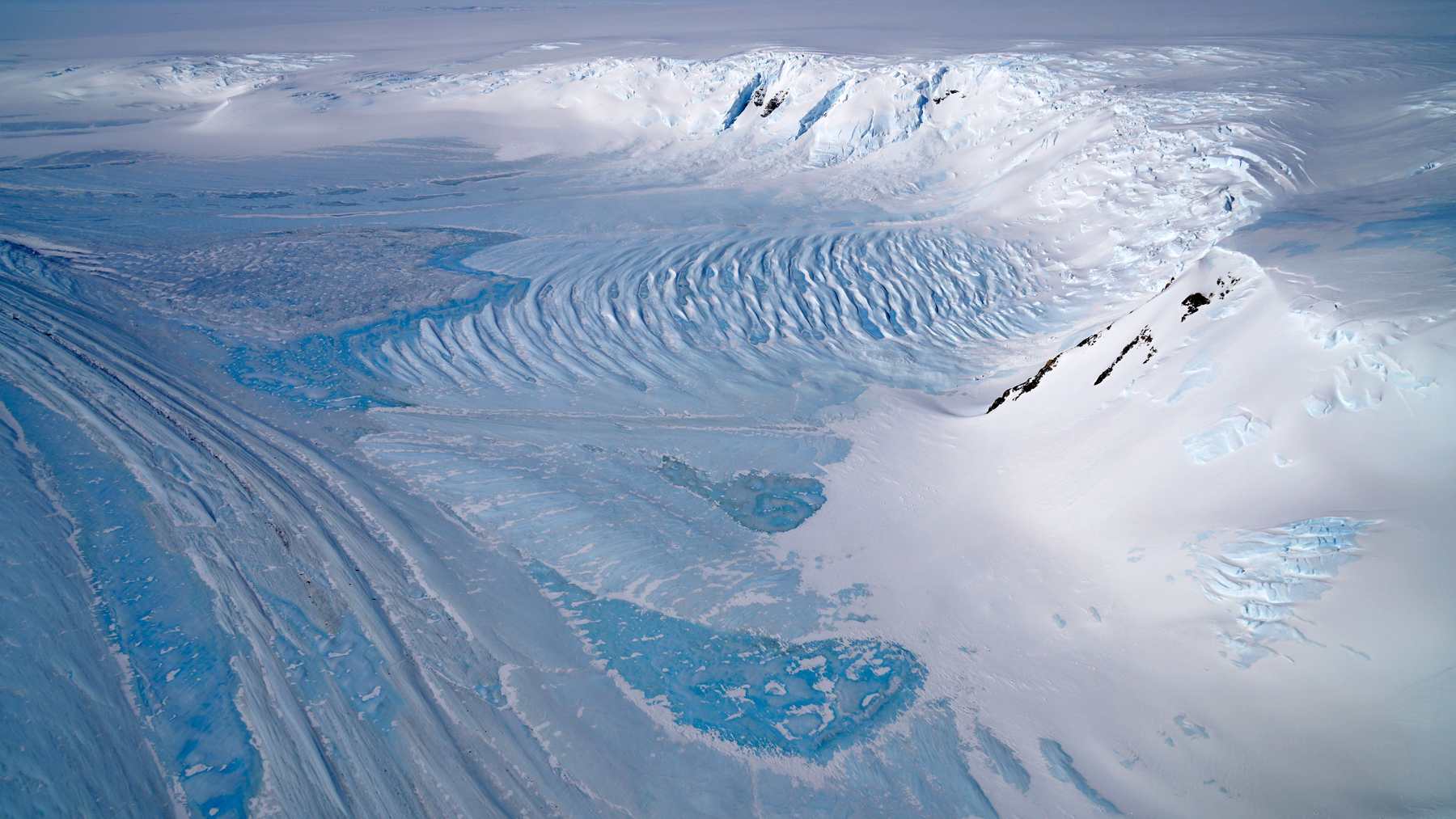
Amasia tells a very different story. When the land mass hugs the far north, ocean currents that currently ferry heat from the equator toward the poles are disrupted. Ice sheets spread, snow cover brightens the planet, and the climate model slips toward a much colder state. Researchers warn that such a configuration could lock Earth into a long-lived ice age, with thick ice and permafrost covering large regions that are now temperate.
In both worlds, there is still liquid water. There are still seasons. Yet the range of comfortable land where large warm-blooded animals can thrive shrinks dramatically.
A warning from Pangea Ultima
Another recent study, led by climatologist Alexander Farnsworth, explored a Pangea Ultima style supercontinent with most land packed into the tropics. When they added realistic future carbon dioxide levels and a Sun that shines roughly two and a half percent brighter, much of the interior baked at forty to fifty degrees Celsius or more. Under the hottest cases, only a small fraction of the land surface stayed within mammal-friendly temperature and humidity limits.
Put together, these projects paint a consistent picture. Wherever the next supercontinent forms, the combination of higher solar energy, altered ocean currents and stronger greenhouse conditions is likely to push Earth toward climate extremes. Marine ecosystems may retain more refuges in the surrounding ocean.
On land, life would probably compress into scattered safe zones along coasts or at high latitudes, with intense competition for water, food and space.
What this means for us right now
Two hundred million years is an unimaginably long time compared with election cycles or mortgage terms. It is tempting to file these scenarios under science fiction and move on to the next traffic jam or electric bill. Yet the physics driving these deep future worlds is the same physics heating the planet today.
The models that simulate Aurica and Amasia run on the same equations that help predict modern heat waves, droughts and changes in ocean currents. Doing this far future work is a way to stress test our understanding of how continents, oceans, atmosphere and life interact over the full lifespan of a planet.
The researchers also offer a quieter message. Intelligence by itself does not guarantee survival. Our technology can help humans ride out short-term extremes or even modify local climates, yet it also gives us the power to destabilize our own life support systems.
If any distant descendants hope to see the next supercontinent from the ground rather than from a museum diorama, they will have to find a long-term balance with their ecosystems.
The study was published in Nature Geoscience.