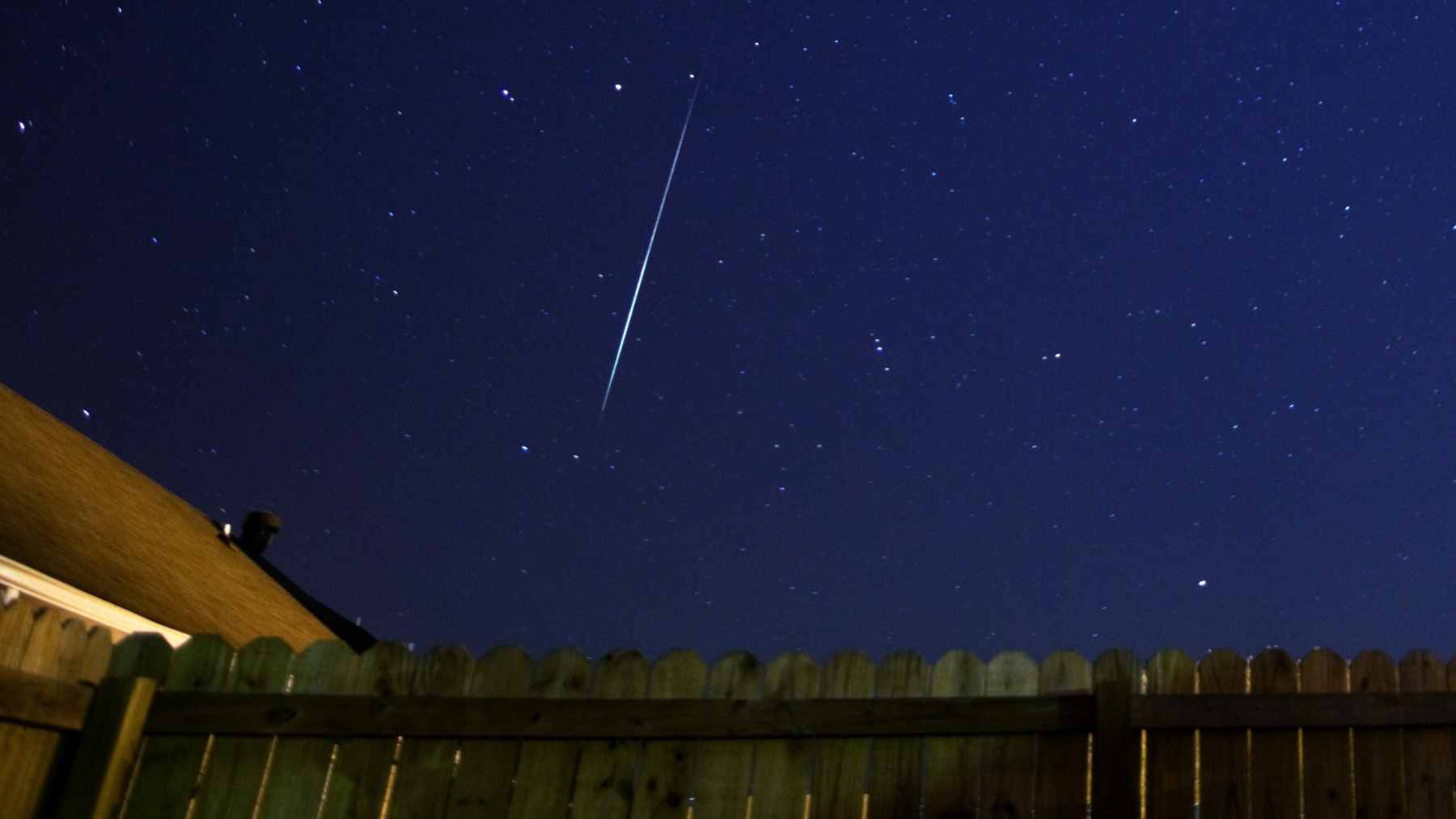
Before sunrise on Monday, people across Victoria looked up and saw a bright orange object crossing the sky, visible for close to 30 seconds as fragments seemed to peel away. What if it was not a meteor at all? Astronomers say it was more likely the fiery reentry of Starlink 5103, a retired internet satellite.
That makes the sight more than a sky show. As low Earth orbit fills with communication satellites, more aging hardware is coming back down, and scientists are asking what that means for safety on the ground and pollution high above it.
ESA says intact satellites or rocket bodies are now reentering Earth’s atmosphere more than three times a day on average.
Why experts think it was Starlink 5103
Monash University associate professor Michael Brown identified the object as Starlink 5103, a satellite launched in 2022. He said satellites like this do not last “particularly long” in orbit, and when they slam into the atmosphere at more than 7 kilometers (about 4.3 miles) per second, they can produce an intense light show.
Tracking data cited by ABC also pointed to a morning reentry over the region.
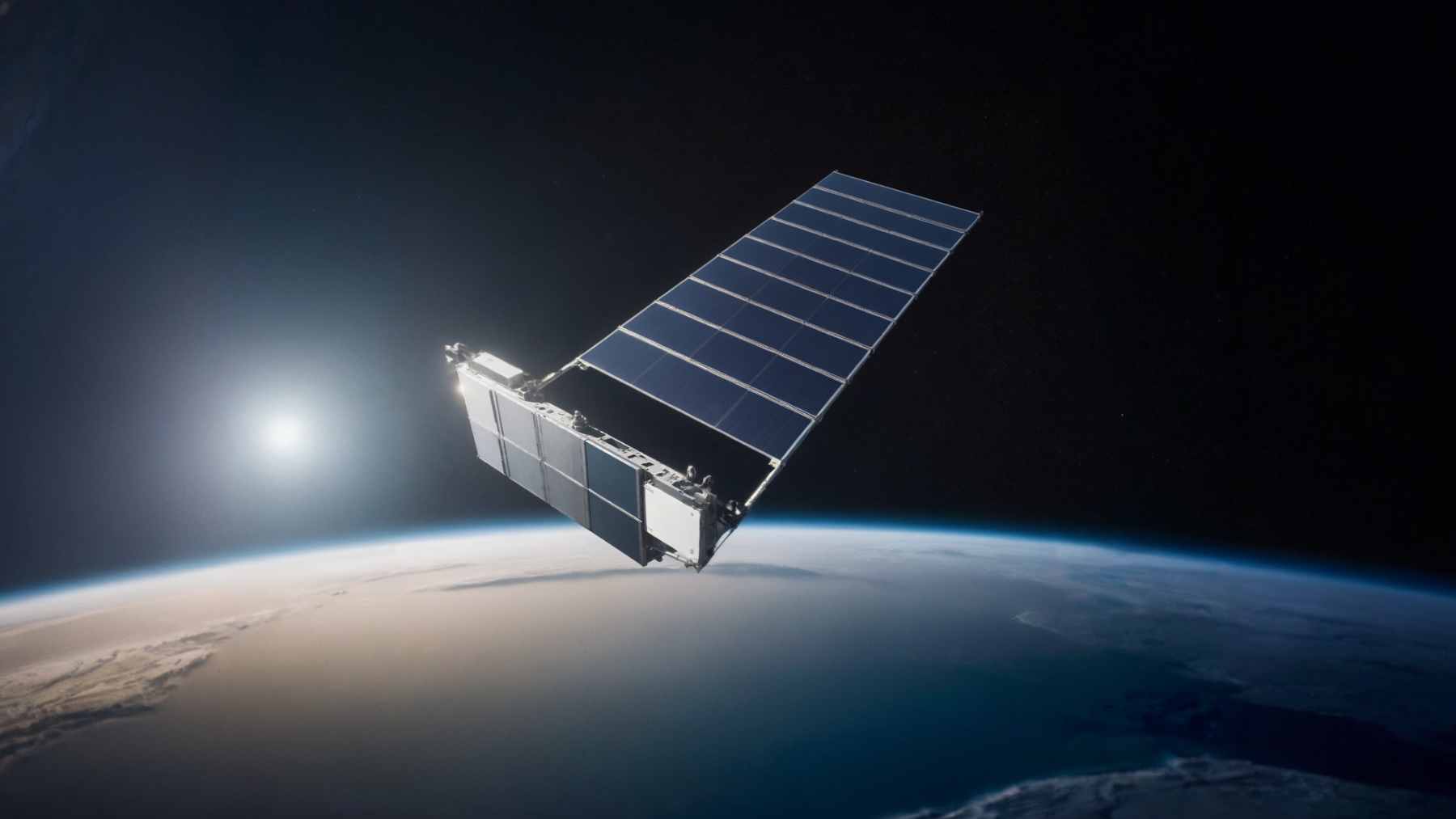
Brown said the satellite was smaller than many viewers likely imagined, measuring about 9 meters long and 2 meters wide and weighing roughly 300 kilograms (about 661 pounds).
Meteorite expert Rachel Kirby added that objects falling from orbit move “slow relative to the Earth,” which helps distinguish them from fast natural meteors. That slower glide is exactly what made the Victoria sighting feel so unusual.
Why sightings like this are becoming more common
Brown said the phenomenon is becoming more common because SpaceX has launched many thousands of Starlink satellites into low Earth orbit. For many households in rural and remote Australia, that network is what keeps the internet working when other options fall short. But the same system that helps connect remote homes also adds to the traffic overhead.
ESA’s 2025 Space Environment Report shows how crowded that traffic has become. The agency says about 40,000 objects are now tracked in orbit, including roughly 11,000 working spacecraft, and in some popular low orbit bands the number of active satellites is now in the same range as dangerous debris.
In other words, the sky above Earth is starting to feel less like empty space and more like rush-hour traffic.
Not every return is easy to predict from the ground. Kirby said many controlled reentries are steered toward the Pacific Ocean, while Swinburne astronomer Sara Webb said there was no clear way to know where surviving pieces from the Victoria event might have landed unless someone actually finds them.
Webb also said she had not seen reports of a sonic boom from this particular fall.
The environmental story is only starting to come into focus
For years, most public concern around reentry centered on whether a surviving fragment might hit the ground. Now there is another question in the mix: what repeated burnups are leaving behind in the upper atmosphere. That is where the story shifts from astronomy to environmental science.
A study published on February 19, 2026, in Communications Earth & Environment reported the first time-resolved and altitude-resolved measurement of pollution after a space debris reentry. Researchers detected a tenfold increase in lithium atoms at 96 kilometers after an uncontrolled Falcon 9 upper stage fell back through the atmosphere.
The authors said the finding supports growing concern that returning spacecraft may pollute the upper atmosphere in ways that are still not fully understood.
NOAA researchers have also modeled what a much busier future could look like. In a 2025 analysis, they found that if low Earth orbit grows toward more than 60,000 satellites by 2040, reentry pollution from aluminum oxide could alter polar winds and temperatures, although scientists stress that the long-term chemistry and ozone effects still need more study.
So the science is moving, but the answers are not all in yet.
What people should keep in mind if debris turns up
Australia has seen space debris before. The Australian Space Agency notes that a SpaceX Dragon trunk was found in New South Wales in 2022, and another pressure vessel washed up in Western Australia in 2023. Most returning objects burn up or fall into the ocean, but some pieces can survive uncontrolled reentry and land in remote places.
If anything from the Victoria event is found, the advice is straightforward.
The Australian Space Agency says people should not touch suspicious wreckage, and should instead contact local authorities and notify the agency because the government has plans and treaty obligations when confirmed space debris is found on Australian land. Simple, but important.
The bright trail over Victoria was dramatic, but it also hinted at a new environmental reality.
The satellite networks that help keep remote homes online are also sending more retired hardware back through the atmosphere, turning orbital waste into something people can sometimes see from their own backyard.
The study was published on Communications Earth & Environment.