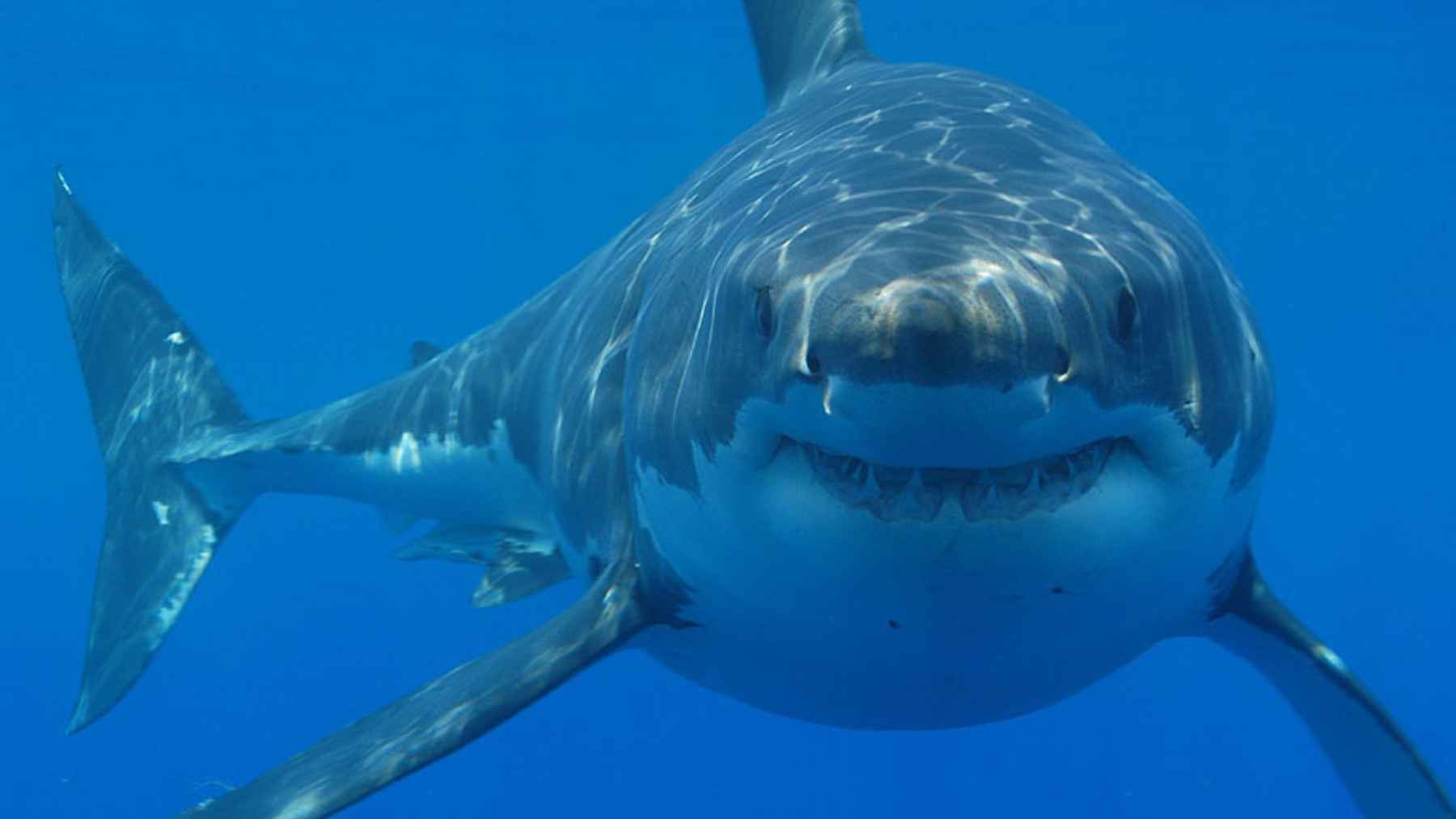
In spring 2023, fishermen working off the coast of Alicante pulled up a catch they were not expecting. Tangled in their gear was a juvenile great white shark, a species many people imagine only from movies or distant oceans.
Two years later, scientists have confirmed that this animal is the third verified great white recorded in Spanish waters in less than eleven years, proof that a tiny and elusive population still cruises the western Mediterranean.
Researchers from the Spanish Institute of Oceanography (IEO-CSIC) and the University of Cádiz (UCA) examined photos, video and tissue samples from the accidental capture. Genetic tests confirmed the shark as a juvenile great white about 2.1 meters long and roughly 80 to 90 kilograms in weight.
The animal was caught in deep water within Spain’s exclusive economic zone, far from crowded beach umbrellas and seaside cafés.
The team went further than a simple identification. They reviewed records of great white sharks in Spanish Mediterranean waters from 1862 through 2023, including 62 documented sightings or captures between 1986 and 2001.
Their analysis shows that observations in some hotspots, particularly around the Balearic Islands, have dropped by more than 70 percent in recent decades. That is why researchers now describe Mediterranean great whites as a “ghost” population, present but rarely seen.
For marine ecologists, the appearance of a young shark is especially important. Juveniles hint that the region may be more than a simple transit corridor. As lead author José Carlos Báez explains, the presence of young animals raises the possibility that some level of reproduction is taking place in the western Mediterranean.
At the same time, he cautions that one new record likely reflects better monitoring and closer collaboration with fishers rather than a clear recovery of the population.
So should swimmers be worried the next time they wade into the warm water off Spain’s eastern coast. The long historical record tells a different story.
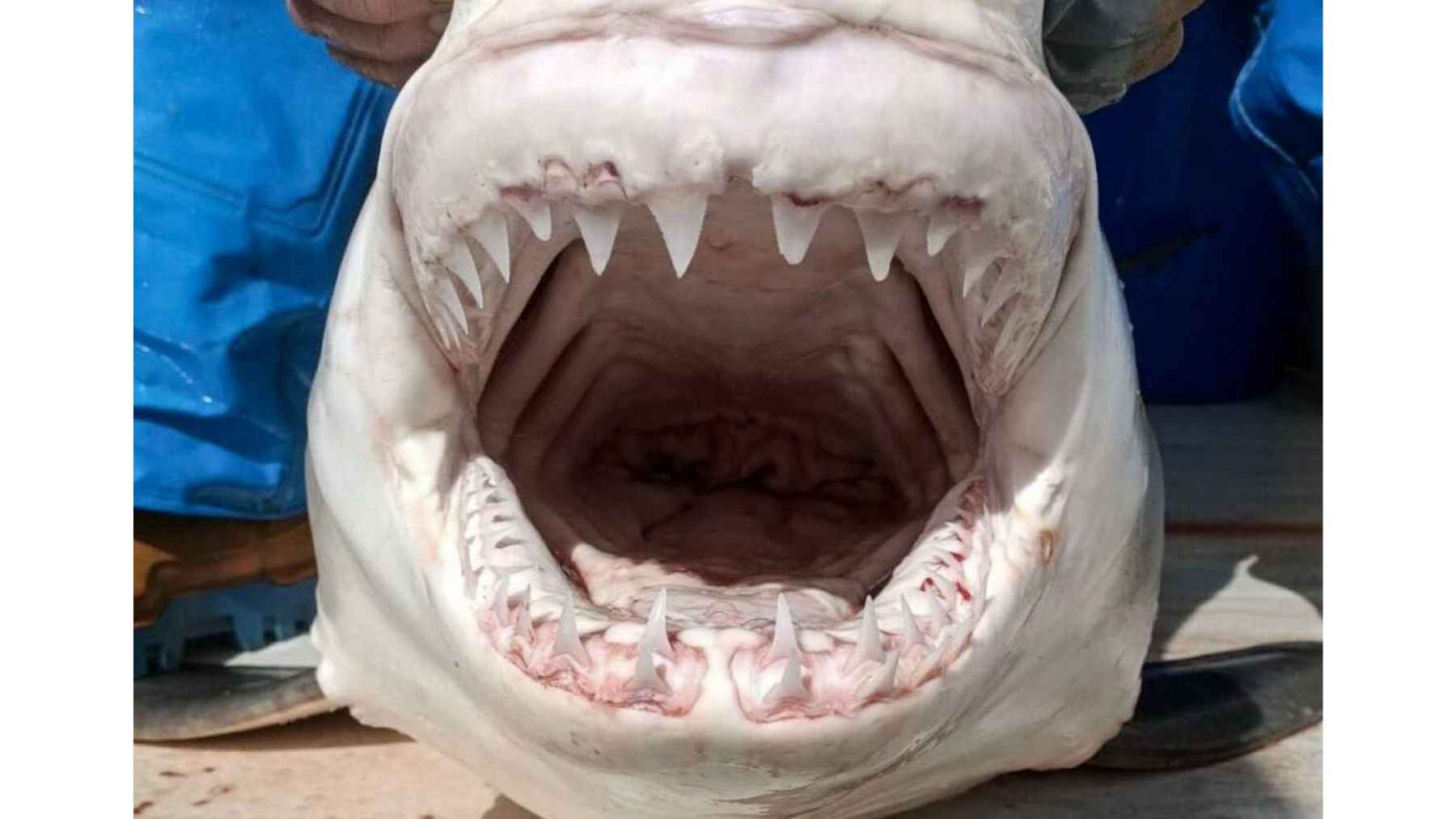
Close up of the mouth and teeth of a juvenile great white shark accidentally caught by fishermen off the coast of Alicante in the western Mediterranean.
Over more than 160 years of data in Spanish waters, documented incidents involving people are described as exceptionally rare, and experts stress that great whites in this region do not represent a meaningful risk to coastal communities. For most beachgoers, sunburn and floating plastic are still far more likely problems than a fin on the horizon.
For the shark and the sea, the stakes are higher. Great whites are listed as Vulnerable with a declining global trend, pressured by accidental bycatch in longlines, gillnets and other fishing gear. They mature slowly, can live more than seventy years and produce relatively few offspring, which makes every juvenile that survives to adulthood valuable for the future of the species.
Scientists say that protecting large predators like the great white is not only about saving an iconic animal. As highly migratory hunters, these sharks help regulate prey populations, move nutrients across vast distances and even feed deep sea communities when their bodies eventually sink to the seafloor.
In practical terms, that means a healthier, more resilient Mediterranean for the many people who depend on it for food, work and summer vacations.
The study was published on Acta Ichthyologica et Piscatoria.