Most of us feel global warming when a heat wave hits or when the electric bill suddenly jumps after a long, sticky summer. Yet scientists say the clearest fingerprint of our overheating planet is not in the air at all. It is hiding in the oceans.
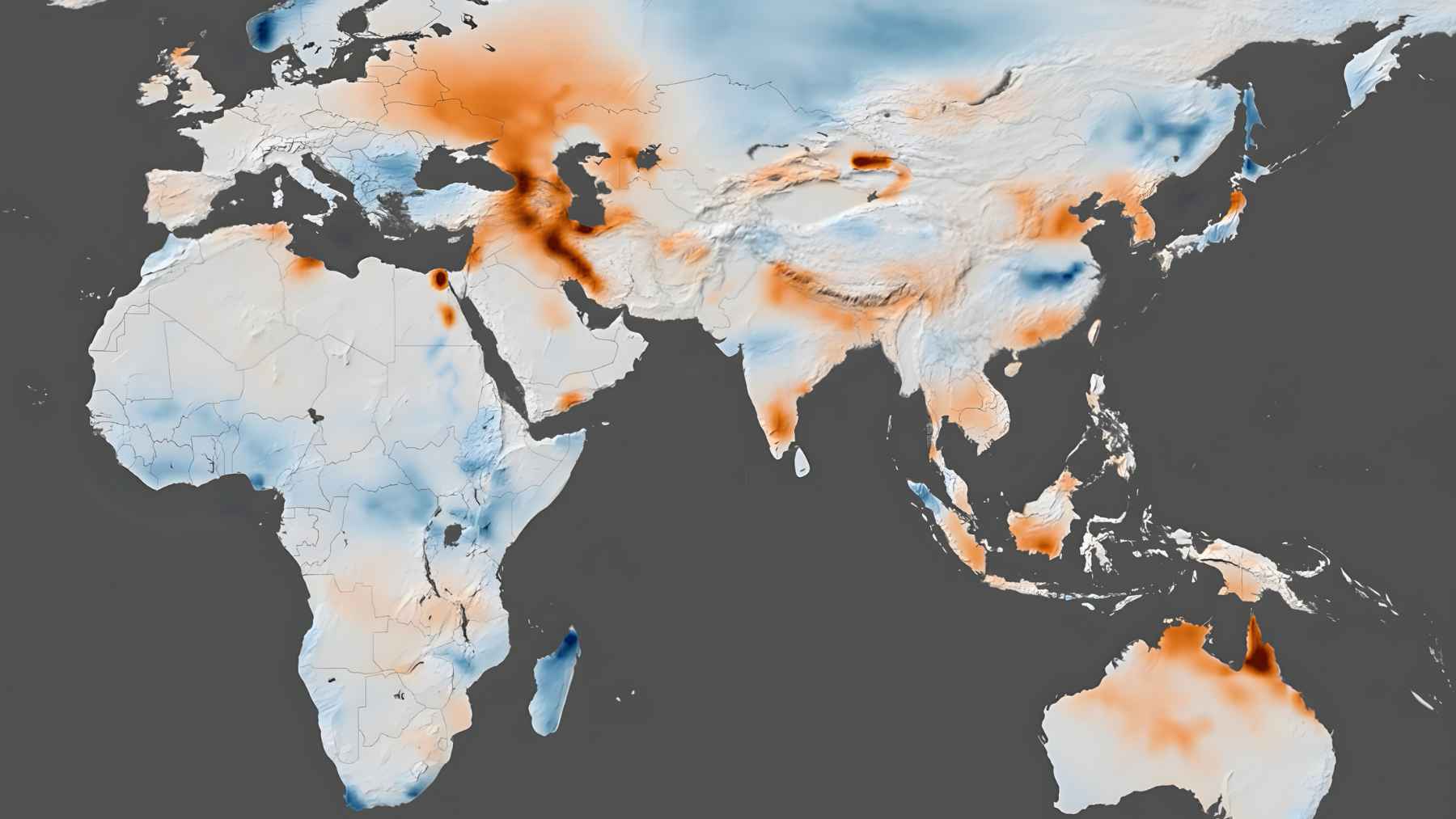
A new peer-reviewed study led by climate scientist Kevin Trenberth finds that Earth’s extra heat is not spreading evenly through the seas. Instead, it is concentrating in two striking bands that circle the globe, one in the north and one in the south, both near forty degrees latitude.
These invisible belts of hot water are warming faster than almost anywhere else in the ocean. They sit east of the United States in the North Atlantic, east of Japan in the North Pacific, and across wide stretches south of New Zealand, Tasmania, and Argentina.
For coastal communities in those regions, that quiet shift in ocean heat is likely to shape storms, sea level, and marine life for years to come.
Two ocean belts that are heating much faster than average
More than 90% of the extra heat trapped by greenhouse gases ends up in the ocean rather than the atmosphere. Ocean heat content is now one of the best thermometers for the whole climate system.
Trenberth and his colleagues analyzed global temperature measurements down to two thousand meters depth from the year 2000 to 2023. Using a high quality dataset known as IAPv4, fed by thousands of Argo profiling floats and other instruments, they tracked how much energy has accumulated in different latitude bands.
When they averaged the data around entire circles of latitude, a simple but powerful picture emerged.
The deep tropics are warming, but that signal jumps around from year to year as El Niño and La Niña events slosh heat back and forth across the Pacific. In contrast, the mid latitudes show a steady climb. Since about 2005, the strongest increases in ocean heat content have lined up near forty degrees north and forty to forty five degrees south, while the subtropics around twenty degrees show surprisingly little long-term warming.
The southern belt is especially intense. There, a wide swath of ocean from about thirty five to fifty degrees south has soaked up more heat than almost anywhere else on the planet. That region includes the stormy Southern Ocean and the waters poleward of the powerful Antarctic Circumpolar Current.
Winds, currents, and a shifting jet stream
At first glance, you might expect these patterns to follow changes in the energy flowing in at the top of the atmosphere. More sunlight in, more heating below. The study shows that is not what is happening.
Top-of-atmosphere radiation has increased in many places as greenhouse gases rise and reflective aerosols decline, but the sharp ocean bands at forty degrees north and south do not simply mirror that pattern. Instead, they match changes in the way the atmosphere and ocean move heat around.
The team combined satellite radiation records with detailed reanalyses of winds, humidity, and temperature. They found that surface heat fluxes, storm tracks, and large-scale currents are acting together like a set of shifting conveyor belts. As the mid-latitude jet streams and storm paths creep poleward, the overlying westerly winds change. That alters the wind stress on the ocean surface and the so-called Ekman transport, which pushes surface waters sideways and drives upwelling or downwelling.
In practical terms, stronger and more poleward westerlies in the Southern Hemisphere are helping pile warm water into the band around forty degrees south while cooler deep water rises elsewhere. In the north, boundary currents such as the Gulf Stream and Kuroshio are funnelling heat into waters east of North America and Japan, reinforcing the hot belt near forty degrees north.
One of the authors described the emerging pattern as “very striking” and noted that it is unusual to see such a clean signal stand out from noisy climate data.
Natural swings riding on top of human-driven warming
Human made greenhouse gas emissions are the root cause of the long-term energy buildup. At the same time, natural variability is clearly involved.
El Niño and La Niña events keep reshuffling heat in the deep tropics, which is why those waters look patchy rather than steadily warming in the maps. Longer-lasting climate rhythms in the Pacific, such as the Pacific Decadal Oscillation, have also been in unusual phases in recent years and may be helping to boost sea surface temperature extremes outside the tropics.
Another piece of the puzzle comes from aerosols. Cleaner ship fuels and lower industrial pollution in parts of the Northern Hemisphere mean fewer reflective particles in the air and slightly more solar energy reaching the ocean surface. Scientists think this may have amplified recent warming in the North Atlantic and North Pacific, although the new analysis suggests it cannot fully explain the size and shape of the ocean heat bands.
Climate models capture many of these mechanisms, yet they have struggled to reproduce the full magnitude of the record-breaking heat seen since 2020. The authors note that this gap is still being investigated and may reflect a combination of model limits and unlucky stacking of natural fluctuations on top of steady human forcing.
Why these hot belts matter for everyday life
It may sound like an academic detail that the ocean is warming faster near forty degrees than twenty degrees. For people who live near those waters, it is anything but.
Hotter mid-latitude oceans can supercharge marine heatwaves that damage kelp forests, coral, and fisheries. Extra warm water also evaporates more easily, loading the atmosphere with moisture that can fuel heavier downpours and stronger storms when weather systems pass overhead. That is the kind of change you feel as flooded streets, swollen rivers, and longer repair lines at the power company.
Because warm water expands, concentrated ocean heating also influences regional sea level. Some coasts within these bands are likely to see faster sea level rise than the global average as the heat-rich layers deepen, on top of ice melt from Greenland and Antarctica.
At the end of the day, the message is simple even if the physics is not. The planet keeps gaining heat, the oceans take up most of it, and winds and currents are now steering a big share of that extra energy into two powerful mid-latitude belts that wrap around the world.
Keeping track of those hidden hotspots will be essential for planning coastal defenses, managing fisheries, and understanding how tomorrow’s storms may feel on land.
The study was published in the Journal of Climate.