For a few weeks, people were yanking black plastic spatulas out of drawers and tossing them in the trash. A viral scientific paper had warned that some of these utensils might be laced with toxic flame retardants from recycled electronics.
Then another wave of news hit. The authors had made a serious math mistake.
So is your kitchen safe after all? Not quite. The real story is more complicated and it reaches far beyond a single spoon.
The black plastic scare was overstated, not invented
The original Chemosphere study tested 203 black plastic household products sold in the United States including cooking utensils, hair accessories and children’s toys. Flame retardants were detected in about 85% of the items, sometimes at very high levels.
Many contained deca‑BDE and its replacements, chemicals linked to possible cancer, hormone disruption and developmental problems.
That finding still stands. The correction came elsewhere.
In a later corrigendum, the authors acknowledged that they miscalculated the “safe” daily exposure level for one flame retardant, BDE‑209, off by roughly a factor of ten.
What looked like an exposure that nearly hit the United States Environmental Protection Agency’s daily limit actually turned out to be less than a tenth of that benchmark. In other words, the median exposure from a single black plastic utensil now appears much lower than headlines first suggested.
Independent toxicologists quoted in the follow‑up coverage stressed that a black plastic spoon in good condition is “basically safe” for everyday cooking. Others take a more cautious line and have already switched to wood, stainless steel or silicone at home. They call it the precautionary principle. If you can easily avoid a possible source of harmful chemicals, why not do it.
At the end of the day, the big environmental lesson from this saga is not whether you must panic about one spatula. It is that poorly-controlled recycling streams can move toxic additives from e‑waste into places they were never meant to be such as kitchen utensils and kids’ toys.
The bigger invisible guest in the kitchen air
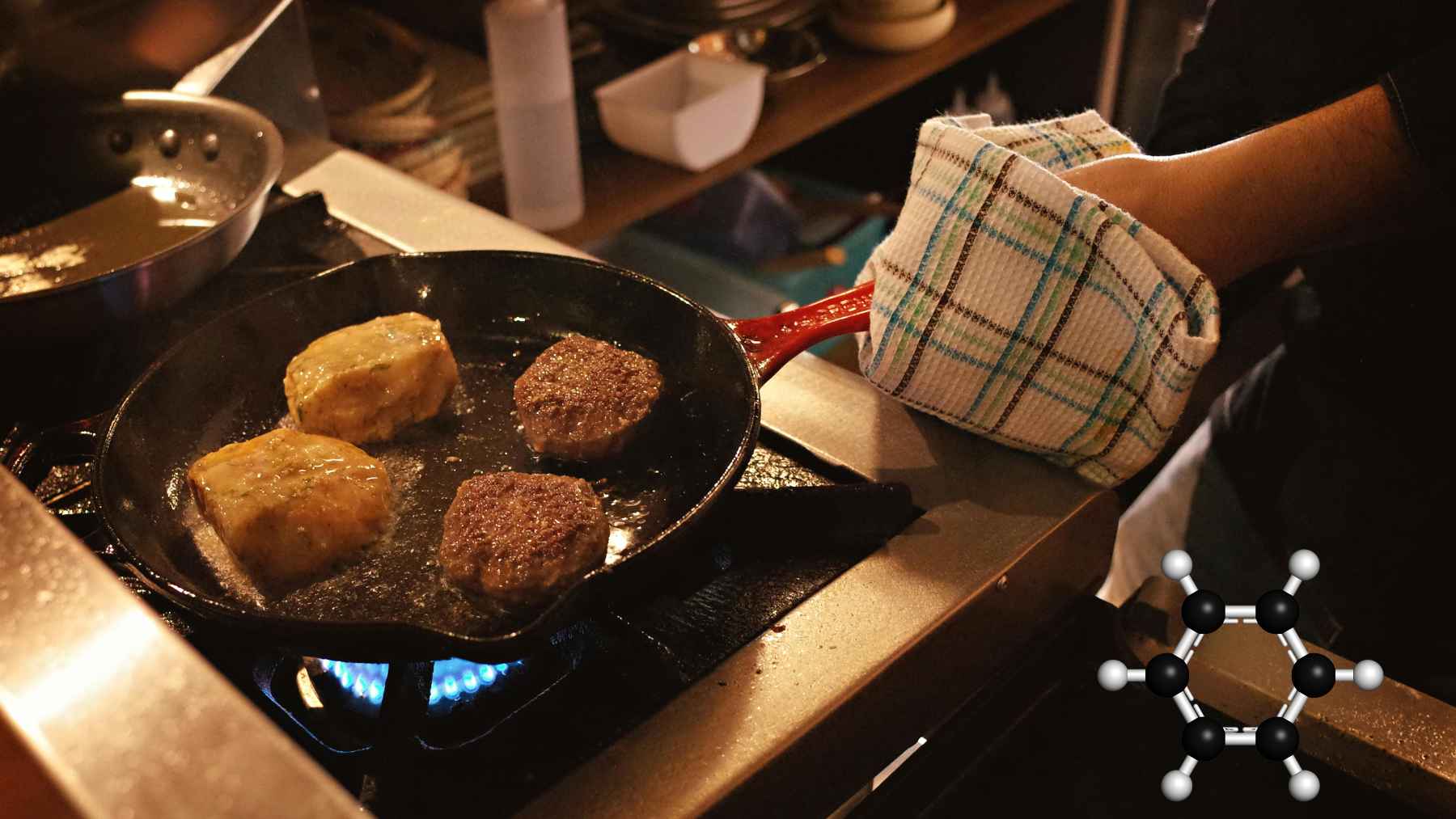
While social media obsessed over utensils, another kitchen risk has been quietly documented. A new study in the Journal of Hazardous Materials uses detailed modeling to look at benzene from gas and propane stoves in United States homes.
Benzene is a volatile organic compound and a proven human carcinogen. The World Health Organization states that there is no truly safe long-term level.
Researchers combined real world measurements from 87 homes with a National Institute of Standards and Technology indoor air model known as CONTAM. They then simulated how benzene from the highest emitting 5% of gas stoves spreads through 24 typical floor plans that together represent a large share of United States housing.
The team estimates that about 6.3 million people live in homes with these top-emitting stoves. In small or poorly ventilated dwellings, heavy use of burners and ovens pushed benzene levels above California’s eight hour reference level of one part per billion in kitchens, living rooms and even bedrooms.
The health implications are long term. Using standard United States Environmental Protection Agency risk methods, the study found that incremental lifetime cancer risk in these homes often exceeded one in a million, a common benchmark for concern.
For children, the modeled cancer risk from benzene exposure was about 1.85 times higher than for adults in many medium- and high-use scenarios. In the worst cases, the authors estimate between sixteen and sixty nine extra leukemia cases per year among those 6.3 million people, if stoves are used heavily without ventilation.
Short term, non-cancer effects were less alarming. Hazard quotients for symptoms such as headaches and irritation stayed below one in all scenarios, which suggests that most people would not notice acute benzene effects even while their long-term risk quietly rises.
What families can actually do
So what should a household worry about more during a busy weeknight spaghetti dinner? The color of the spoon, or what is burning under the pot.
For most people with an intact black plastic utensil the immediate risk from flame retardant contamination appears relatively low, especially after the corrected math.
Choosing wood, steel or silicone is still a sensible precaution, and many environmental scientists argue for tighter control of recycled plastics so that e‑waste additives do not leak into food contact items.
The benzene story is different. It is not about a niche product. Roughly 38% of United States homes cook with natural gas and hundreds of millions of households worldwide rely on gas burners. In practical terms, that means a few simple habits can matter a lot.
- Always run a vent hood that exhausts outdoors when the burners or oven are on and keep it running for a while after cooking
- If your hood simply recirculates air through a filter, treat it as noise control rather than real protection and crack a window while you cook when weather and security allow
- In small apartments, consider keeping children out of a closed kitchen during long baking or frying sessions since bedrooms can pick up benzene and hold it for hours afterward
- When appliances need replacement, looking at efficient electric or induction stoves can cut both indoor pollution and climate emissions at the same time
None of these steps requires panic. They do ask us to pay attention. Kitchens feel cozy and familiar, yet the air in them can carry a chemical fingerprint of our energy choices and our recycling systems.
The study was published in the Journal of Hazardous Materials.