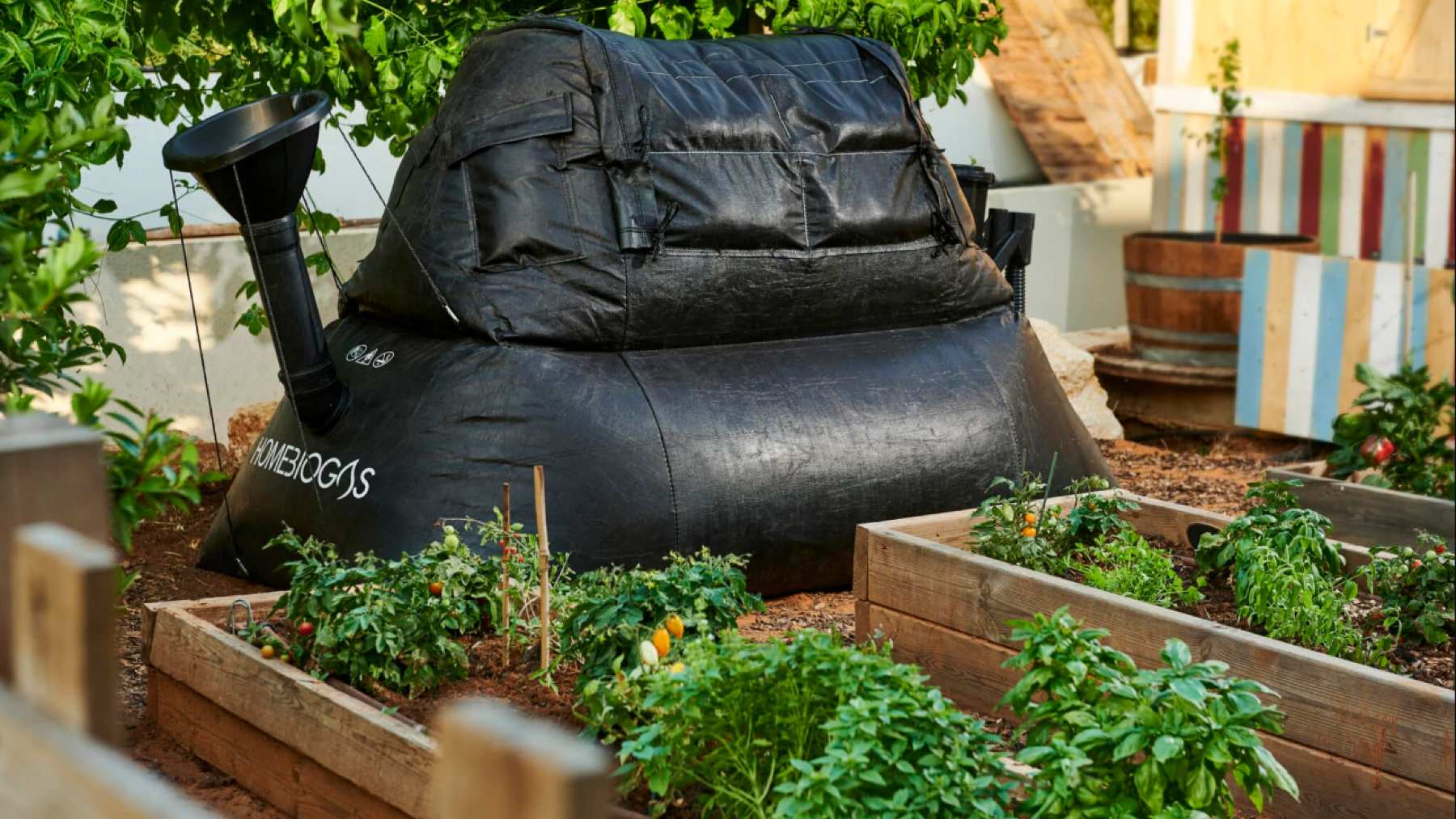
With energy costs on the rise, a great solution would be one that turns food scraps into gas to save on energy bills. Thanks to the HomeBiogas 2.0 system, a backyard-ready system is on offer that is set to turn household food scraps into gas and fertiliser, reducing electricity costs considerably. Set to produce 4,4 kWh and 53 gallons of gas per day, this tool is a welcome breath of fresh air this autumn. It must be noted that the HomeBiogas 2.0 system is designed for homes with modest outdoor space and is one that can turn organic waste into clean gas.
HomeBiogas 2.0 is a closed-loop system turning waste into watts
HomeBiogas 2.0 is not to be seen as a compost bin or a generator, but rather as an integrated system meant to transform waste. Any leftovers in the kitchen can be placed in the unit’s output sink, where natural bacteria break them down in an oxygen-free environment, resulting in Biogas that is safe for cooking and for heating.
The system is equipped to handle about 4 liters of food waste alongside 4 liters of water daily. This is due to the 700-liter gas tank with a digester tank volume of 2,0 cubic meters. The tank is also able to handle more or less 36 liters of animal manure. Once in use, the system will produce:
- More or less 4,4 kilowatts of usable energy
- 2 hours of free cooking gas daily
- 8 liters of liquid bio-fertiliser every day
With so much daily output on offer, the cost of gas and electricity can be considerably reduced. This is a great solution during peak periods where energy demands increase.
The innovative solution was created with homeowners in mind
HomeBiogas 2.0 was designed specifically for use in the backyard, or as an outdoor system, while keeping homeowners in mind. With a measurement of 210 cm x 115 cm x 130 cm, it can fit into any home setting. The catch is that it requires a temperature of at a minimum 20°C (68°F) to function optimally, and heating may be required if a minimum of 20°C (68°F) is not met.
Priced at $1,380, this innovative solution surely does seem like an investment in the right direction with the promise of long-term savings. Thus far, installations are underway in 76 countries, including Kenya and Puerto Rico. HomeBiogas 2.0 surely is supporting off-the-grid solutions and is turning all purchases into a form of global contribution.
What does HomeBiogas 2.0 mean for your utility bill?
While HomeBiogas 2.0 is meant to do wonders for your utility bill, it is also doing much for the environment. Food waste is a rather problematic climate issue to date. By getting rid of food waste, the HomeBiogas 2.0 will cut energy costs while reducing household waste. The daily gas output of 201 liters, which is about 53 gallons, means that practical cooking can replace conventional gas stoves.
The system’s 4,4 kWh energy output is enough to:
- Run a standard refrigerator for a day.
- Allow a washing machine to run through several cycles.
- Run many LED lights continually for a day.
About 130 kWh of energy can be saved, reducing rather high utility bills in the process. The time has come when what you eat and drink every day can become the energy of the future.
Saying goodbye to high energy bills this autumn
With cooler weather on the horizon, homeowners can rest assured that there is an alternative energy source available. The HomeBiogas 2.0 system is being marketed as an accessible and scalable solution that will assist in converting daily waste into energy that will make utility bills easier to get to grips with. Sustainable and off-the-grid living means saying goodbye to high energy bills and turning kitchen waste into something so useful. This solution surely sweeps 100 countries to gain sustainable energy at home from leftover food.