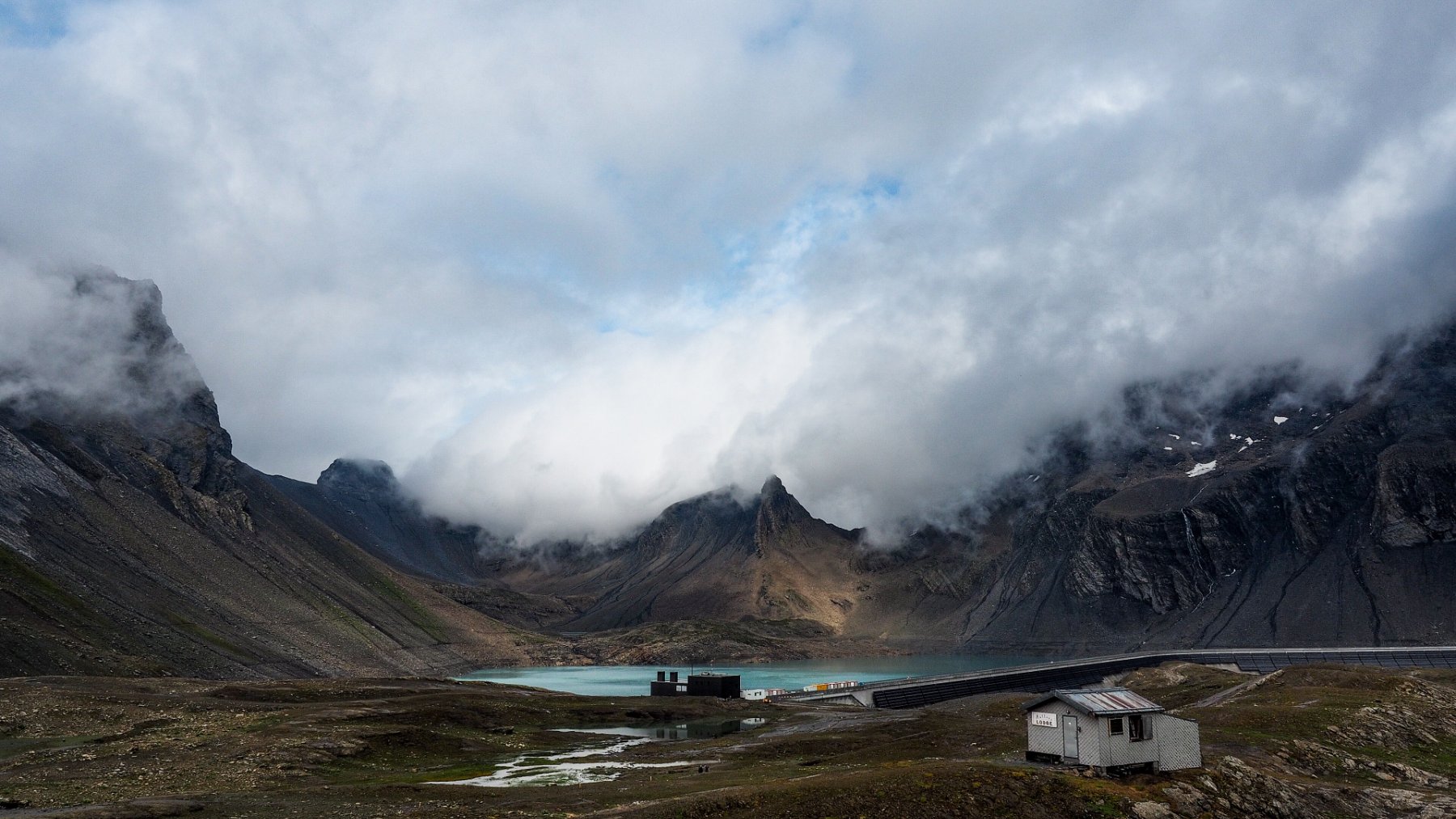
High in Switzerland’s Glarus Alps, nearly 5,000 solar panels cover the wall of the Muttsee dam, roughly 8,200 feet (2,500 meters) above sea level. The AlpinSolar installation occupies a setting that sounds unfriendly to solar power, surrounded by freezing temperatures, deep snow, and difficult terrain.
Built by Axpo and IWB and fully operational since late August 2022, the plant was designed to deliver roughly half its annual electricity during the winter half-year. Its strongest selling point is not simply how much energy it produces, but when that energy arrives, helping address Switzerland’s seasonal supply gap.
What the winter numbers actually show
At commissioning, Axpo forecast annual generation of about 3.3 million kilowatt-hours from the 2.2-megawatt installation. Its current English-language project page describes production as around 3 million kilowatt-hours annually.
Axpo’s 2022 announcement described winter production roughly three times that of comparable lowland installations. A 2024 study in Frontiers in Energy Research provides a more specific measurement, finding that Muttsee produced 3.8 times as much winter electricity per unit of installed capacity as the lowland reference plant during the period studied.
That comparison covered October 2022 through September 2023, with winter accounting for 43% of Muttsee’s annual output. It supports a substantial winter advantage, but it is not evidence that the plant always outperforms every solar farm by the same amount.
Why cold air and snow can help
Why put solar panels somewhere you would need a heavy winter coat? At Muttsee’s elevation, the installation benefits from less fog than plants on the Swiss plateau, where low clouds can limit sunshine during the colder months.
The cold also helps these panels operate more efficiently than they would at high temperatures. Snow around the installation reflects additional sunlight toward them, a phenomenon called the “albedo effect,” while the dam’s favorable orientation helps capture winter light.
An existing dam made the difference
Muttsee offered something a remote mountainside usually does not. It already had a structure suitable for mounting panels and an available grid connection, allowing the developers to install the array without taking additional open land.
Getting the equipment there was another matter. “Logistically it’s quite complex,” project manager Christian Heierli explained in a 2021 Axpo interview, describing how construction materials would reach the roadless dam by helicopter.
The installation was designed with panel slopes of 51 and 65 degrees, steep enough to help snow slide off. Designers also kept panels away from the lowest part of the wall to reduce exposure to accumulating snow.
Electricity with a destination
The project was developed to address a recurring Swiss energy problem, producing enough electricity during the colder part of the year. Axpo identified winter imports as a reason to pursue Alpine solar, while acknowledging that Muttsee alone would not make a significant difference to the national balance.
There is also a concrete customer behind the mountain scenery. Supermarket chain Denner agreed to purchase the plant’s entire electricity output for its first 20 years of operation, putting the generation to work for its stores rather than leaving the project as a demonstration without a buyer.
A promising idea with real limits
Snow is not always an ally. Researchers studying Muttsee found that some bottom-row modules became buried during its first winter, and the larger installation delivered lower yields than similarly tilted panels at the Alpine test site used for comparison.
Economics also complicate the picture. In a September 2022 account, IWB acknowledged that AlpinSolar was not economical under the conditions then in place, a reminder that strong winter output does not automatically mean cheap electricity.
Switzerland introduced its “Solar Express” measures in 2022 to accelerate large solar projects with strong winter production. But the Swiss Federal Office of Energy has also highlighted concerns about the effects of such installations on nature and the landscape.
The mountain plant takes on another job
An August 2025 announcement added a different role for AlpinSolar through Swissgrid’s PV4Balancing pilot project. When the grid has excess electricity, the installation can reduce output at the grid operator’s request, helping keep production and consumption aligned.
The larger lesson from this snowy dam is that supplying clean electricity involves timing and control as well as generation.
The official announcement about AlpinSolar’s grid-balancing role was published on Axpo’s website on August 21, 2025.