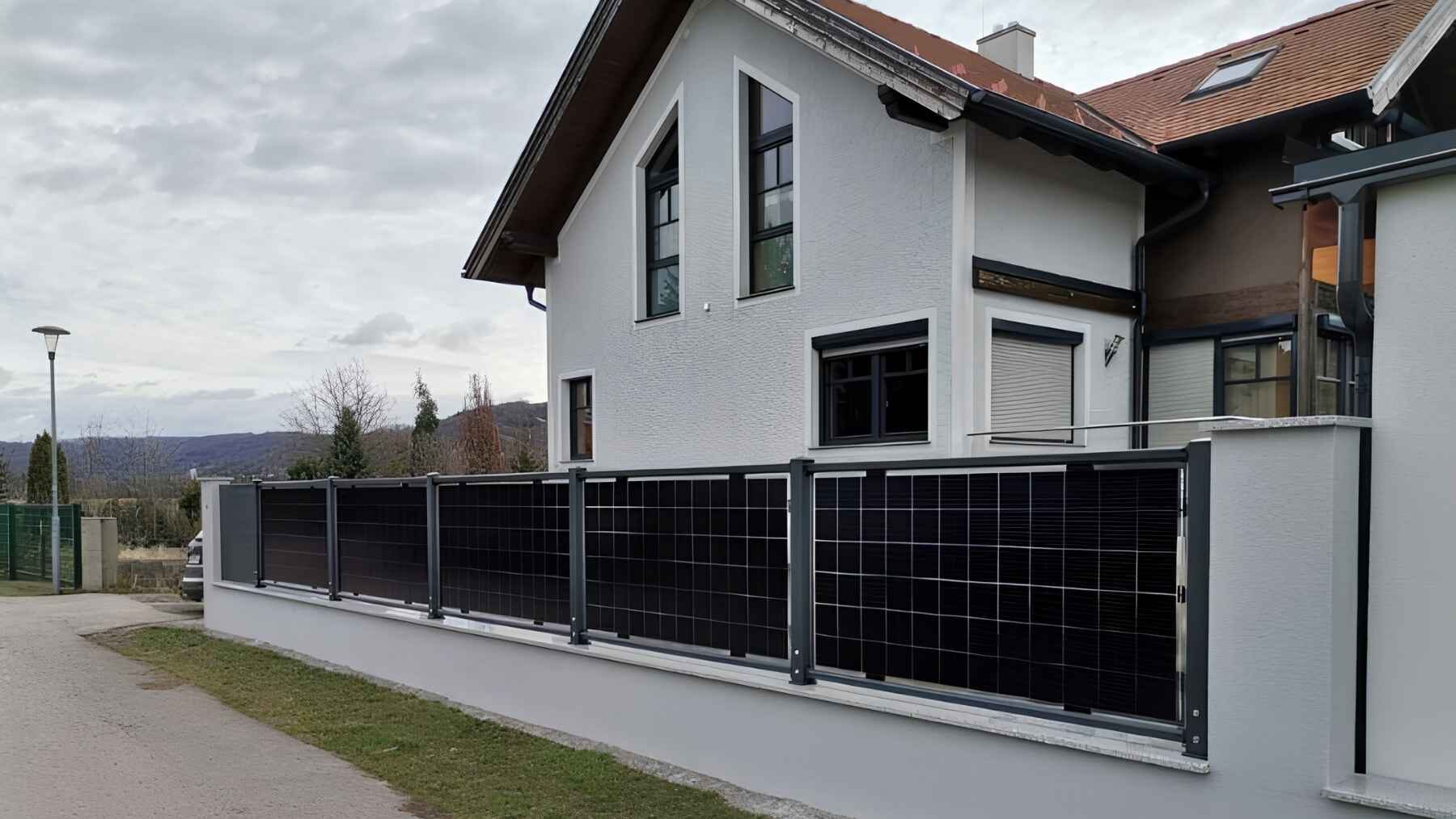
Usually, backyard fences are just used to establish property limits. In Europe, vertical solar fences are adding a second use to them. Next2Sun is advertising its Fence2Sun system, starting from €250 per meter, a perfect choice for homes with shaded, cluttered, or poorly oriented roofs.
These fences capture sunlight on both sides, so its vertical bifacial panels are able to generate a larger percentage of their electricity in the morning and late afternoon, and in general, this is the moment when household demand is higher. However, this new system does not mean that solar fences produce more electricity than those placed on rooftops.
The power curve explained
That can move solar production closer to breakfast and evening demand, potentially reducing how much electricity must be exported at noon or stored in a battery for later.
Conventional tilted panels that are placed facing south tend to reach their highest output around noon. On the other hand, vertical bifacial panels absorb sunlight from both sides. This means that an east-west setup can take better advantage of the early morning and late afternoon sun.
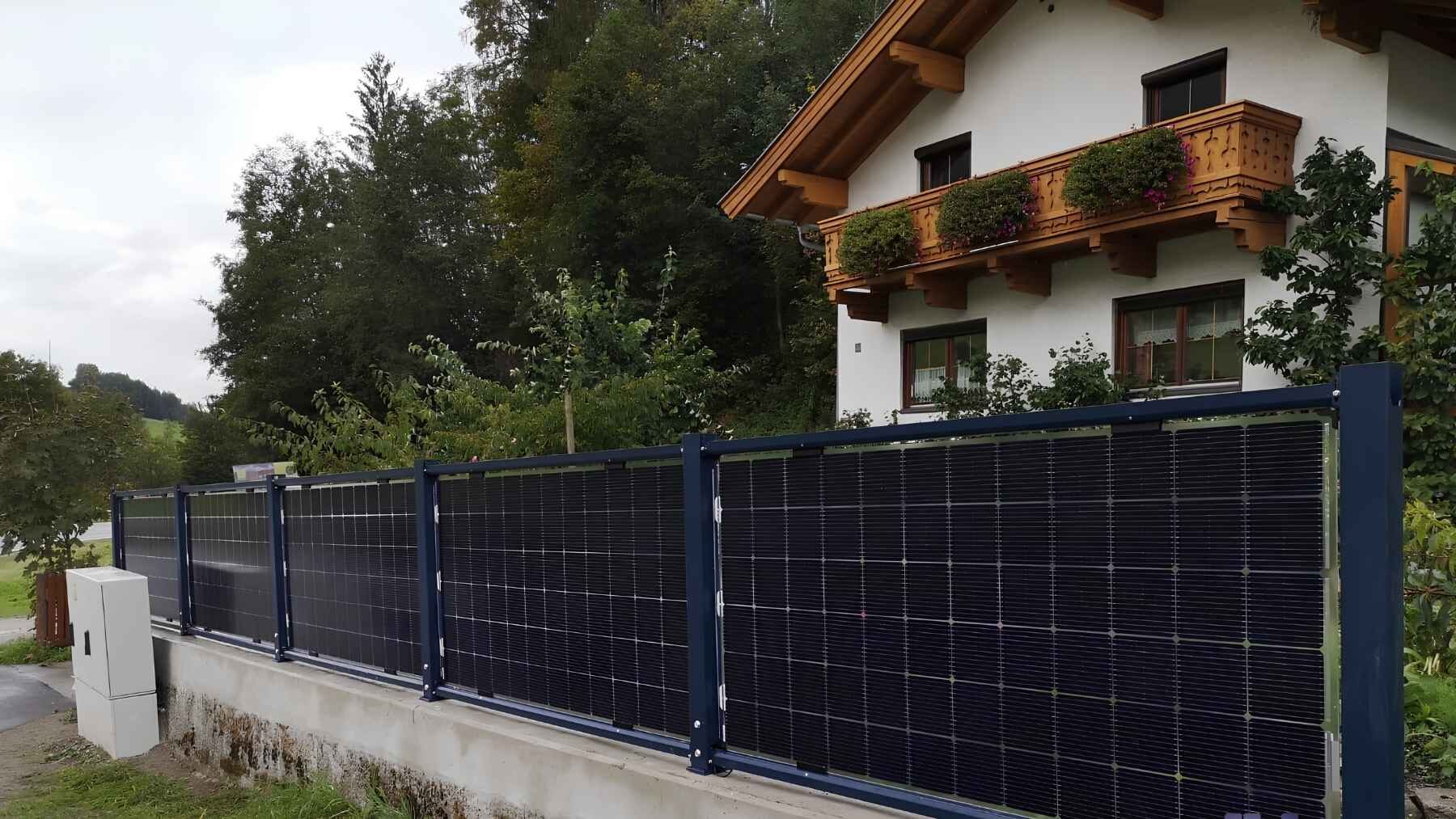
As a result, the generation of electricity can better align electricity demand in houses at breakfast time and in the evening. This can help reduce the amount of power that needs to be exported around noon or saved in a battery for later.
Conclusions of the York study
Between February and December 2023, a University of York study tracked the performance of a vertical bifacial solar array of 1.5 kilowatts. It was compared with both a vertical monofacial system and a conventional monofacial array, installed at an angle of 45 degrees.
During the early-morning comparison period, the bifacial option produced 26.91 percent more electricity. In the late afternoon, it was 22.88 percent more. In winter, it generated up to 24.52 percent more power than the tilted array.
However, these figures are the result of a single experiment in York, so people should not expect the exact same results in every house.
The importance of the ground
The amount of power produced by bifacial panels is strongly influenced by albedo, or the sunlight reflected by the ground. In this experiment, there was white gravel with high reflectivity beneath the panels, so more light reached the back of the panels.
According to the IEA Photovoltaic Power Systems Programme, power output is also affected by other factors including diffuse sunlight, panel height and spacing, system design, and nearby surfaces. For example, snow can boost production on the rear side, as it reflects more sunlight, while dark soil or grass may produce a smaller reflection.
Heat and fences
As solar cells get hotter, their efficiency tends to decline. In general, panels installed on rooftops receive less airflow, whereas vertical fence systems allow air to circulate more freely on both sides.
Better ventilation could help the performance of vertical panels on hot days. However, the benefit will depend on the type of module, installation method, wind exposure, and climate.
The actual price
The advertised price, €250 per meter, by Next2Sun only covers the starting cost, not the fully installed system. At that price, a 10-meter fence begins at around €2,500, with labor, assembly, and electrical components, that would probably increase the final cost.
Next2Sun believes that suitable projects could pay for themselves in just eight years, but this is an estimation, not a guaranteed return.
According to a June 2026 Euronews report, the company had already installed 479 solar fences in six European countries, covering a total distance of approximately 10 kilometers.
Giving fences a second task
Solar fences are very practical for homes with long and mostly unobstructed property lines, a roof that for some reason is not suitable for solar panels, and relatively high use of electricity during the morning or evening.
They will probably not replace rooftop systems in every situation. Their main advantage is the ability to serve two functions at the same time: establishing the edge of a property while producing electricity when regular rooftop panels are not operating near their midday peak.
The study was published in Scientific Reports.