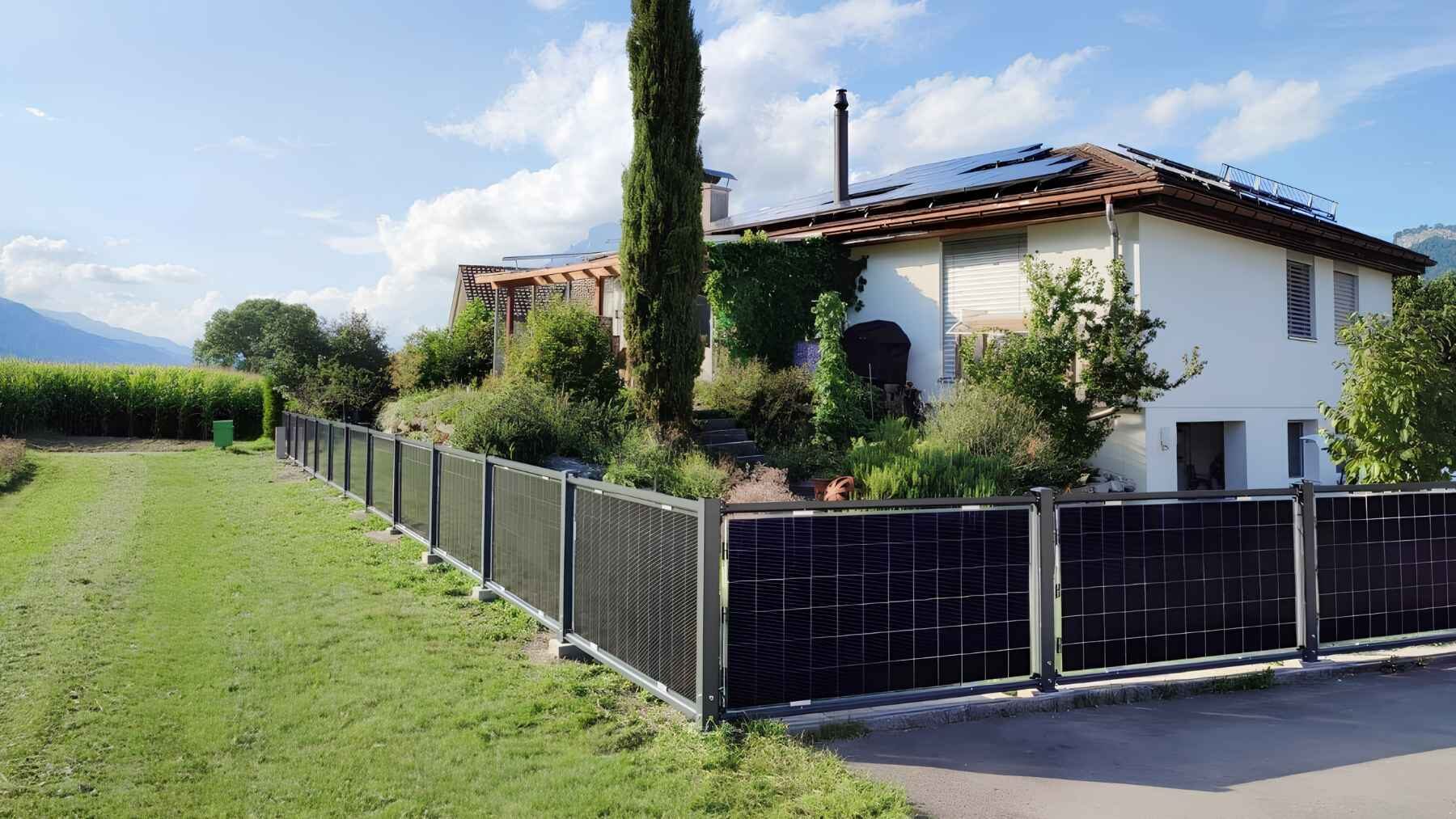
Europe’s solar boom is no longer staying on the roof. As households look for cheaper electricity and more control over their energy supply, a new idea is moving into backyards. Solar fences.
The timing is hard to ignore. The Middle East conflict tied to Iran has sharpened Europe’s worries over fossil fuel imports, and SolarPower Europe’s analysis reportedly found that solar had saved the continent about $14.6 billion by June 2. That works out to roughly $155 million a day, based on the European Central Bank’s July 6 exchange rate.
From rooftops to fences
For years, the typical home solar dream was a neat row of panels on a sunny roof. But not every roof faces the right way, and not every homeowner wants scaffolding, roof work or a big up-front project.
That is where solar fencing comes in. Instead of treating the garden boundary as dead space, companies are turning it into a slim line of photovoltaic panels that can make electricity while still doing the ordinary job of marking a property line.
In the United Kingdom, Jacksons Fencing describes its Jaksun solar fence as a garden panel that combines appearance with energy production, with a 415 watt capability per panel and a 25 year guarantee. Not bad for something most people usually notice only when it needs painting.
Why now
The backyard trend is part of a larger scramble for energy independence. Reuters reported in April that rooftop solar demand across Europe had surged since the start of the Iran war, with some industry players seeing homeowner demand more than double.
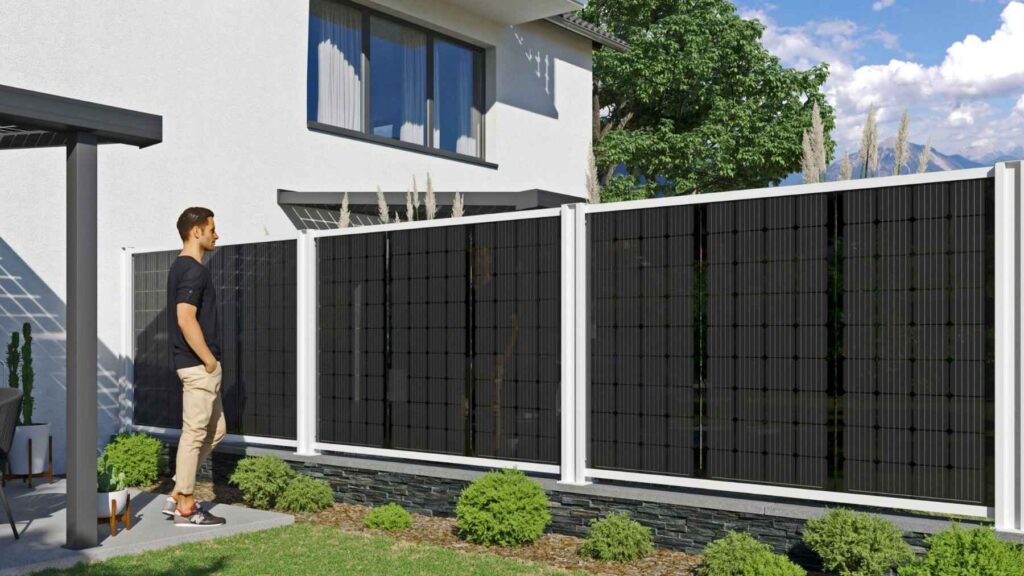
Germany’s Enpal said orders rose 30 percent year over year in March, while E.ON said customer requests had nearly doubled. In practical terms, that means the electric bill has become a geopolitical document, not just a monthly annoyance.
The UK government has also moved to open the door for plug-in solar panels, saying they could be available in shops within months and naming retailers such as Lidl and Iceland as part of the rollout discussions. The same statement said Germany sees about half a million new plug-in devices connected each year, a sign that small solar is already part of everyday life in parts of Europe.
What they can power
Solar fences are clever, but they are not magic. Because the panels stand vertically, they usually catch less midday sun than a well-angled rooftop system.
Bluetti Power estimates that a typical solar fence can generate about 30 to 46 watts per foot under ideal conditions. That means a 33 foot fence could produce around 1 to 1.5 kilowatts.
With about five hours of peak sunlight, that same fence could generate roughly 5 to 7.5 kilowatt-hours of electricity a day. That is not always enough to run a whole home year-round, but it could help keep efficient appliances, lights or a television going while shaving some demand from the grid.
The catch
There are limits, of course. A fence shaded by trees, neighboring buildings or parked vans will not perform like one in open sun.
“The performance also depends on positioning, shading and the length of the available boundary,” Maguire said in the briefing provided for this story. “In some areas, permits or regulations may influence installation, especially in sensitive or protected environments.”
Planning rules matter because fences are visible. A rooftop panel may sit out of sight, but a solar fence changes the look of a garden, a school perimeter or a business park.
A bigger market
This is not only about suburban yards. German solar company Next2Sun has completed 479 solar fence projects across six European countries, covering about 6.2 miles in total, according to Euronews.
The company says vertical photovoltaic systems can cost as little as about $285, although more natural-looking designs can cost more. Euronews reported that the investment can be paid back within eight years, putting the technology in the same broad range as traditional rooftop panels.
Next2Sun also promotes bifacial vertical panels, which collect light from both sides. The company says that design can produce up to 10 percent more electricity in the morning and evening, which matters because those are the hours when many households are making coffee, cooking dinner or switching on lights.
Beyond the garden
Solar fencing may become more useful in places with long unused boundaries. Think warehouses, logistics centers, airports, schools and local government sites.
Next2Sun’s vertical technology is already being used at Frankfurt Airport, where a 1.7 mile installation with 37,000 vertical modules is expected to generate up to 17.4 million kilowatt-hours of electricity a year. That is a very different scale from a backyard fence, but the same idea is at work.
“Solar fences are ideal for infrastructure and commercial settings, where long stretches of boundaries already exist and remain unused from an energy perspective,” Maguire said. The concept is simple enough, but it asks a sharp question. Why should empty perimeter space stay empty?
The grid problem
Still, small solar will not solve Europe’s energy problem alone. Grid bottlenecks remain one of the biggest obstacles, with more than $114 billion in clean energy projects stuck in distribution connection queues across eight European countries, according to Beyond Fossil Fuels.
That is why solar fences are best understood as one piece of a bigger puzzle. They can help households and businesses produce electricity closer to where it is used, but Europe still needs batteries, better grids and faster connection rules.
At the end of the day, the appeal is easy to see. A fence is already there, the sun is already falling on it, and families are already looking for relief from volatile energy prices. The question is whether regulators, installers and homeowners can make the idea simple enough to spread.
The press release on Europe’s solar savings was published on SolarPower Europe.