A small school prototype built from recycled parts is getting attention again because it points to a big energy question. What if coastal communities with unreliable electricity could tap the movement of nearby water instead of waiting for expensive fuel deliveries?
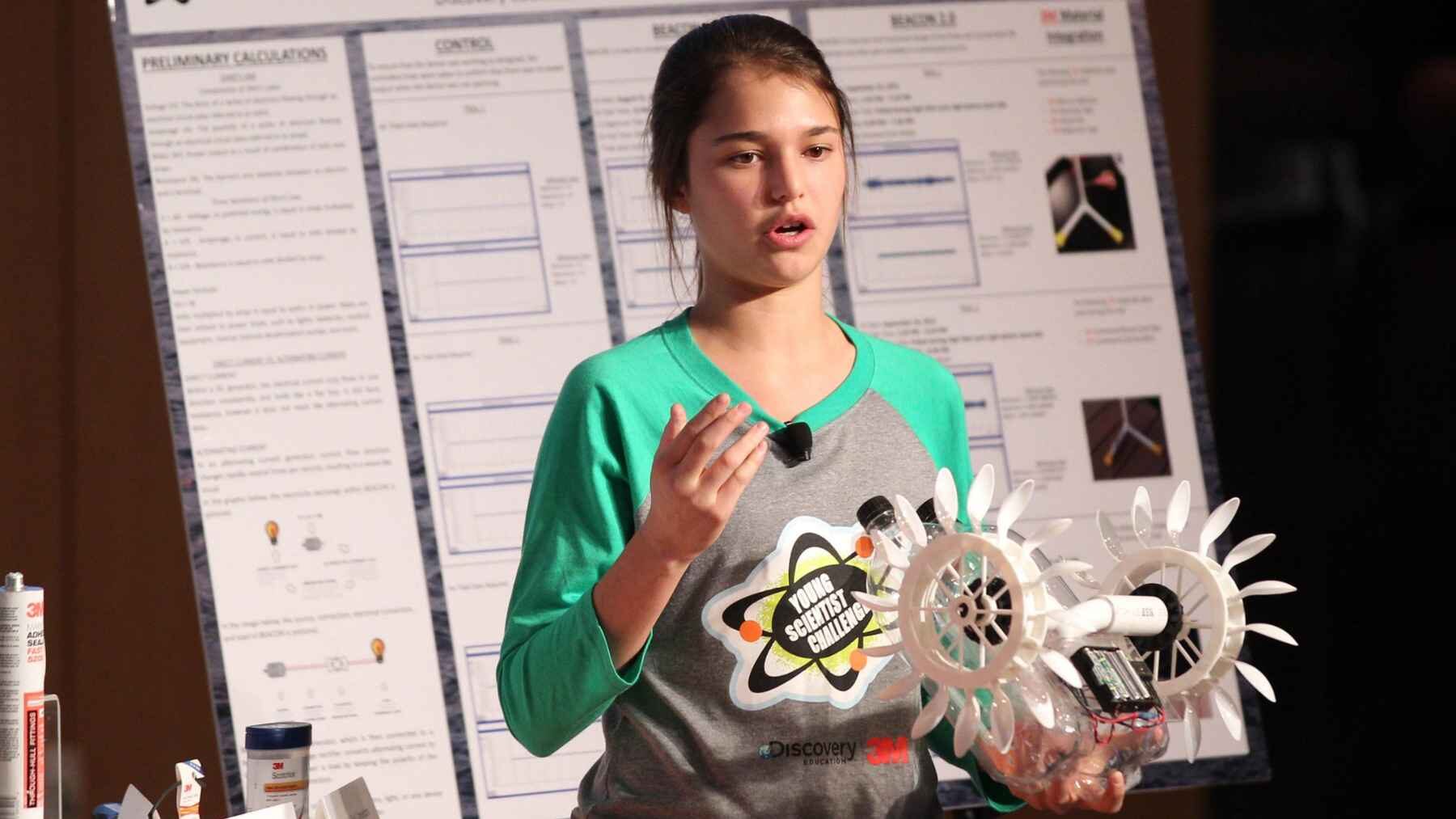
The device, called BEACON, was created by then 15-year-old Hannah Herbst, a student from Florida Atlantic University High School, and won the 2015 Discovery Education 3M Young Scientist Challenge. It did not become a power plant, but it did show a simple way to convert ocean-current motion into usable electricity, starting with enough power to light LEDs.
A small device with a big question
The idea sounds almost too simple to work. Place a small turbine in moving water, let the current spin it, and use that mechanical motion to produce electricity.
That is the core of BEACON, short for Bringing Electricity Access to Countries Through Ocean Energy. The official project profile says the Ocean Energy Probe was aimed at providing stable power and fresh water for developing countries by using untapped energy from ocean currents.
How the $12 generator worked
The prototype was low-cost because it used recycled materials and basic parts. Reporting at the time described a 3D-printed propeller connected by a pulley inside a plastic PVC pipe to a small hydroelectric generator.
As water moved past the device, the propeller turned. That motion traveled through the pulley system and into the generator, which converted moving-water energy into electricity that could be used by a simple load.
In early testing in the Boca Raton Intracoastal Waterway, the student’s device powered LED lights. She also calculated that a scaled version could help charge batteries or run desalination pumps, though that remained a projection rather than a deployed system.
What marine energy means
Marine energy is power drawn from moving water, including waves, tides, river currents, and ocean currents. In plain terms, it is the water-based cousin of wind power, except the spinning force comes from currents instead of air.
The U.S. Department of Energy says marine energy can use waves, tides, currents, and water temperature differences to help provide power to hard-to-reach places. That matters for coastal towns, islands, and remote communities where the electric bill is not just a household worry but sometimes a question of whether power is available at all.
Why remote coasts care
For many isolated communities, electricity often depends on diesel fuel brought in by boat, truck, or plane. That can mean high costs, loud generators, exhaust fumes, and the constant risk that storms or supply delays leave people in the dark.
Ocean energy is attractive because the resource is local. If the water is already moving near a shoreline, a harbor, or a channel, the basic question becomes whether engineers can capture some of that motion safely, affordably, and reliably.
A U.S. Government Accountability Office report said renewable ocean energy could help meet the energy and water needs of rural coastal and island communities by reducing reliance on costly diesel generators. The same report also warned that ocean-energy technology can be expensive and that more research is needed on possible effects on marine wildlife.
The limits behind the headline
This is where the story needs a careful line. BEACON was not a finished commercial product, and it was not installed in thousands of homes.
It was a school prototype that proved a principle. The principle was that moving water can be converted into usable electricity with a small, understandable setup that a teenager could build and test.
That does not mean a $12 device can solve energy poverty by itself. Scaling any marine-energy system brings harder questions about durability, saltwater corrosion, storms, maintenance, permits, and how to connect the power to batteries, pumps, or a local grid.
Why the idea still matters
Still, the project has value because it makes a complicated energy problem feel tangible. Instead of starting with massive turbines and million-dollar infrastructure, it starts with a propeller, a pipe, a current, and a simple question.
Can the force of water near a community be put to work? In practical terms, that is the same logic behind much larger marine-energy research today.
The National Renewable Energy Laboratory has estimated that U.S. marine energy resources have major technical potential, though only part of that resource could realistically be captured. So, for the most part, this field is not about replacing every power plant tomorrow, but about adding cleaner options where the ocean, rivers, or tides make sense.
A school project with a serious lesson
The most lasting part of BEACON may be the lesson it offers about innovation. Big energy systems often begin with simple prototypes that make people rethink what is possible.
That is why this story keeps resurfacing. It sits at the crossing point of youth science, clean energy, water access, and the everyday reality of communities that need dependable power.
At the end of the day, the tiny generator did not prove that cheap ocean energy is easy. It proved something more modest but still important, that a simple idea can point toward bigger solutions when it is tested honestly and explained clearly.
The official project profile has been published by the Discovery Education 3M Young Scientist Lab.