A nine-year-old boy visiting Czersk Castle, south of Warsaw, found a silver coin struck in 1624. The office of the Mazovian Provincial Conservator of Monuments announced the find on Facebook on September 19, 2026. It identified the piece as a Prussian półtorak issued under Duke George William at the Königsberg mint.
According to the post, the boy spotted the coin on his own during a tour. Under the heading “A little explorer with a big find” (translated from Polish), the office praised his sharp eye and thanked him for his conduct. The post does not name the child.
Pocket change from Königsberg
With a face value of 1.5 groszy, the coin was a small denomination for daily transactions. The conservator’s office puts such coins at just under 1 gram (about 0.035 ounce).
Finds of that size help archaeologists and historians reconstruct daily life, the office wrote. They also show how money moved across Polish lands in the 17th century. The office called this piece a small but telling witness to a time when the castle still served important functions.
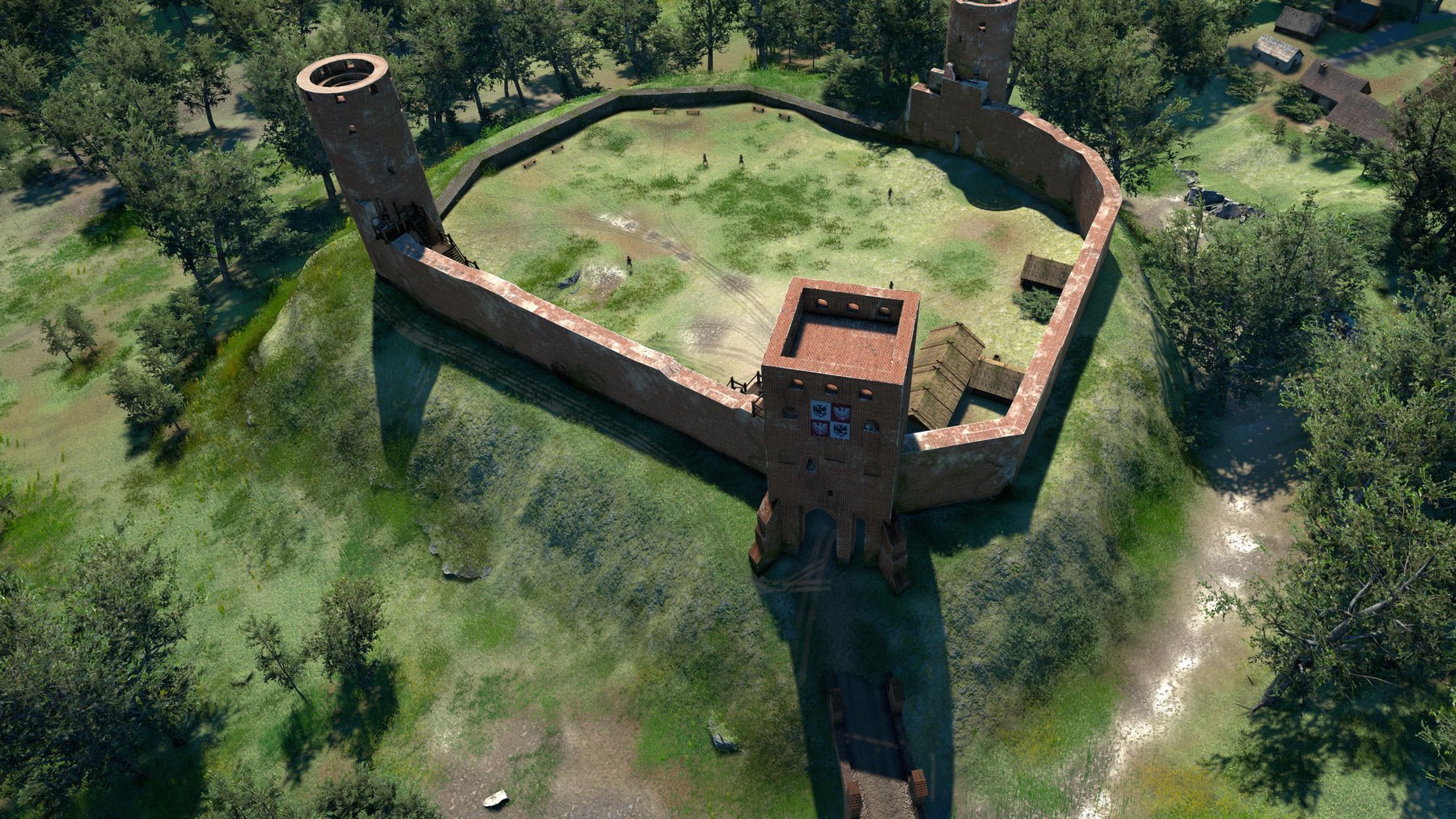
By 1624 those functions already had a long history. The castle’s official history says Prince Janusz I built the Gothic stronghold in the early 1400s. He wanted a defense against the Teutonic Knights.
Queen Bona expanded the castle after Mazovia passed to the Polish Crown in 1526. Swedish forces badly damaged it in the 1650s, about three decades after this coin left the mint.
A close match from Ełk
Numismatist Grzegorz Śnieżko has published a catalog of a 17th-century hoard from Ełk, a separate find in Poland.
Entry 386 records a silver 1624 Königsberg półtorak. It measures 19 millimeters (about 0.75 inch) across and weighs 1.01 grams.
Coins from that year carry an electoral hat above a quartered shield. The eagles of Brandenburg and Ducal Prussia appear among its arms, and an abbreviated Latin title runs around the edge.
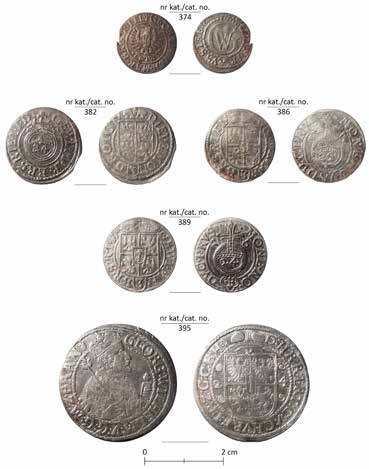
In German these coins were called dreipölker, and Śnieżko writes that their dies imitated Polish coins of the same denomination. His catalog lists Ducal Prussia as a fief of the Polish Kingdom. George William ruled it from 1619 to 1640.
Nobody has published that level of detail for the Czersk piece. The Ełk entry therefore shows the type and leaves the boy’s coin undescribed.
Still being saved in 1655
How long did a coin like this stay in use? Śnieżko studied 722 coins from Ełk, and 719 of them came out of the ground in 2020. He assigned 684 to the hoard itself, with Ducal Prussian money as its third-largest group.
The youngest securely dated coins come from 1655, and he concludes that “it is likely that this is when the hoard was actually hidden.” Because the hoard included półtoraks from 1624, somebody was still keeping that issue 31 years later.
For Czersk, the date on the coin marks only the earliest moment it could have reached the castle. It may have been dropped in the 1620s or a generation later.
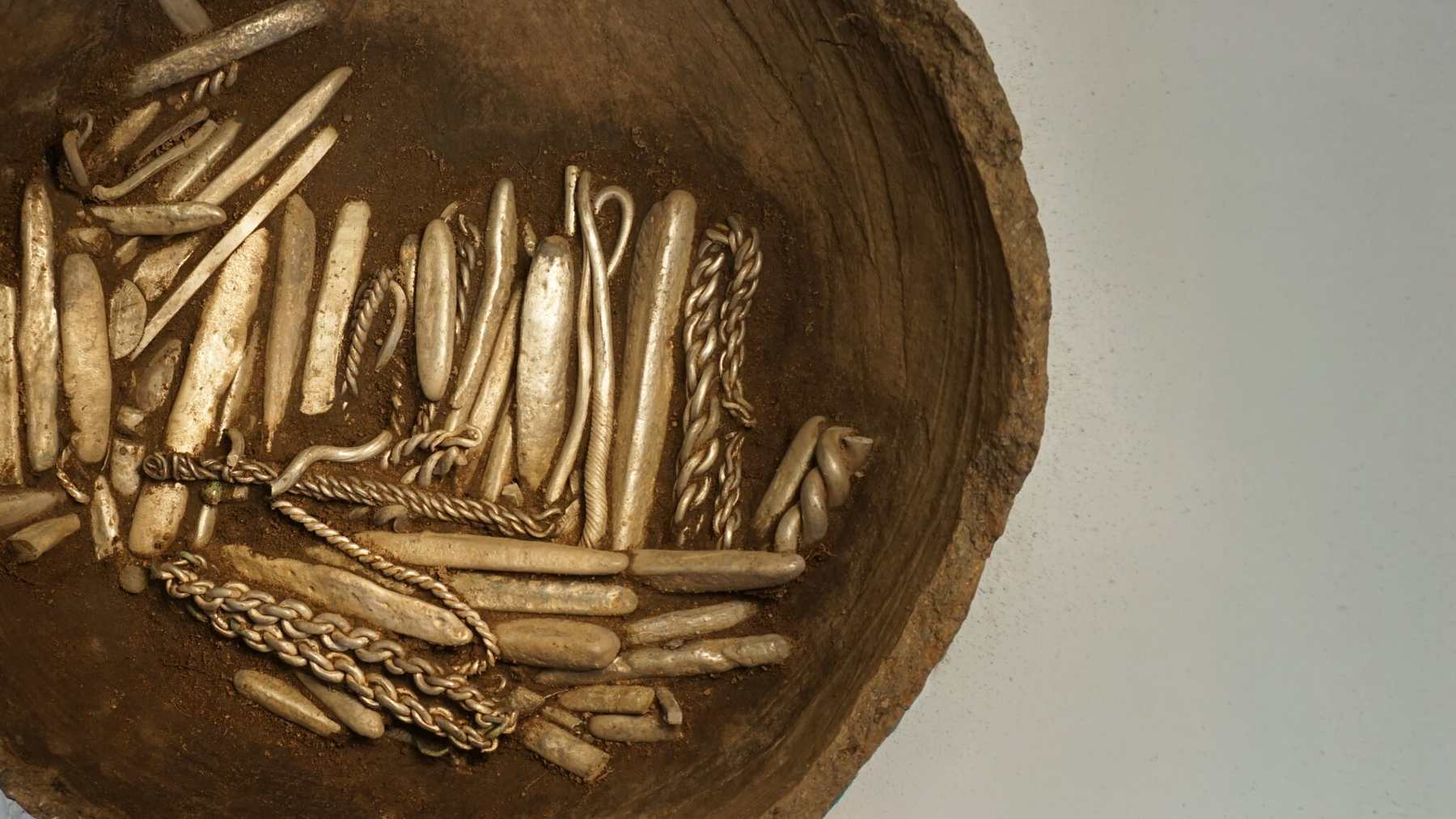
Archaeologists face a similar gap with Viking silver buried in Denmark and 45 Roman coins on Sweden’s Gotland. Geography adds a further caution here. Śnieżko describes Prussian coins as local money for Ełk, while Czersk lay in Mazovia, so the hoard cannot explain this coin’s journey.
Imported soil on Castle Hill
In an interview on the castle’s website, archaeologist Przemysław Urbańczyk described repeated deliveries of soil to enlarge the hill. Those additions complicated the site’s stratigraphy, the layered sequence that reveals the order of past activity.
Nothing in the announcement places the boy’s coin in that imported earth. Even so, Urbańczyk’s account shows why a find spot at Czersk needs careful recording.
The hill’s relationship with the Vistula also remains unsettled. A 15th-century grain barge turned up in a small fishing pond below the castle, which Urbańczyk reads as evidence of the river. Geological studies are still needed to establish when it moved away, he said.
That timing bears on the town’s fate. The castle’s history links its fall in status to political changes and the loss of a direct river connection. In Urbańczyk’s words, translated from Polish, “We still do not know whether Czersk actually fell because the Vistula moved away, or whether it was a political decision.”
No find spot on record
The conservator’s post does not say where on the grounds the boy saw the coin. It also omits the day of the find, the coin’s condition and who holds it now. No collector’s value appears, and 1.5 groszy has no simple equivalent in today’s dollars.
Being issued under George William does not connect the coin to him personally. The announcement names no owner, purchase or event at the castle. Like the tradesmen in a parchment hidden in a Polish pulpit, its user belonged to an everyday world that records tend to skip.
The office added that the young visitor’s find shows history “sometimes waits right beneath our feet” (translated from Polish). The full announcement is on the Mazovian conservator’s Facebook page.
Image: Zamek Książąt Mazowieckich w Czersku