“It was only supposed to be a couple of hours of hard yard work,” the finder said, translated from Danish. The job was clearing stubborn grass, stones and gravel for a new patio in Rebild, in northern Denmark, and it “turned into the biggest surprise of my life.”
After half an hour, the garden fork hit something that made a strange sound. At first it seemed like old iron, fencing wire or bits of pottery. Digging by hand, the finder, who wants to stay anonymous, began pulling up one metal object after another and realized they were jewelry, coins and silver bars.
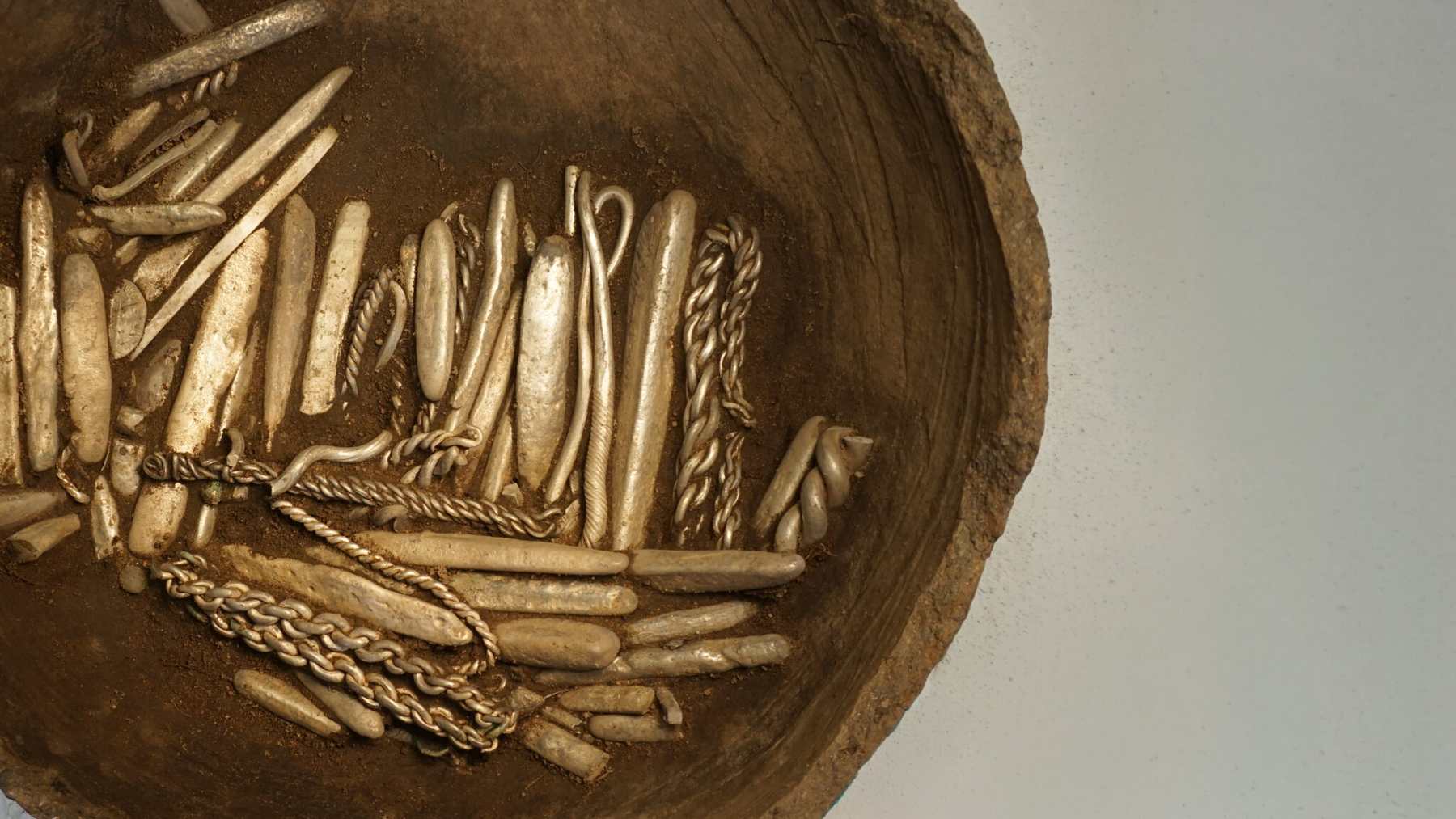
On Aug. 31, 2026, Nordjyske Museer, the museums of North Jutland, announced what had come out of that yard: 18.5 kilograms of Viking Age silver, about 41 pounds, in roughly 700 objects and fragments. It is the largest Viking silver hoard known in Denmark.
“Like finding a safe”
“I couldn’t believe my own eyes,” Torben Sarauw, the museums’ head of cultural heritage and an archaeologist, told the Danish broadcaster DR. “We have received smaller silver hoards before, but then we’re talking grams, and here we’re talking many kilos.”
About 320 objects, weighing 6.4 kilograms, were still inside the clay vessel they were buried in. The rest lay in the soil around it. Altogether the hoard holds silver bars, bracelets, coins, cut pieces of silver and a small Thor’s hammer.
“It is like finding a safe from the Viking Age,” Sarauw said in the museum’s announcement.
Silver that was money by weight
Much of the hoard is broken on purpose. In a world that paid by weight, a smart bracelet was also small change. “You could easily chop a fine bracelet to pieces if you needed part of it to pay for something,” Sarauw told DR.
He went further in an interview with the Danish magazine HISTORIE. “If you needed 100 grams for a deal, then 100 grams was what you had to use,” he said. “When we weigh the objects, we can see that many cluster around certain weight groups, including 50, 75 and 100 grams.” In ounces, that is roughly 1.8, 2.6 and 3.5.
The British Museum describes the same Viking habit of mixing coins, small bars and chopped-up objects, known as hacksilver.
Coins from Central Asia and England
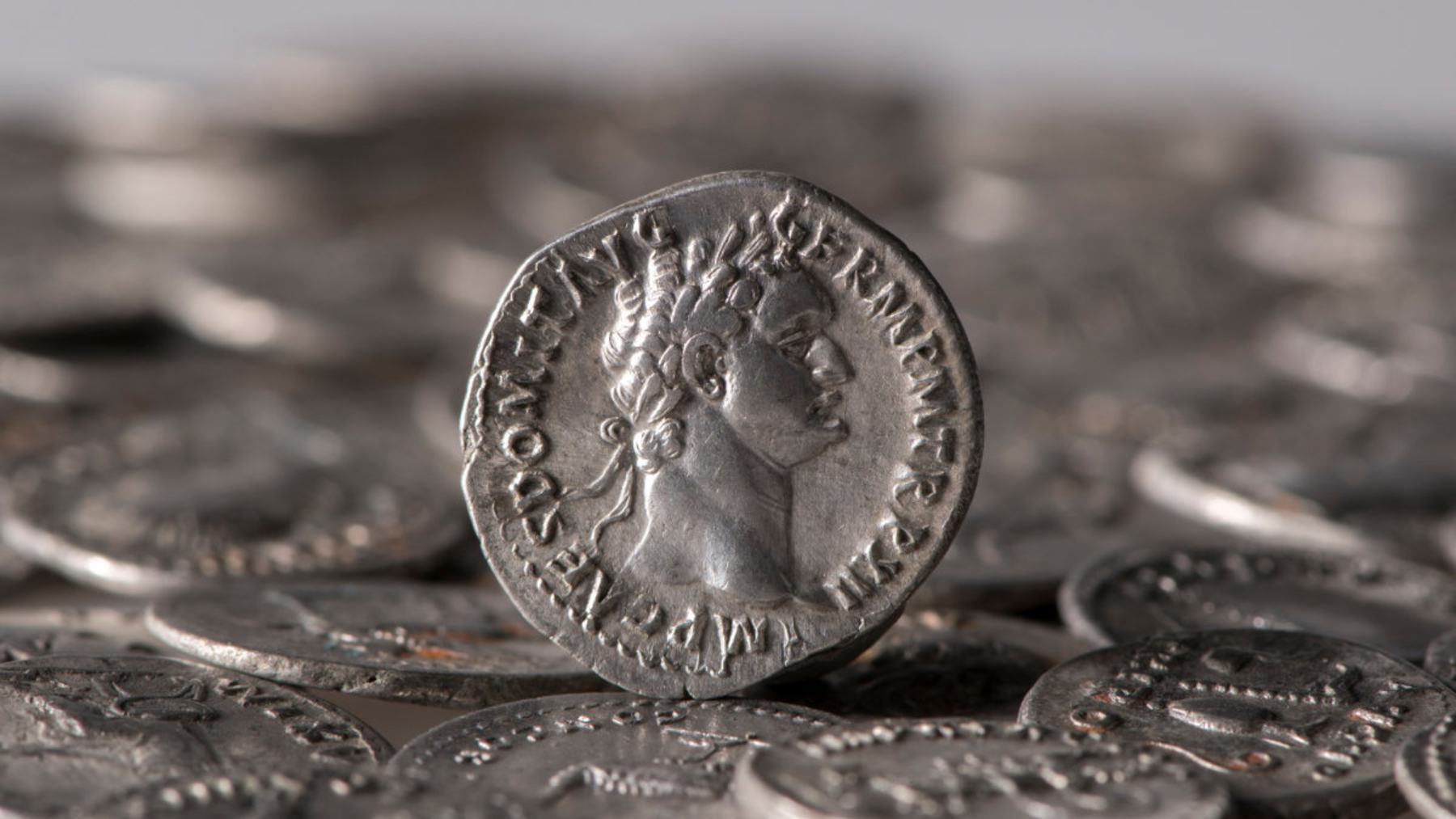
The hoard holds both Islamic and Anglo-Saxon coins. Two silver pennies were struck under Edward the Elder, who ruled from 899 to 924, which helps date the burial to sometime in the 900s. A coin only shows the earliest a hoard could have gone into the ground, not exactly when.
“The coins come all the way from Central Asia, where silver could be mined from the ground, and they then made their way up to the Baltic region via the Russian rivers,” Sarauw told DR. The National Museum of Denmark says silver reached Denmark in large amounts in the 900s, much of it as Arab dirhams.
He was careful about what that means. “It’s important, though, not to conclude that the silver comes from Viking raids,” he told HISTORIE. “Some of it may have arrived through raids, but trade is at least as interesting.”
Almost three times the old record
The museums put the earlier Danish record holder, the Terslev hoard, at about 6.5 kilograms. Rebild weighs about 2.8 times as much. Terslev is a coin hoard, though: the National Museum lists 1,751, including 1,708 of Arab origin. In Rebild, bars, jewelry and cut silver make up most of the weight.
A word nobody had seen
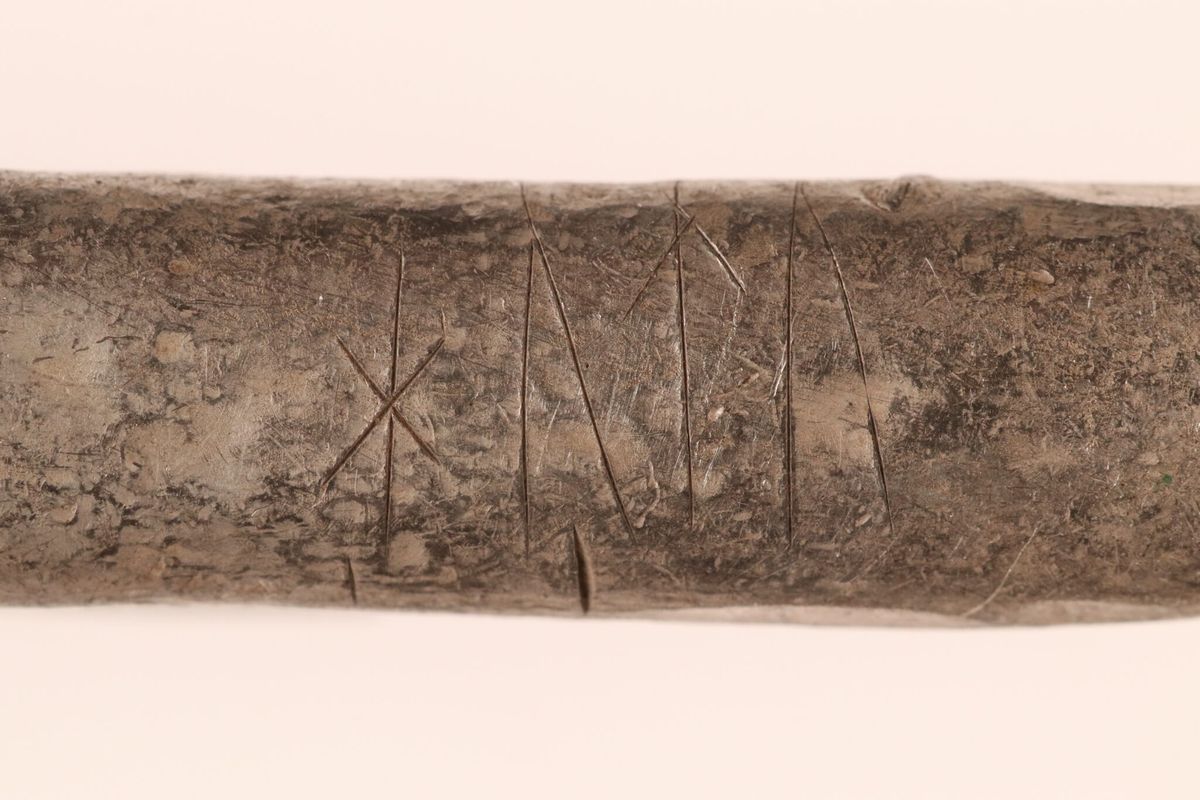
One bar carries scratched runes. “It can possibly be read as ‘hutu.’ We don’t know what it means,” Sarauw told HISTORIE. “It could be a name, an owner’s mark or something else, but the runologists haven’t come across it before.”
Why the silver was buried is unknown. The site is in a built-up area where a large excavation isn’t possible. Lars Christian Nørbach, the museums’ director, told DR he would like to find “a house, a village or something that the silver belongs to,” and that they are starting to look.
The hoard is being submitted to the National Museum for assessment. Nordjyske Museer hopes to show it permanently at Vikingemuseet Fyrkat, if the security demands for such valuable objects can be met. “So the work has really only just begun,” Sarauw told HISTORIE.
Photo: Nordjyske Museer