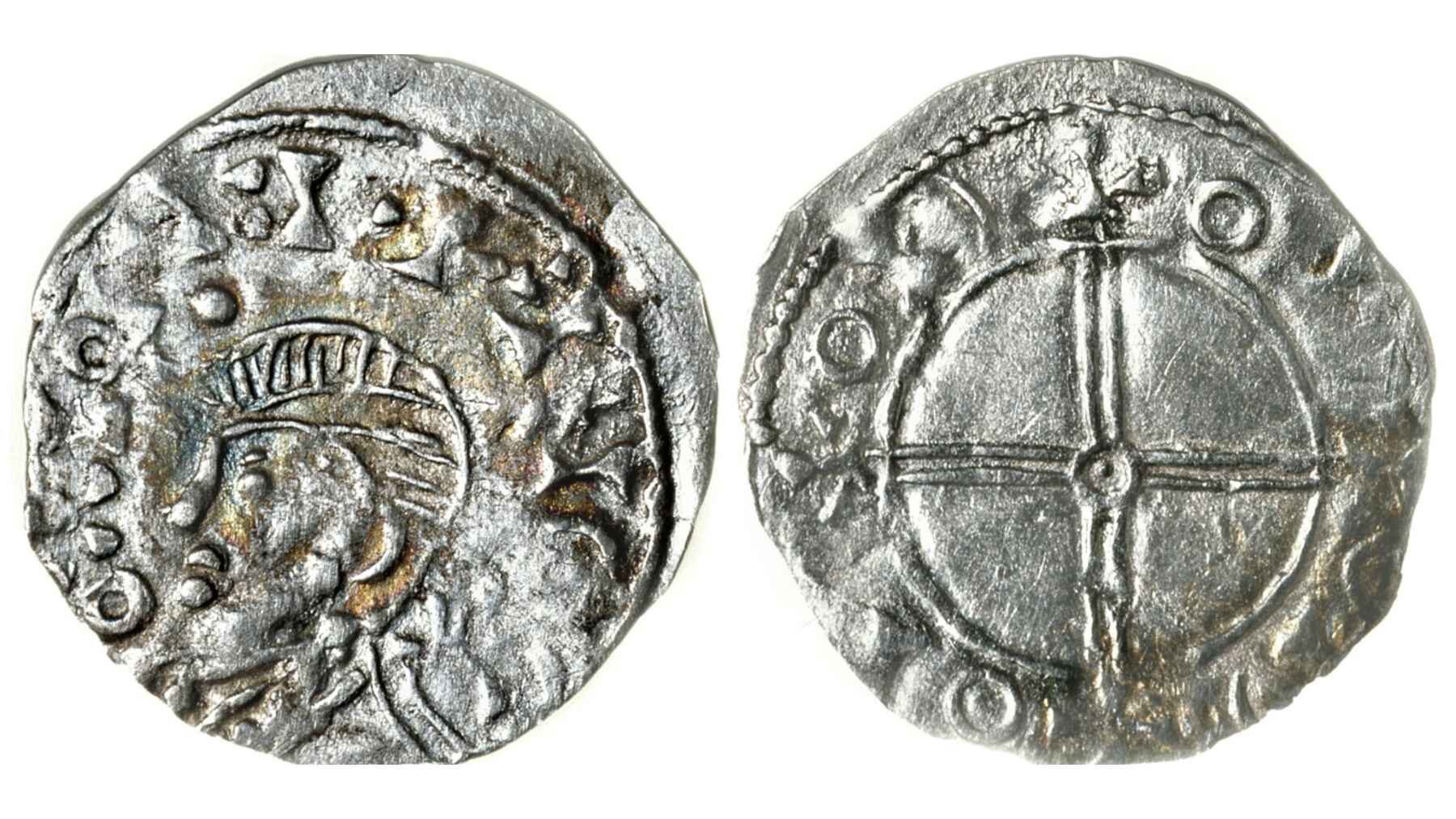
Morten Eek, a Norwegian metal detectorist thought so little of a small, round metal object he unearthed in a field next to Utstein Abbey that he tossed it in a box with buttons and other scraps. Months later, experts identified it as a silver coin minted during the reign of Magnus Barefoot, who ruled Norway from 1093 to 1103 and is often remembered as the country’s last Viking king.
The discovery is the first known example of this exact coin type found on Norwegian soil. More surprising still, the coin had been deliberately rebuilt with a copper plate, suggesting that it acquired a second life as a piece of jewelry after it stopped serving as money.
A spring search that seemed uneventful
On a clear day in April 2025, Eek and other members of the Rygene Detector Club searched a field directly north of Utstein Abbey. After several quiet hours, his detector led him to a small object lying 4 to 6 inches deep in the plow layer.
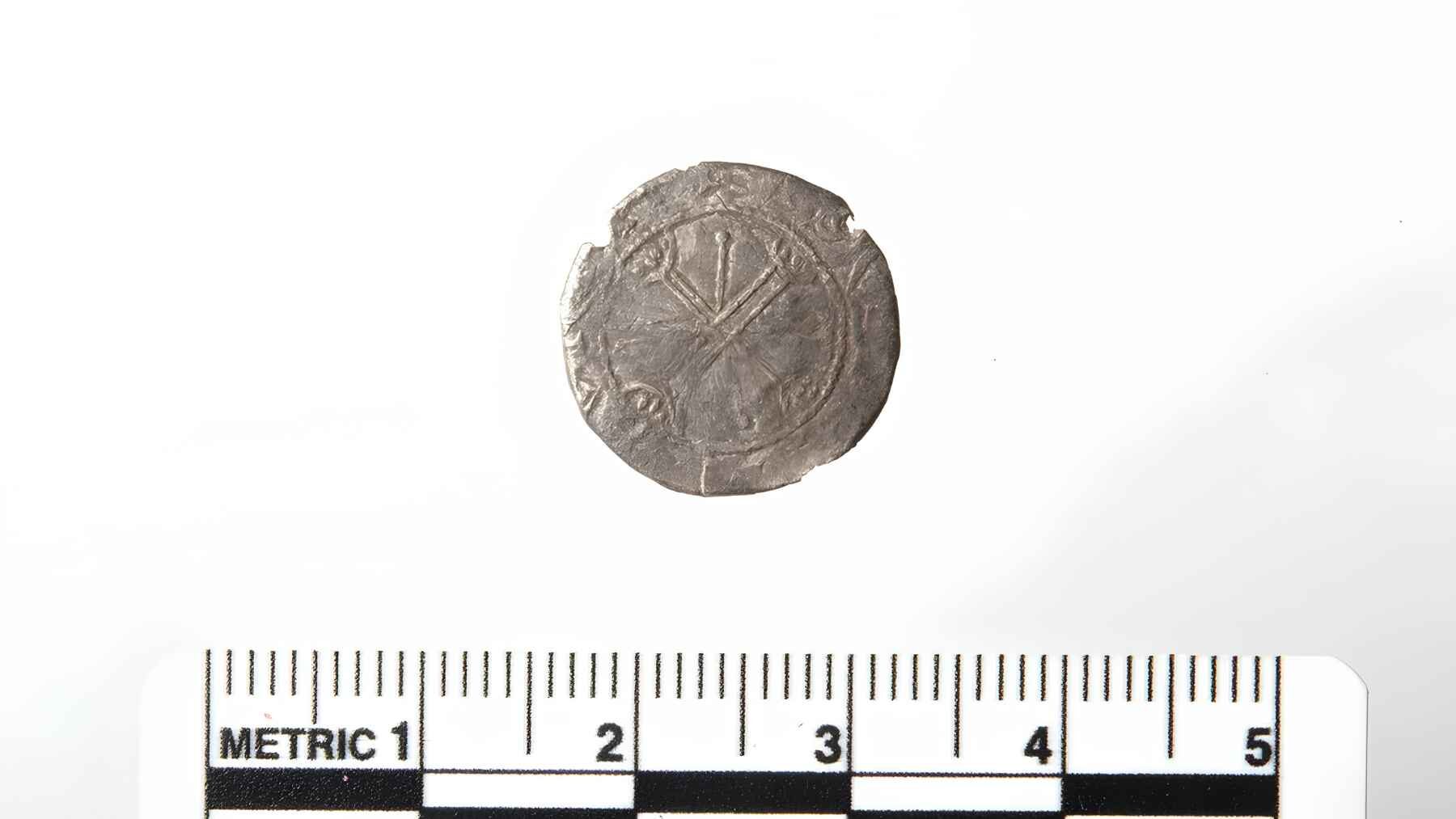
One face looked bright and silvery, while the other showed copper and a dark central spot. It resembled the old clothing buttons detectorists often uncover, so Eek took it home and placed it in a box with worn modern coins, buttons, and pieces of scrap metal.
The detail that changed everything
A couple of months later, club members looked through the box again. This time, the shiny face and its unusual cross stood out, and a comparison with C. I. Schive’s 1865 reference book on medieval Norwegian coins suggested that the “button” was something far older.
Under a magnifying glass, they could also see that the silver edge had been folded around a copper plate. The detectorists shared the find with specialists, and it was quickly delivered to the University of Stavanger’s Museum of Archaeology for examination.
A coin given a second life
Researchers found that someone had placed a copper disc against one side of the coin and bent its rim around the added metal. Two rounded notches along the edge may mark where a chain, loop, or similar fitting was once attached.
Why alter a royal coin this way? The precise answer is unknown, but the modification suggests it may have been suspended or worn as an ornament, turning everyday currency into an object with a more personal meaning.
X-rays uncovered a hidden griffin
The visible face carries a “cross-over-cross” design made from double lines, with small bowl-like shapes and dots at the ends of the arms. Only fragments of the inscription around the rim survived, so researchers could not read it securely.
Removing the copper plate would have damaged the artifact and erased part of its later history. Instead, the team used X-ray imaging, which revealed a griffin on the concealed face, a mythical creature combining features of a lion and a bird of prey.
What makes the coin so rare
Before the Utstein discovery, only four two-sided coins were known with this pairing of a griffin and a cross-over-cross. One came from a hoard found at Sandøy in the Faroe Islands in 1863, while three were recovered from the Lundby Krat hoard near Aalborg in Denmark.
The newly found coin appears to share a die with one of the Danish examples. That link matters because repeated die patterns can point to a limited production run, and only about 100 coins from Magnus Barefoot’s reign are known across 12 finds.
Magnus Barefoot changed Norway’s silver coins
Magnus became king in 1093 after his father, Olaf Kyrre, whose long reign was remembered as comparatively peaceful. Earlier Norwegian rulers had steadily reduced the silver content of their currency, but Magnus introduced a reform that cut the coins’ weight while keeping roughly the same amount of silver, raising their fineness to about 90%.
Over time, his pennies became smaller but much purer. The reform offers a rare glimpse of Magnus as a domestic ruler, not merely the warrior king remembered for campaigns across the western seas.
The king behind the coin
Magnus worked to extend Norwegian control over the western islands, including the Hebrides and the Isle of Man. His reign ended in 1103 when he was killed in an ambush during a campaign in Ireland, at about 30 years old.
That history gives the coin political weight, but its later conversion into jewelry adds a human twist. Someone valued it enough to reshape it, carry it, or display it, although researchers cannot yet say when that transformation happened.
Utstein adds context, but not a final answer
The field around Utstein has produced more than 10 medieval objects during the past 15 years, and geophysical surveys have identified traces that may belong to a Viking Age trading place. The interpretation has not yet been confirmed by excavation, so the coin alone cannot prove that Magnus had a direct connection to the site.
It may also have circulated for years, or even generations, before becoming jewelry and eventually entering the soil. At only 0.81 grams, the object is tiny, yet it preserves several chapters of history in one battered piece of metal.
Why one small find matters
The museum notes that scholars may be only “one large treasure find away” from changing their picture of Magnus Barefoot’s coinage. Until that happens, every carefully recorded discovery helps researchers reconstruct how money was made, moved, reused, and understood as the Viking Age gave way to the Middle Ages.
The official account was published by the University of Stavanger’s Museum of Archaeology.