The eastern black rail is a federally threatened marsh bird that would rather run than fly. At first glance, it can look like a mouse scurrying along the ground.
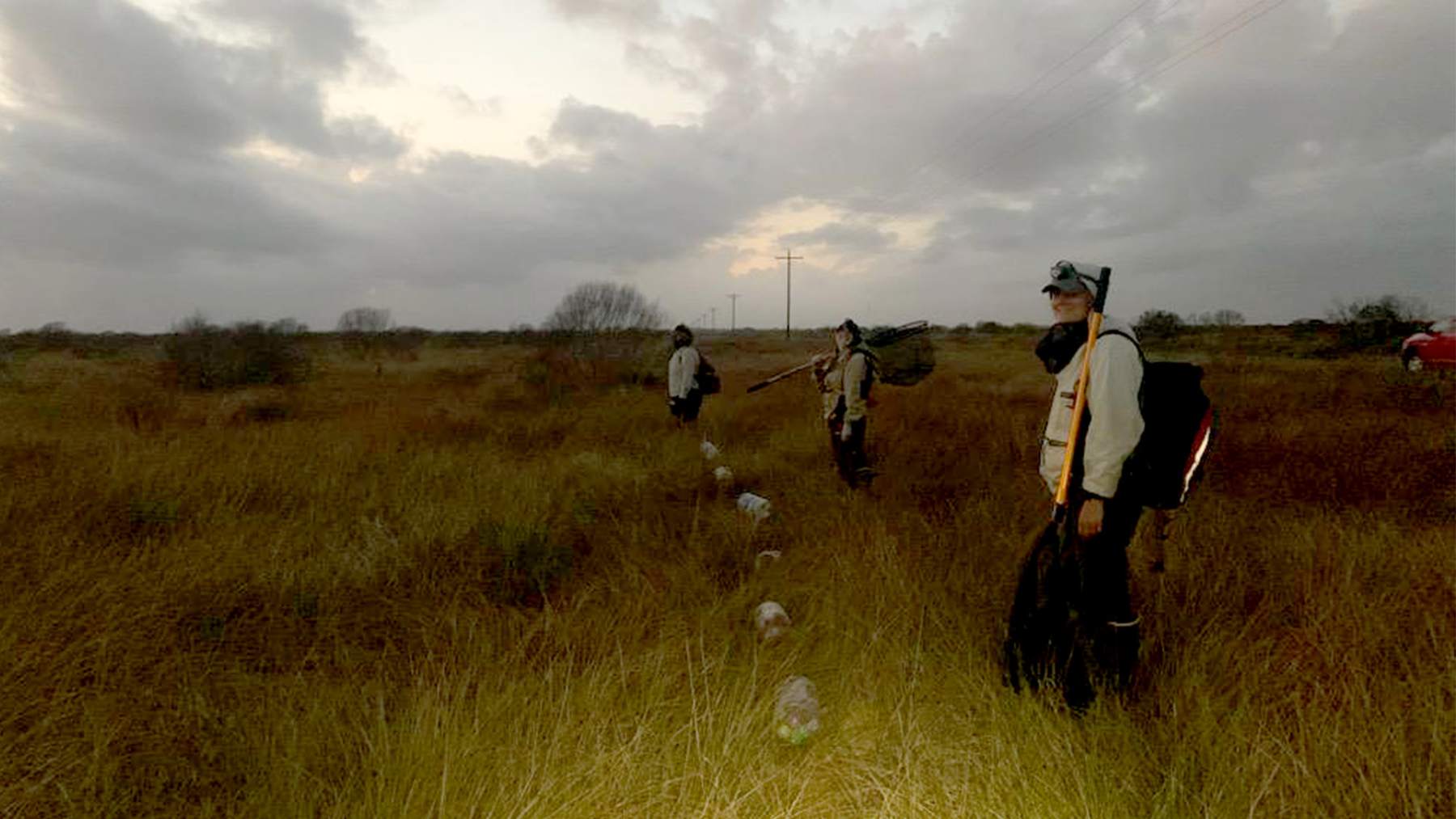
Finding one takes an unusual trick. On the Bolivar Peninsula in Texas, waterfowl ecologist Auriel Fournier and a team of graduate students drag a rope through wetland grass at night to flush the birds out.
Fournier described the fieldwork in an account published November 20 by the University of Illinois Urbana-Champaign. The work is part of a larger project on how fire affects coastal marshes and the threatened birds that live in them.
Plastic bottles full of cat toys
Several plastic bottles hang from the rope, each holding two or three noisy cat toys. The team walks through the dark with the line, listening to the toys jingle over buzzing mosquitoes and wind in the grass.
When a bird flies a short distance away from the commotion, a student calls out “Rail! Rail!” and the group stops. The team then approaches slowly and lowers a dip net over the bird where it landed.
Photos from the fieldwork are courtesy of the Forbes Biological Station. The account appeared in the university’s Behind the Scenes series of short posts from Illinois researchers about their work.
The smallest rail in North America
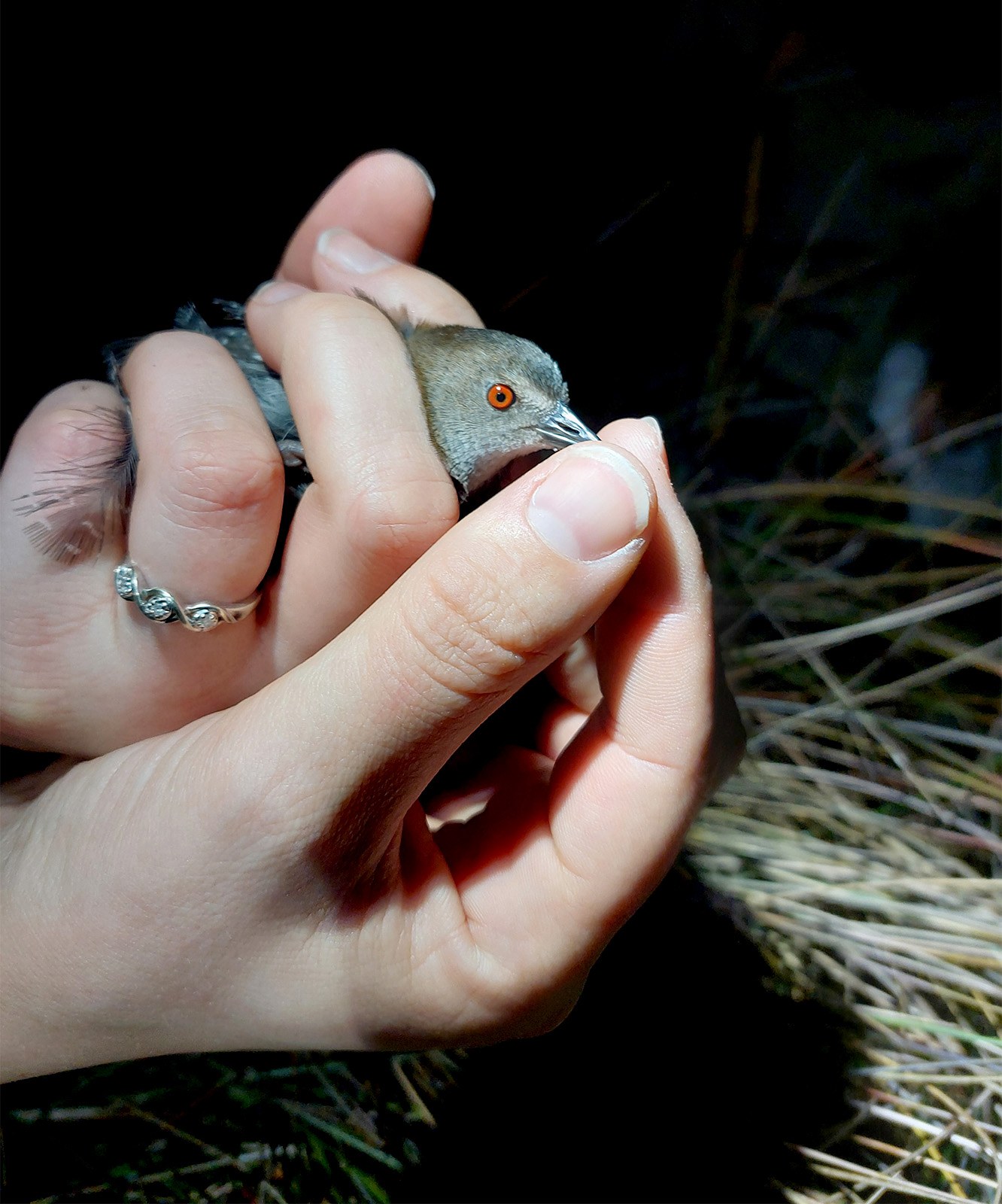
Eastern black rails are about the size of a sparrow. According to the US Fish and Wildlife Service, adults measure 4 to 6 inches long and weigh about 1.2 ounces on average.
The birds are gray-black with white speckles, a chestnut nape and red eyes, the agency says. They spend most of their time on the ground, hunting invertebrates and seeds and hiding in dense vegetation.
Fournier wrote that the bird is small enough to wrap a hand all the way around it. The species’ life span is estimated at 5 to 9 years, according to the agency.
The bird is one of five recognized subspecies of black rail, the agency notes. Two live in North America but do not overlap, and the other three are found in South America.
One feather to track migration
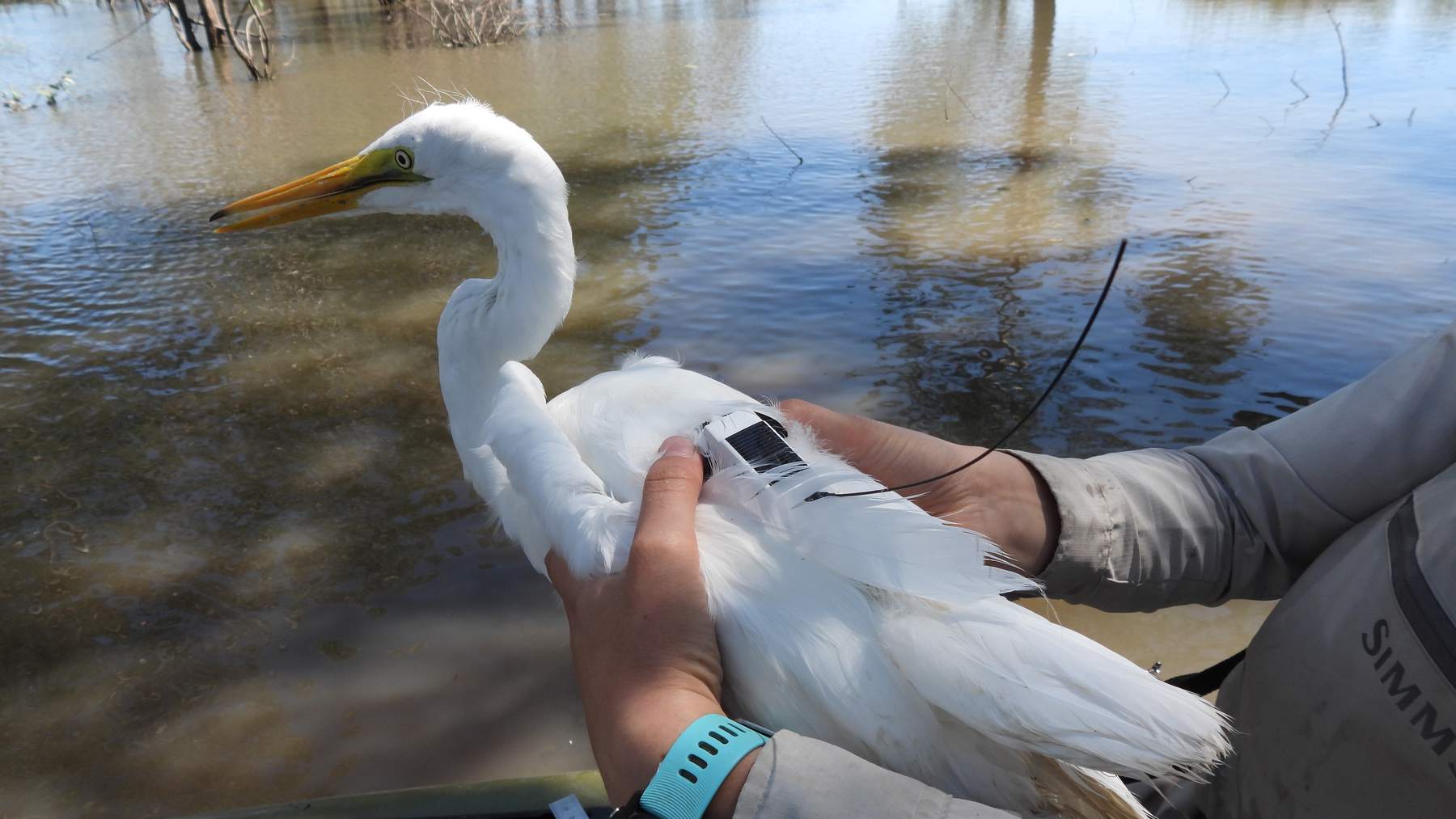
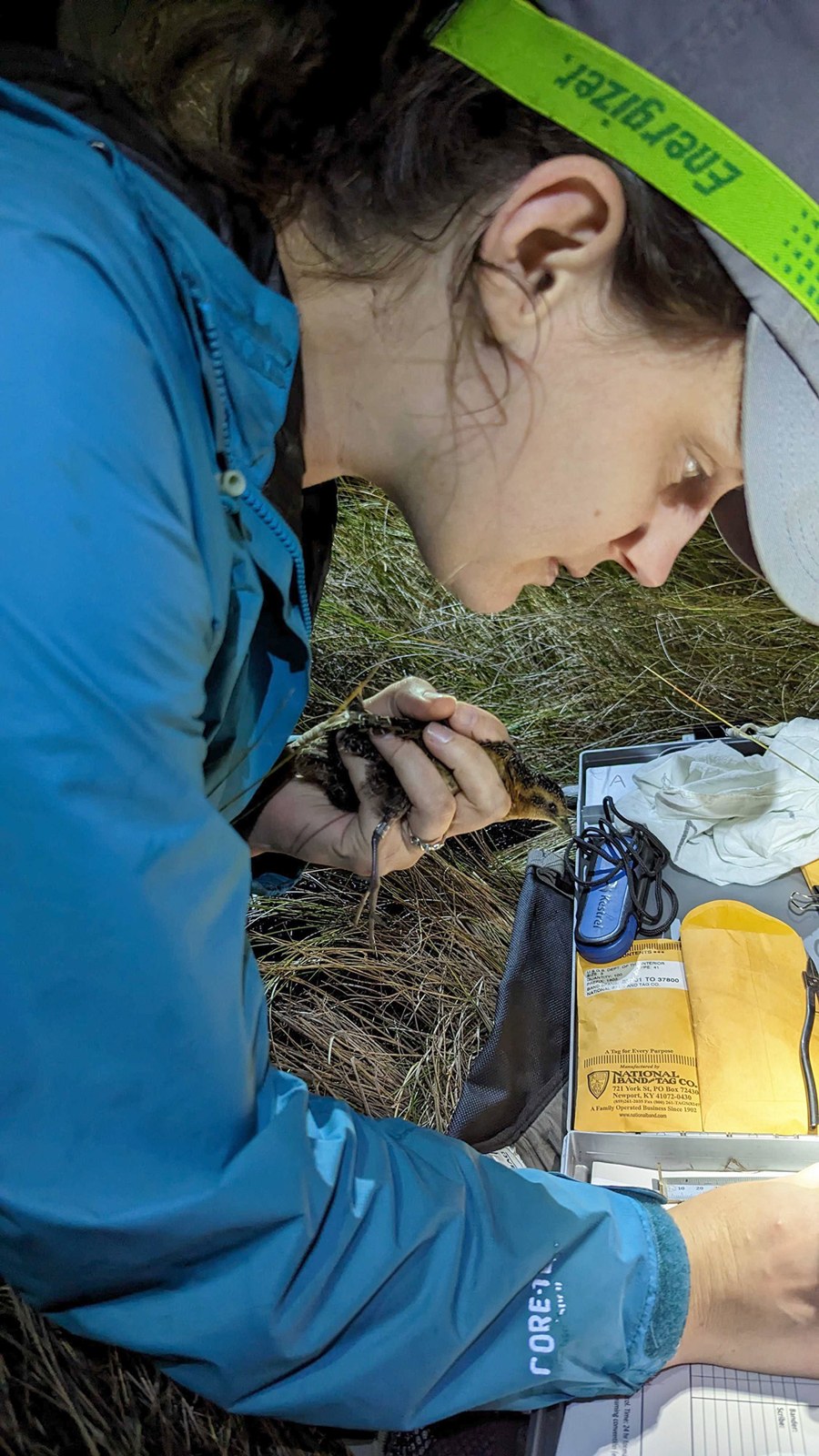
Each captured rail gets a small metal band engraved with a unique number. That way, the team can identify the same bird if it is ever caught again.
The researchers also take measurements and standardized photos and remove a single feather. The feather will show whether the bird lives on the Texas coast all year or only spends the winter there before heading north, probably to Colorado or Kansas.
Many migrating birds travel unseen. In a separate project, BirdCast radar estimated that 1.25 billion birds were in the air over the US on a single night in October 2025.
Once the data are collected, the bird is set down on the ground under a dim headlamp. Fournier described it pausing, looking around and then running off into the grass.
Where the birds still hold on
Eastern black rails live in coastal wetlands along the Gulf and Atlantic coasts, with small inland populations mostly in Colorado and Kansas. The Fish and Wildlife Service lists Texas and Florida as the current strongholds along the southeastern US coast.
North Carolina, a historical stronghold, shows a severe decline in occupied sites, the agency says. Threats include habitat loss, altered water flows, climate change, spills and human disturbance.
Pairs build hidden nests of grasses, rushes or sedges over moist soil or shallow water. Clutches average seven eggs, and both parents incubate them for about 17 to 20 days, according to the agency.
The agency determined that designating critical habitat is not prudent. Doing so would more widely announce the species’ exact locations, and the birds are extremely vulnerable to disturbance.
The same Texas coastline also supports other protected species. This year, Kemp’s ridley sea turtles dug 697 nests on the Texas coast, a 55 percent jump from 2025.
Testing how fire shapes marshes
Fournier holds a grant from the National Oceanic and Atmospheric Administration’s RESTORE Science Program. The project studies the effects of fire in coastal high marshes along the Gulf Coast.
It looks at how black rails and mottled ducks respond to different prescribed fire regimes. The aim is to find fire practices that support these vulnerable species and give land managers the data to manage their habitat.
The team spends several hours a night searching, for two weeks, as part of the project. After each release, they pack up their gear, pick up the rope and keep searching for the next rail.
Photos: Forbes Biological Station / University of Illinois