Along the coast of northeastern Jamaica, the remains of ancient reefs sit just meters from living ones. Those fossils could help show where Caribbean corals might survive a warming future.
University of Texas at Austin researchers used them to see which corals ruled reefs there 125,000 to 130,000 years ago. The University of Texas at Austin said on November 20 that the record could help guide reef rehabilitation.
The best spots for conservation include parts of the northern Caribbean, the Florida Keys and the Yucatan Peninsula, according to the university. Caribbean reefs have declined sharply over the past 70 years.
A baseline from warmer times
The fossil reefs date to the Late Pleistocene, a time known for warm periods between ice ages. According to lead author Claire Williams, those warm spells are good analogs for what the planet is projected to experience in about 50 to 100 years.
“Because we were studying already damaged reefs (in the modern-day Caribbean), we had a limited baseline of what a healthy reef used to look like and were missing understandings of things like resilience,” said Williams. Williams led the research on the fossil and modern reefs while earning a doctorate at the UT Jackson School of Geosciences.
The findings appear in two papers, in PALAIOS and Conservation Biology. Williams is now a postdoctoral researcher at the Georgia Institute of Technology and Texas A&M University.
Walking a reef instead of swimming
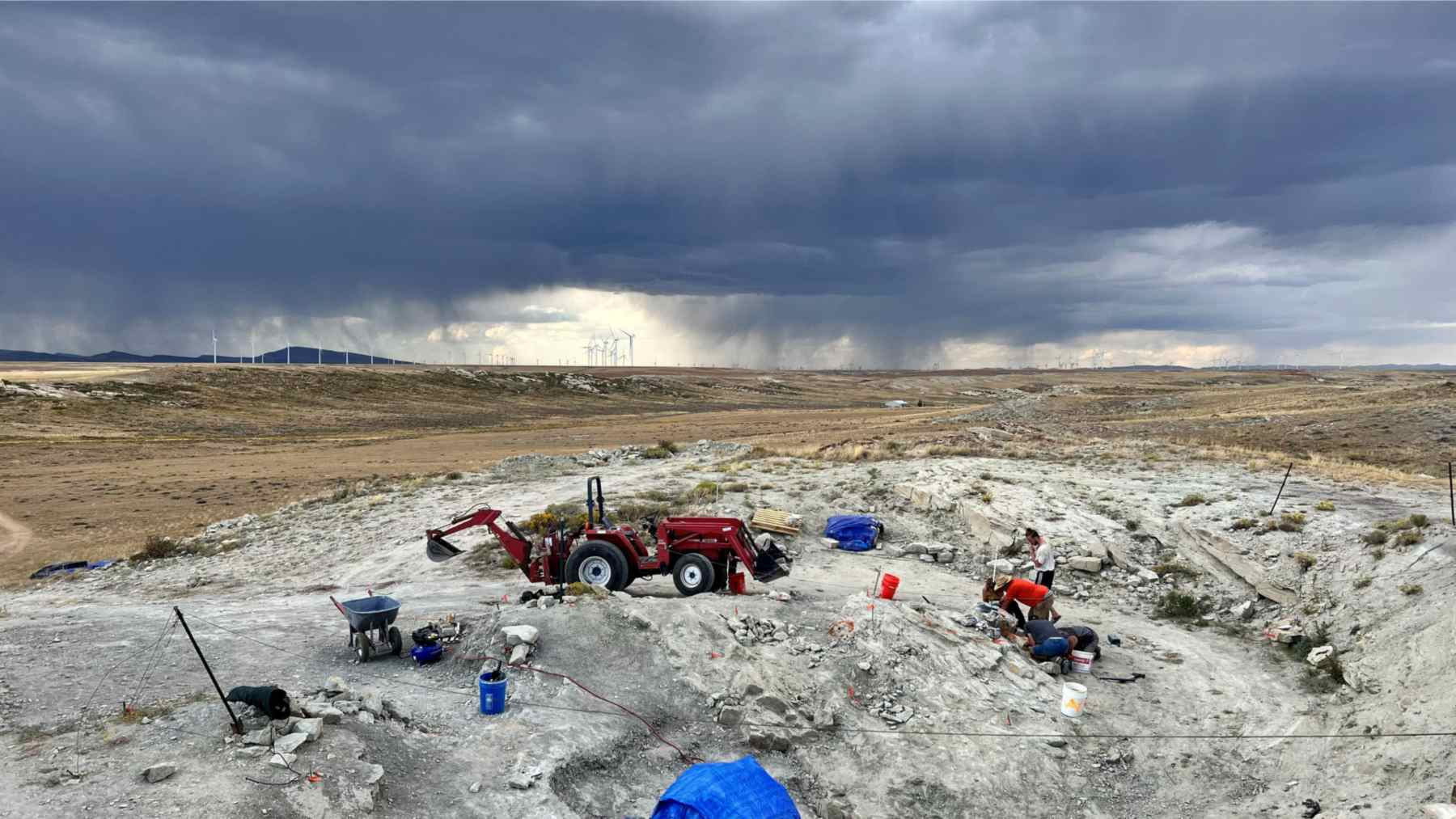
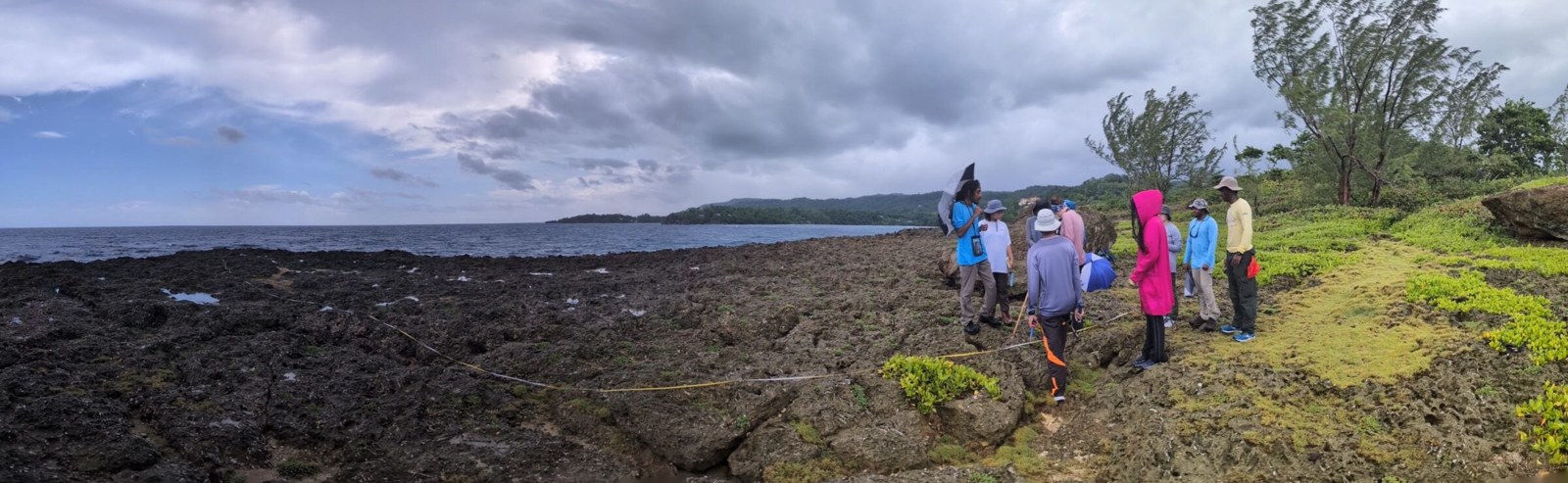
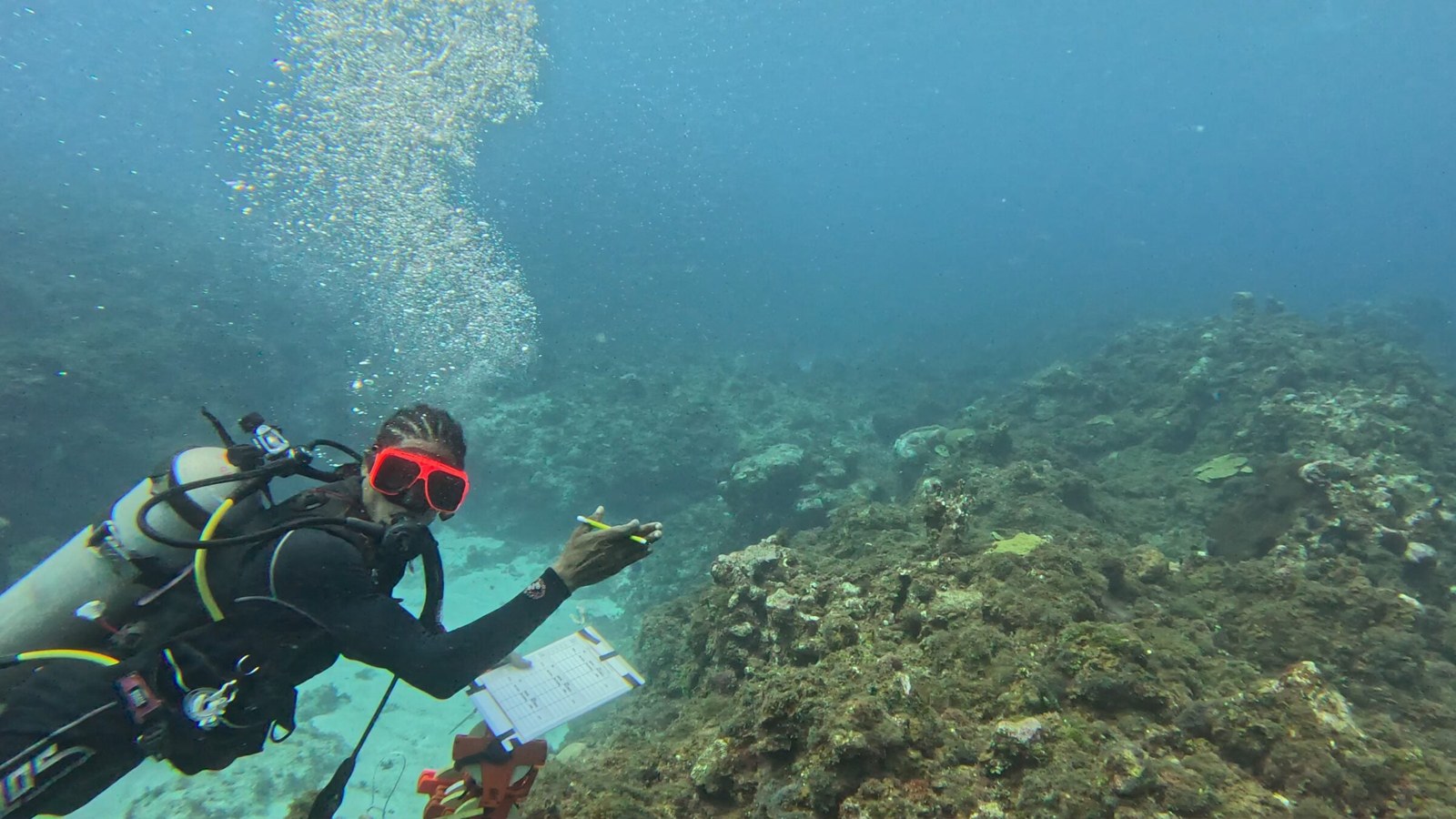
These ancient reefs now sit above sea level. So instead of swimming above them, the team walked along them, adapting a transect method used to monitor modern corals.
The researchers photographed the fossils to estimate how many corals there were and how they were spread out. They then compared those numbers with coral species at modern reef sites.
The title of one of the two papers, in PALAIOS, describes the Pleistocene reef as a healthy ecological baseline for a sanctuary in northeast Jamaica. The team worked at two sites in that part of the island.
Branching corals have largely died
Branching corals called Acropora, including elkhorn coral (Acropora palmata) and staghorn coral (Acropora cervicornis), were abundant during the Pleistocene. At the modern sites, the team found them largely dead and covered by algae.
Most remaining corals are Porites astreoides, a rounded species. Williams said it can recover quickly after disturbances but does not provide helpful reef structure.
“These big branching species provide a lot of habitat and offshore protection. With that gone, we’ve lost that function on the reef,” Williams said.
The same two species have been hit hard in US waters as well. In Florida, a 2023 heatwave killed 98% to 100% of wild staghorn and elkhorn coral in the Keys, and coral nurseries now help grow replacements.
Gardening corals is not enough
Planting more Acropora on damaged reefs is not a simple fix, said co-author Rowan Martindale, an associate professor in the Jackson School’s Department of Earth and Planetary Sciences.
“We can nurture and transplant new, healthy corals from nurseries to damaged reefs, often referred to as coral gardening, but if they are in a place that’s too hot in the future, they’re not going to survive,” Martindale said.
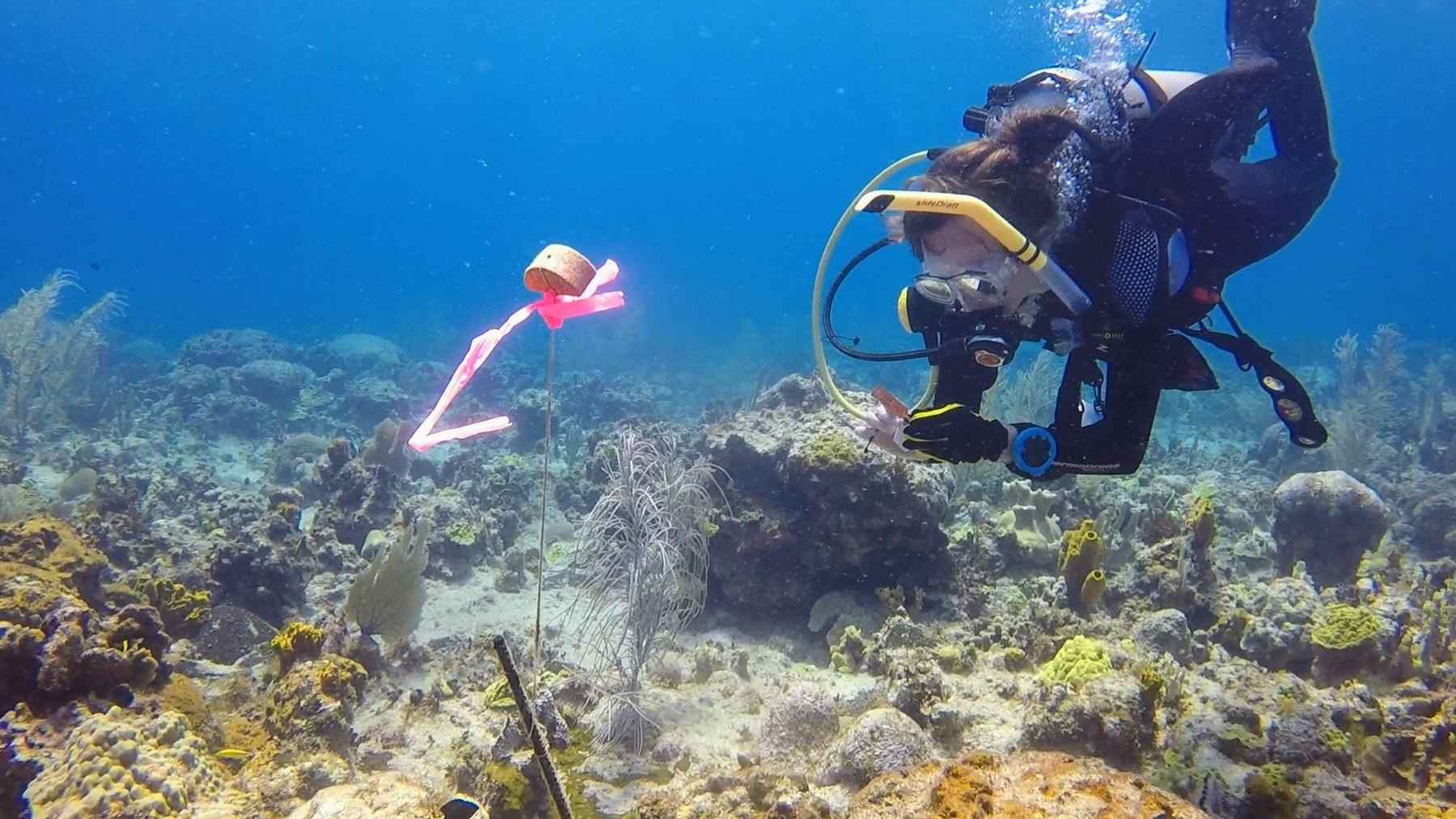
Many corals transplanted by the Alligator Head Foundation died in the heat-induced bleaching of summer 2023. The group works on marine conservation in East Portland, Jamaica.
Heat waves have reshaped marine life along US coasts in other ways. Researchers found that size mattered for the mussels that died on a Washington shore during the 2021 heat dome.
Mapping where corals could last
The team also studied the water temperature and salinity that ancient corals could tolerate. They added fossil data from the mid-Holocene, 5,000 to 7,000 years ago, to get a more recent set of points.
Adding climate models, they mapped reef areas projected to have the right salinity and sea-surface temperature for reef-building species. The areas flagged as best suited include parts of the northern Caribbean, the Florida Keys and the Yucatan Peninsula.
Ocean warmth is already changing other ecosystems too. On the West Coast, warm water has turned Monterey Bay into a blue desert, with plankton crashing and humpback whales largely absent.
A starting point, not a guarantee
Williams said the findings should be seen as a starting point. Reefs still need regular monitoring for disease, pollution, natural disasters and other threats to coral survival.
“The fossil record can improve our predictions and provide best-case ideas of where things might be able to survive,” Williams said. Martindale added that reefs matter to people who rely on them for fish and protection from hurricanes.
The research was funded by the National Science Foundation and UT Austin’s Program in British, Irish and Empire Studies. Scientists from the University of the West Indies, the Alligator Head Foundation and the University of New Mexico also took part.
Photo: Rowan Martindale