“Originally we were going to grow coral and sell it to the aquarium trade, just like the 4-H kids up north raised and sold pigs and chickens,” Ken Nedimyer told CORAL magazine in 2009. “We never did sell any.”
Nedimyer, then a tropical fish collector in the Florida Keys, started propagating staghorn coral around 2000 with his daughter Kelly for her 4-H project. They turned it into an outreach and restoration project instead.
In October 2003 they were given their first planting site, on Molasses Reef. “Six corals were planted initially,” Nedimyer said in the 2009 interview. “Now, six years later, there are at least 500 direct descendants of those original plantings.”
A 2004 pilot project funded through a NOAA and The Nature Conservancy partnership followed, and Nedimyer founded the Coral Restoration Foundation in 2007.
Trees that grow coral
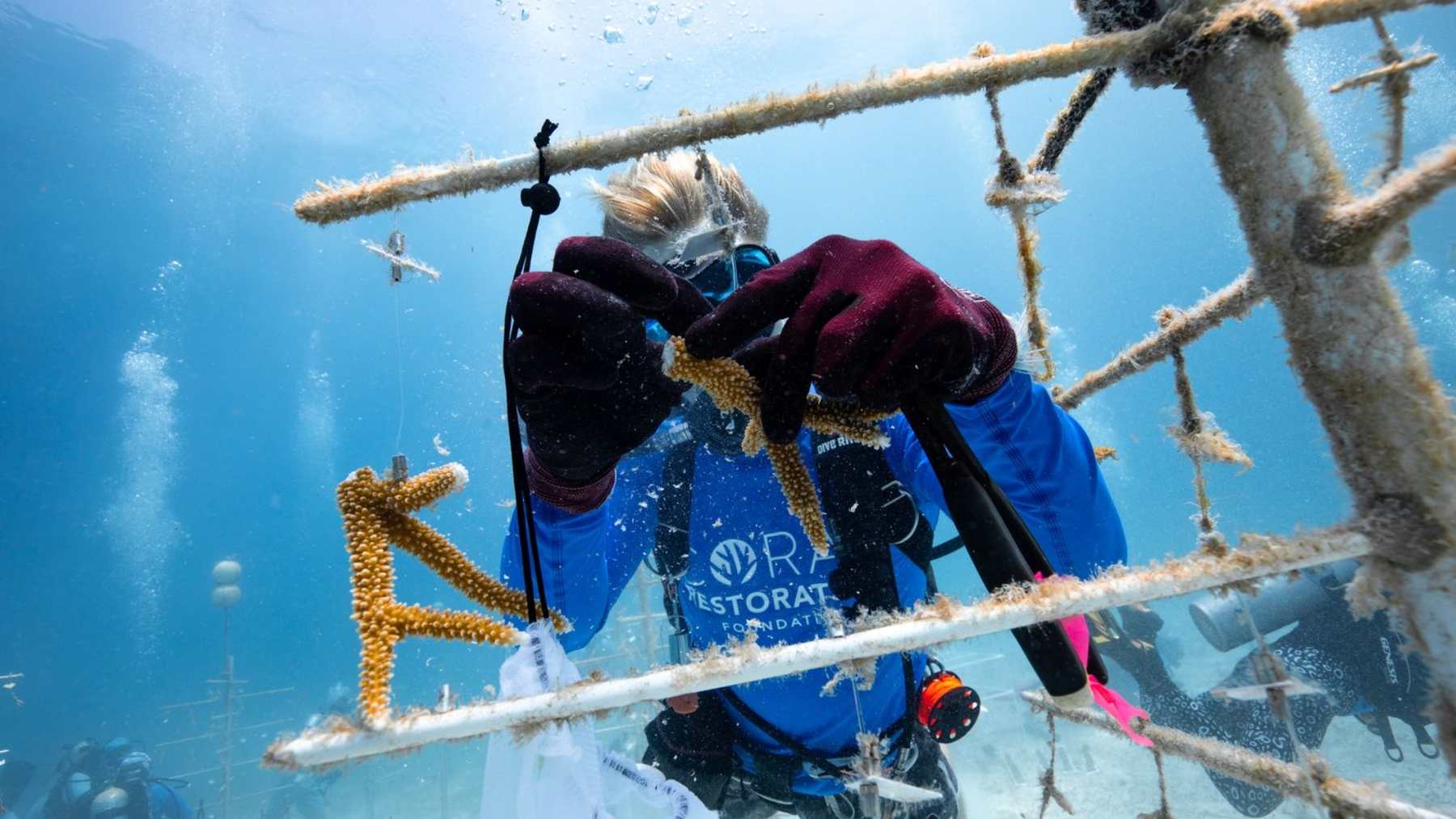
The foundation says it invented the Coral Tree in 2011. Each tree is tethered to the seafloor and held up by a float below the surface, and coral fragments hang from its branches on monofilament line. Divers clean the trees regularly so the corals don’t have to compete with other organisms for space or food.
Branching fragments grow into “reef-ready” colonies in six to nine months, according to the foundation. In 2009, Nedimyer said a three-quarter-inch cutting in his nursery could grow up to 15¾ inches of branches in a year, about 20 times its starting length.
The foundation’s Florida program now runs four principal production nurseries with nearly 1,000 trees and says they can raise more than 50,000 corals a year. The Tavernier nursery alone covers an acre and a half of seafloor and holds more than 500 trees, so over half of the total. The collection includes more than 600 genotypes across 20 coral species. A genotype is one genetic individual, so many fragments can be copies of the same coral.
The methods also traveled. In Bonaire, Buddy Dive Resort and three island residents sought out Nedimyer to bring reef restoration to the island, a collaboration that led to Reef Renewal.
How many outplanted corals survive
A 2020 study in PLOS ONE by Ware and colleagues looked at 2,419 outplanted staghorn colonies from 20 restoration projects monitored between 2007 and 2015. Survival was generally high in the first two years and then declined.
Among seven groups followed for at least five years, survival ranged from 4% to 89%. Projections put it between 0% and about 10% after seven years. The authors wrote that their results support the federal recovery plan’s conclusion that reducing stressors “is required before significant population growth and recovery will occur.”
“We need to be mindful that reefs take thousands of years to develop, corals take tens of years to grow into a large colony,” Phanor Montoya-Maya, the foundation’s restoration program manager, told NOAA’s Climate.gov in 2024. “Why are we expecting that whatever we do today, we need to see a result tomorrow?”
The summer of 2023
A record marine heatwave hit Florida in 2023. A study published in Science on Oct. 23, 2025, found that mortality of staghorn and elkhorn coral reached 98% to 100% in the Florida Keys and Dry Tortugas. The two species “still exist in small numbers but no longer play their vital role in building and sustaining reef ecosystems,” the University of Miami said.
“We’re running out of time,” said Ross Cunning, a co-first author and research biologist at Shedd Aquarium.
Another study in Conservation Biology by 30 authors led by Erinn Muller, including Montoya-Maya and Nedimyer, concluded that restoration infrastructure, emergency action and land-based gene banks helped keep the two species from disappearing from the region and preserved much of their genetic diversity.
A second gene bank in the water
On Aug. 20, 2026, the foundation reported moving about 1,000 corals representing 130 genotypes from Tavernier to its Elbow Nursery, the first stage of a planned transfer of about 3,500. That first move is under a third of the plan, and its 130 genotypes are roughly a fifth of the more than 600 in the foundation’s Florida nurseries. The release tied the move to a strengthening El Niño.
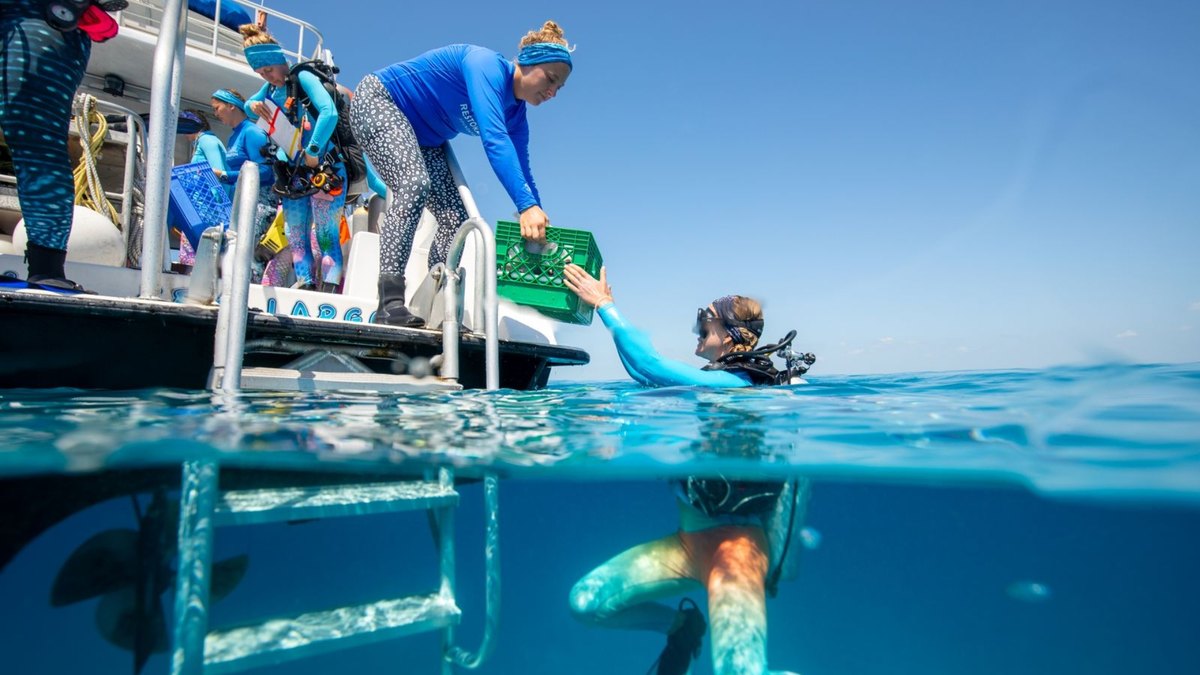
“We saw in 2023 how much genetic diversity can disappear in a single summer,” Montoya-Maya said in the release. “We cannot control the temperature of the ocean. But we can reduce the risk of losing important genetic stock.”
Photo: Coral Restoration Foundation