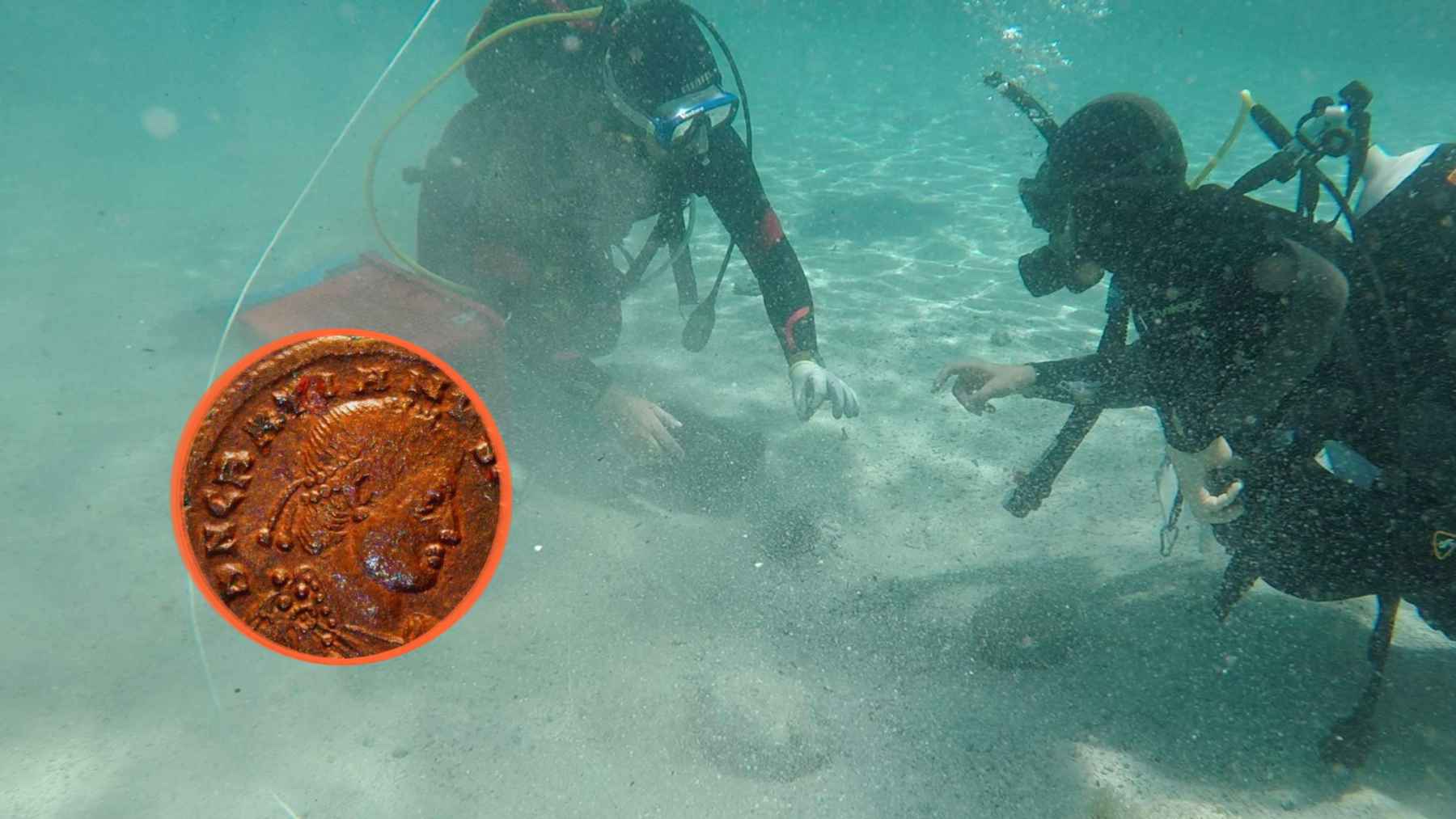
A flash of metal in the seagrass off Sardinia has turned into one of Italy’s most remarkable archaeological finds in recent years. On May 25, 2023, a diver near Arzachena spotted the first signs of a huge deposit of late Roman bronze coins about 330 feet from Capriccioli beach and about 10 feet below the surface.
The hoard includes at least 30,000 coins and may reach 50,000, according to early estimates based on the weight of the recovered material. That number is still a range, not a final count, but the discovery is already big enough to raise one irresistible question. Did these everyday coins spill from a ship that has not yet been found?
A glitter in the seagrass
The coins were found in a sandy opening between the beach and Mediterranean seagrass. Divers later identified two broad areas where the coins were spread across the seafloor, a pattern that matters because ancient objects do not usually scatter that way without a story behind them.
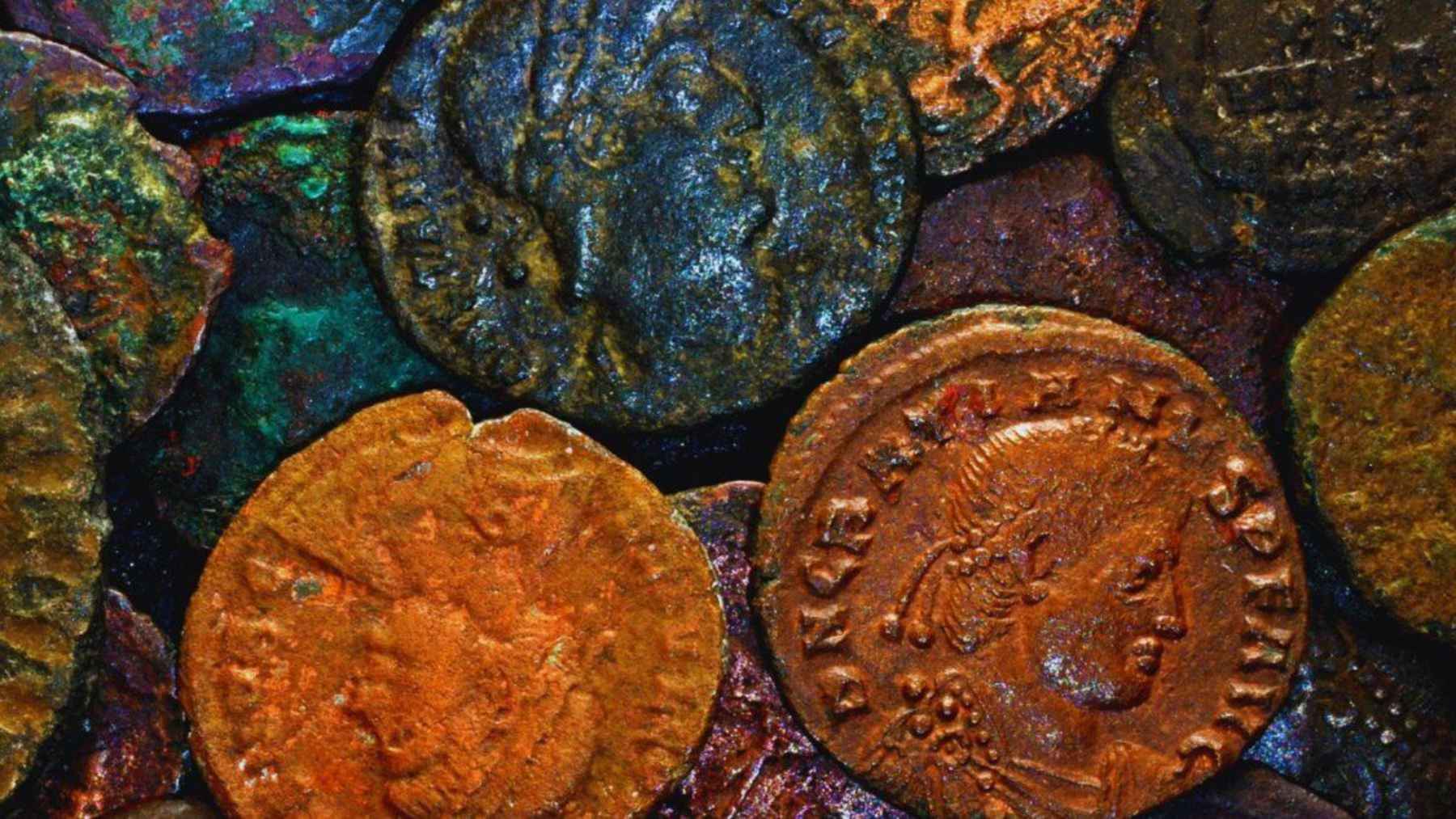
The coins are known as folles, small bronze pieces used in the late Roman world. Think of them less like a royal treasure and more like ancient pocket change, the kind of money that could move through many hands in daily life.
Why the number matters
Even the low estimate is enormous. Italy’s culture ministry noted that the Sardinian deposit may be larger than the 22,888 folles recovered at Seaton in the United Kingdom in 2013, a comparison that helps show why specialists are paying attention.
Later reporting from a public presentation in Sassari described the working figure as roughly 40,000 folles. A studied sample placed the coins in a tight time window, from A.D. 324 to no later than A.D. 345, which puts them deep in the age of Constantine and his family.
A possible wreck
Archaeologists also recovered fragments of amphorae, which were narrow-necked storage jars with two handles. Amphorae were the shipping containers of the ancient Mediterranean, used to move goods across busy sea routes.
That is why the find is so intriguing. Coins spread across two underwater areas, plus broken transport jars, could fit the scene of a lost cargo, but there is a big difference between a clue and a conclusion.
So far, officials have treated a wreck as a possibility, not a confirmed discovery. The ministry said the shape and position of the seabed could preserve important remains of a ship, while later local reporting said no ship remains had yet been found.
Preserved for 1,700 years
The condition of the coins may be just as important as the number. The official statement said the recovered coins were in an exceptional and rare state of preservation, with only four pieces damaged and even those still readable.
That matters because coins are tiny historical documents. Their markings can help experts identify rulers, mints, trade patterns, and the movement of money across the Roman Empire. A handful of coins can tell a story, but tens of thousands can change the scale of the questions.
The court dispute
The discovery did not end at the waterline. In a January 5, 2026 ruling, TAR Sardegna rejected the finder’s claim for a statutory reward, after the court reviewed whether the discovery should legally count as accidental.
The court’s reasoning turned on a narrow point. It cited the use of a metal detector and prior knowledge that the area could contain archaeological material, while also noting that a metal detector is not automatically proof of an archaeological search in every possible case.
That makes the case more than a treasure story. It is also a reminder that strict rules protect underwater heritage, even when the first person to see an object alerts the authorities.
Where the coins go next
For visitors, the next question is simpler. When can people actually see the coins?
Local reporting in December 2023 said part of the cleaned and cataloged material was expected to go to the Museo Civico Michele Ruzittu in Arzachena. The museum’s current archaeology page describes an exhibition with more than 200 artifacts from the local territory, but there is still no public confirmation there that the coin hoard is already on display.
That waiting period is not unusual. Large archaeological finds often need cleaning, cataloging, conservation, and legal decisions before they can become museum objects. Treasure may be found in a moment, but turning it into public history takes much longer.
Sardinia’s seabed still speaks
Luigi La Rocca, director general of archaeology, fine arts, and landscape for the region, called the Arzachena treasure “one of the most important coin discoveries” of recent years. His point was not only about the money itself, but about the seafloor that protected it for centuries.
The scene is easy to picture. A diver, a patch of seagrass, a metallic glint, and then a buried chapter of the Roman world waiting just offshore. If a wreck is eventually found nearby, the coins may become the opening page of a much larger story.
For now, the safest conclusion is also the most exciting one. Sardinia has already given archaeologists a rare hoard of late Roman money, and the seabed may still be holding the answer to how it got there.
The official press release has been published on Italy’s Ministry of Culture’s website.