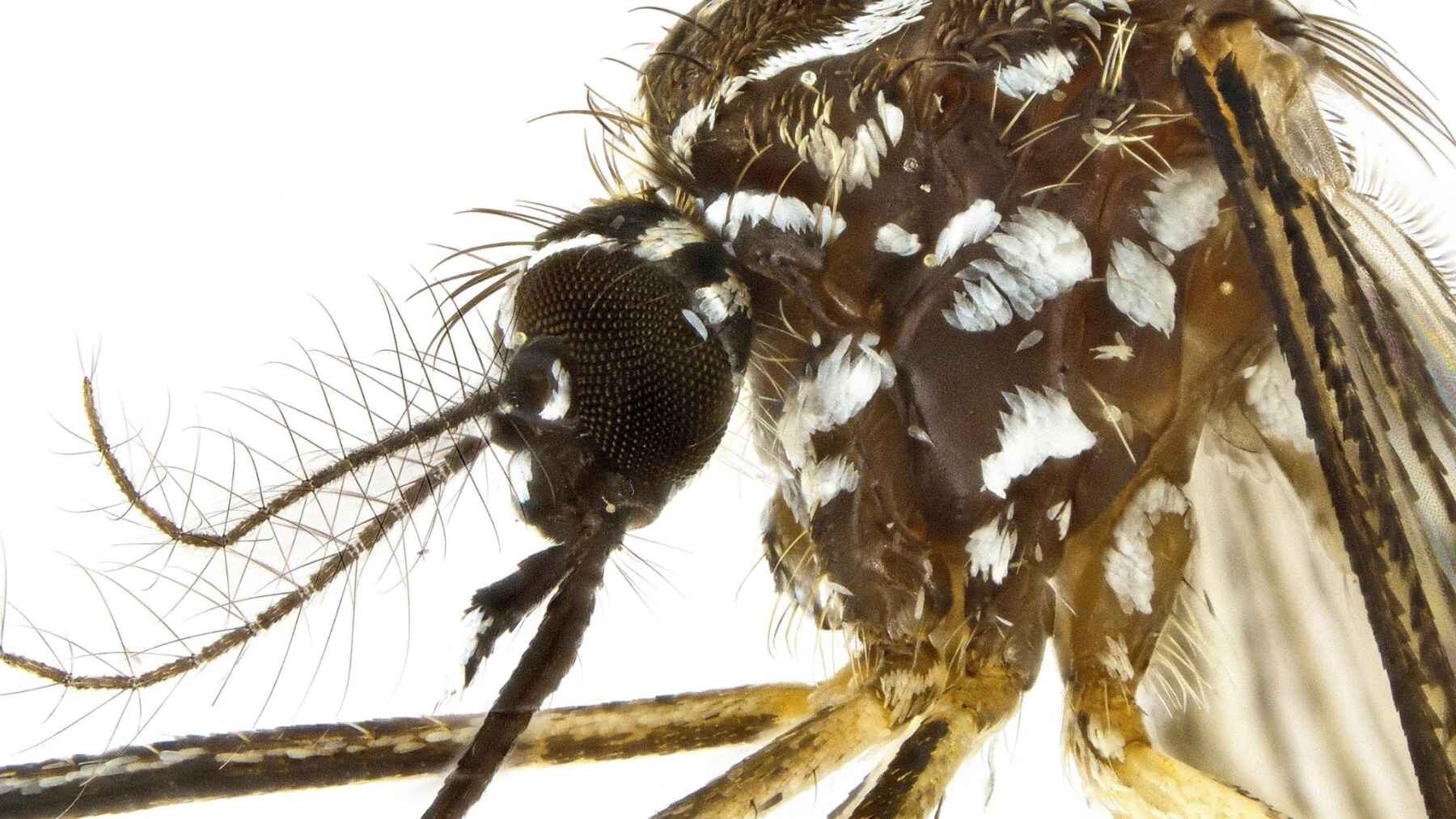
That faint buzz beside the bed is annoying enough. A new University of Delhi study suggests that a laboratory strain of Aedes aegypti, the mosquito known for spreading dengue, may be showing an early warning of lower vulnerability to α-cypermethrin, a widely used pyrethroid insecticide.
At the suggested diagnostic dose, 97.91% of the adult females died. That is indeed a very high kill rate, but it falls slightly below the 98% threshold used in the study to label a population as ‘fully susceptible’, so the finding calls for verification rather than panic.
A small gap with a serious message
Researchers tested 12 concentrations of α-cypermethrin in a World Health Organization bottle bioassay, using four replicate bottles for each dose. Each treated bottle held 20 young female mosquitoes for one hour, and mortality was recorded 24 hours later.
The diagnostic dose of 10 micrograms per bottle killed 97.91% of the insects. First author Dr. Rohit Lakhwani called it “an early sign these mosquitoes could be developing resistance,” but the experiment did not test whether the survivors could pass on that reduced susceptibility to the next generations.
What the insecticide targets
α-Cypermethrin is a type II synthetic pyrethroid that disrupts voltage-gated sodium channels in the insect nervous system. In plain language, it interferes with normal nerve signaling and produces the rapid knockdown produced with many mosquito-control products.
Repeated reliance on the same chemistry can favor insects with protective traits. Yet the colony in this experiment had been maintained without insecticide selection pressure, which makes the enzyme response intriguing while also requiring cautious reading.
The mosquito’s chemical cleanup crew
The team analyzed five enzymes using computer-based molecular docking and biochemical measurements. β-esterase showed the strongest predicted binding to α-cypermethrin, and its activity rose 21.41-fold at the concentration that killed half the mosquitoes and 17.46-fold at the concentration that killed 90%.
That enzyme may help break the insecticide’s ester bonds before the chemical reaches its nervous-system target. CYP450 activity also doubled, while α-esterase rose more than sevenfold, suggesting a layered defense rather than one simple biological switch.

Not every enzyme behaved the same way
The pattern was not an across-the-board surge. Glutathione S-transferase activity fell after exposure, and the study found that acetylcholinesterase had the weakest predicted binding of the five enzymes.
That is important to consider, because the result should not be reduced to a claim that two proteins have already made mosquitoes resistant. The evidence shows a strong short-term detoxification response, with β-esterase taking the lead and CYP450 making a meaningful contribution.
Why this matters for dengue
Aedes aegypti is the primary mosquito vector for dengue and can also transmit Zika, chikungunya, and yellow fever. The World Health Organization estimates that about half of the world’s population is at risk of dengue and that 100 million to 400 million infections are reported every year.
Dengue prevention still rests heavily on controlling mosquitoes and avoiding bites. A gradual decline in insecticide effectiveness could therefore complicate outbreak response, although this single laboratory study does not show that α-cypermethrin is failing in India or anywhere else.
The laboratory limit
The mosquitoes were not collected from neighborhoods, farms, or outbreak zones. They came from a colony acquired in 2009, supplemented in 2017, and maintained under controlled conditions without insecticide pressure.
The authors acknowledge that the slight survival seen at the diagnostic dose could reflect age, nutrition, environmental fluctuation, natural biological differences, or genetic drift during long-term colony maintenance. Field studies are now needed to determine whether the same enzyme pattern shows up in wild populations and transforms into stable resistance under real-world insecticide pressure.
How resistance can be slowed
The researchers point to insecticide rotation, chemicals that inhibit detoxification enzymes, biological control, and the removal of breeding sites as ways to protect existing tools. The bigger lesson is simple enough: spraying more of the same product is not necessarily the smartest response.
Households play a role, too. Empty and scrub water-holding containers each week, tightly cover stored water, repair screens, and follow every insecticide label rather than treating the yard based on gut feeling.
An early warning worth using
This study is not evidence that α-cypermethrin has suddenly stopped working. It killed almost 98% of the tested mosquitoes, and the study’s real value lies in revealing how defensive biology can start shifting before a control program notices an obvious failure.
By tracking β-esterase, CYP450, and field mortality now, public-health teams may have time to adapt their strategy before suspected resistance becomes established.
The study was published in the journal Frontiers in Tropical Diseases.