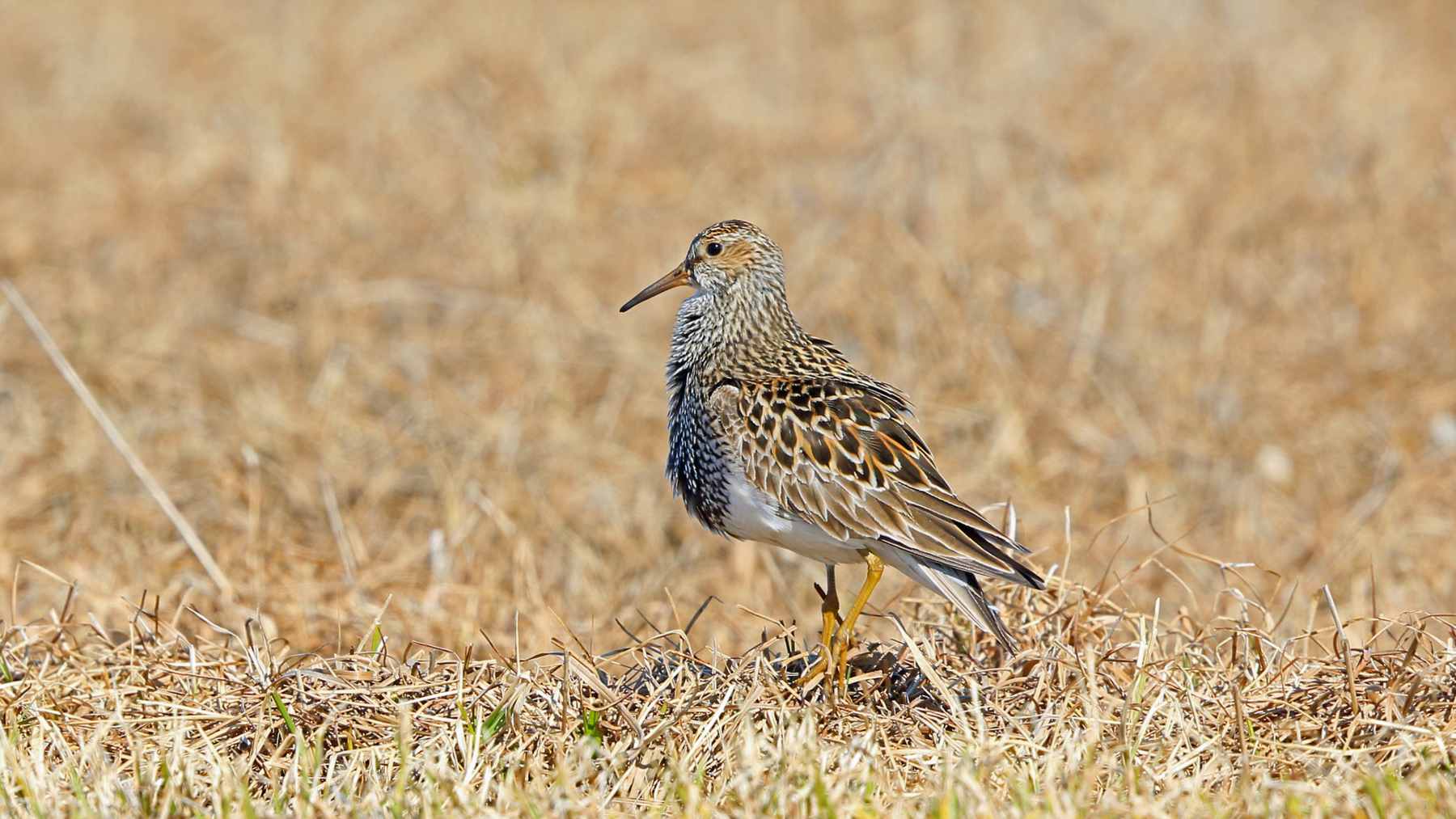
For years Bart Kempenaers watched male pectoral sandpipers fly into his team’s study area at Barrow, Alaska, the city now called Utqiagvik, stay a few days and then leave, and when his group radio-tagged 120 of the shorebirds, most turned out to be roaming across the Arctic during the breeding season and visiting up to 24 potential breeding sites. “It seems that flying cannot be all that costly for those animals,” Kempenaers said in 2017, when that work came out.
How long a male stayed at Barrow depended strongly on how many fertile females were around, and Mihai Valcu, a researcher in Kempenaers’ group, said then that “the males move through the whole breeding range to increase their chances to reproduce several times during one breeding period.” A 2025 study by the same group found that only 2.4% of 524 color-banded males and 0.5% of 366 marked females came back to the Alaska site in a later year, with a median of more than 800 kilometers, about 500 miles, between one year’s breeding spot and the next.
The team, at the Max Planck Institute for Biological Intelligence in Germany, has now looked at shorebirds across the whole Northern Hemisphere, and in a study published Sept. 14 in Ecography it reports that only about one in three on the Arctic tundra come back to the same breeding area the next year, compared with about two in three in other habitats.
One in three against two in three
When Peter Santema, a postdoctoral researcher at the institute and the study’s first author, first looked at the numbers, they seemed to line up with latitude. “At first, the data seemed to show a simple pattern: the further north birds breed, the fewer that come back,” he said. The birds breeding farthest north are also tundra birds, though, and that overlap “accounted entirely for the apparent relationship between latitude and return rates,” according to Santema, who added, “Once we compared habitats separately, it was clear the effect belongs to the tundra alone.”
Co-author Eunbi Kwon, a staff scientist at the institute, pulled together records from published field studies and data that other researchers shared, 189 return-rate estimates in all for 120 populations of 55 shorebird species. On the Arctic tundra about one in three marked adults turned up again in the same study area the following breeding season, while in forests, grasslands and arid regions about two in three did, and within the tundra the rate slid from roughly half near its southern edge, at about the latitude of Oslo, to about one in ten in the high Arctic.
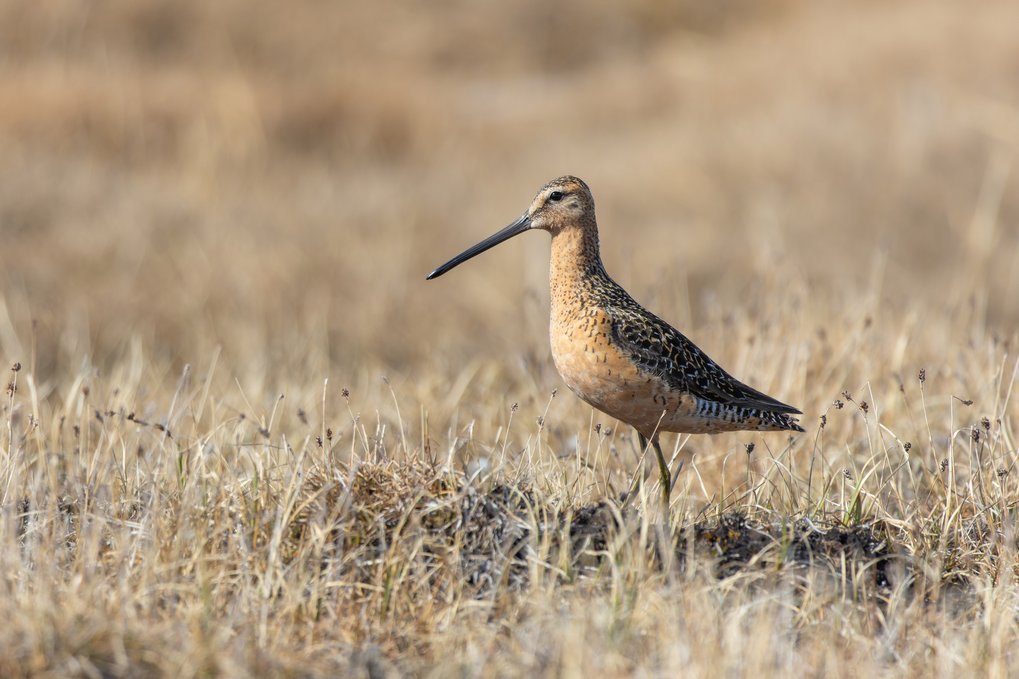
Away from the tundra, latitude made little difference, and in three species that breed both on the tundra and in other habitats the tundra populations again came back less often, which suggests the effect isn’t just a difference between species.
Why come back at all?
“Several factors are known to affect whether a bird returns to the same site to breed, such as how a species divides parental duties, and an individual’s sex and body size, but how much geography matters had not been studied systematically,” Santema said. A 2022 analysis in Behavioral Ecology had linked higher fidelity to socially monogamous species, in which both parents share incubation, and in Alaska the few male pectoral sandpipers that did come back tended to be the ones that had sired more young and stayed longer the year before.
A bird that returns knows the best spots to feed or roost and where predators lurk, and it may find its old mate there. The tundra plays by other rules, the researchers say, because a spot that was perfect one summer can be buried in snow the next, predator pressure shifts from season to season, and with so little time to breed a bird can’t afford to sit and wait for things to improve.
There is a catch in the numbers, which the authors acknowledge, since a bird missing from a study area might have moved, died or simply gone unseen by the people counting. They think shorebirds’ fairly high survival and the wide-open tundra make moving the likeliest explanation for much of the gap.
What a wandering bird means
“Finding that one habitat drives so much of this variation opens up fascinating questions,” said Kempenaers, who heads the institute’s Department of Ornithology. “Do other unpredictable habitats that are not included in the study, such as ephemeral wetlands, also favour nomadic breeders? What leads an individual bird to return or move on?”
He also wondered whether a readiness to relocate might help these birds keep their populations stable as breeding habitats come under pressure, and he pointed to a consequence that reaches beyond the birds themselves. “Clearly, where a bird breeds from one year to the next affects how widely genes mix between populations, and how readily disease travels with them,” he said.
Photo: Nigel Voaden / Wikimedia Commons (CC BY 4.0)