Spain’s attempt to help one of its most endangered birds has delivered a hard lesson from the mountains. Thirty Cantabrian capercaillies entered a release program in León, but after about six months of tracking, only one female was still alive.
The case has drawn attention not because conservation failed completely, but because it shows how difficult rescue work can be once captive-bred animals face the real forest. The program cost about $5.8 million when converted from €5 million at the European Central Bank’s June 8, 2026 reference rate.
A fragile mountain bird
The Cantabrian capercaillie is a forest grouse found only in northern Spain’s Cantabrian Mountains. It is a large, ground-dwelling bird that depends on quiet, mature woodland, thick cover, and enough food to survive harsh mountain seasons.
Why does one bird matter so much? Because the whole wild population is tiny. Spain’s Ministry for the Ecological Transition and the Demographic Challenge estimated 209 Cantabrian capercaillies in 2024, up from 191 in 2019, but still just a few hundred birds spread across León and Asturias.
That small increase is welcome, but it does not erase decades of decline. Habitat loss, fragmented forests, human disturbance, fires, predators, and climate pressure have all made recovery slow and uncertain.
The Valsemana release
The birds came from the Valsemana breeding center in León, a facility run under the conservation work of the Junta de Castilla y León. In 2025, the center reported 76 young capercaillies after three months of life, a major captive-breeding success that opened the door to a first experimental release.
The release site was the Alto Sil Special Protection Area for Birds, one of the key mountain zones for this subspecies. Before the final release, the birds spent time in acclimation enclosures so they could get used to the forest, the weather, and the sounds around them.
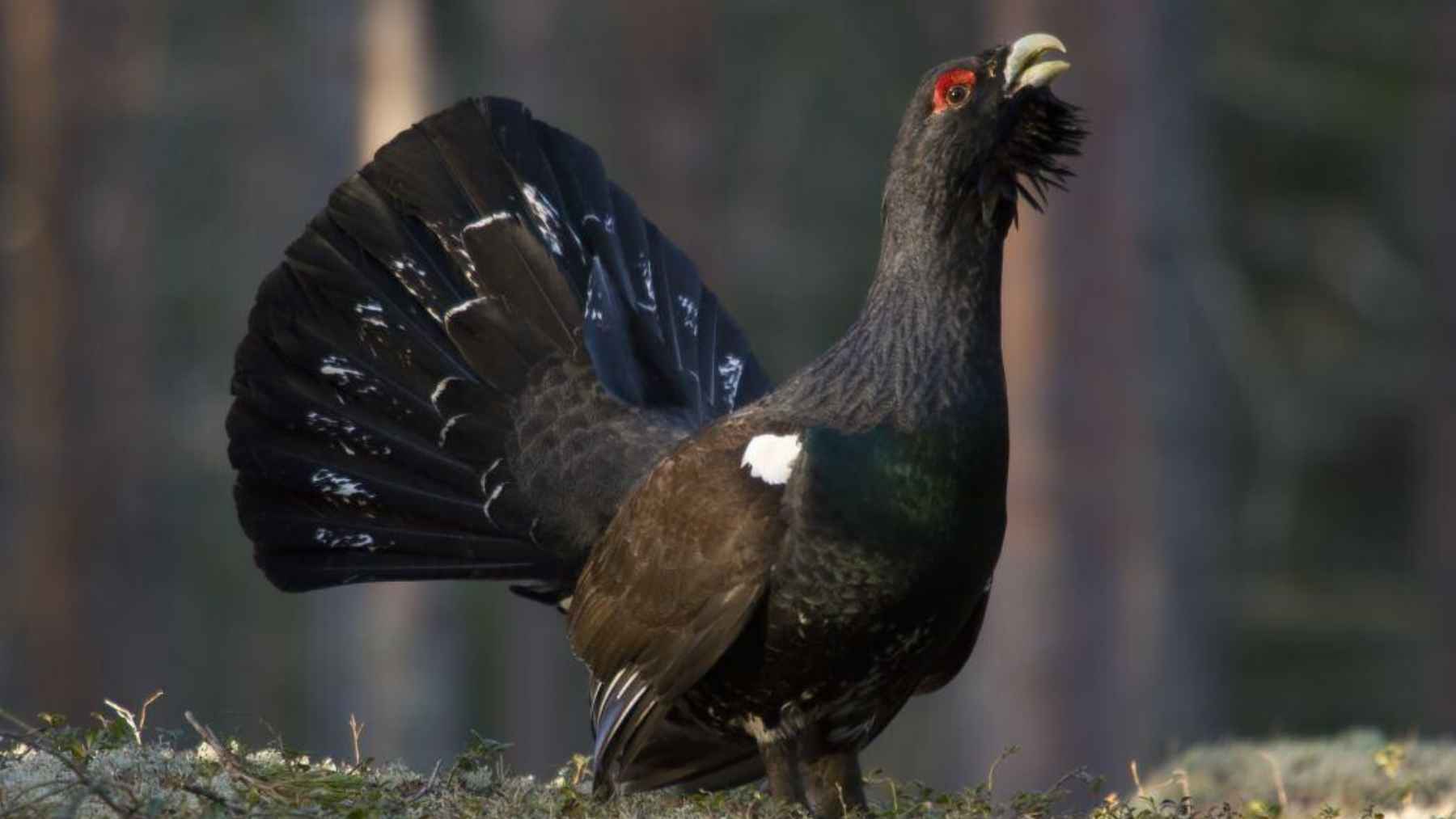
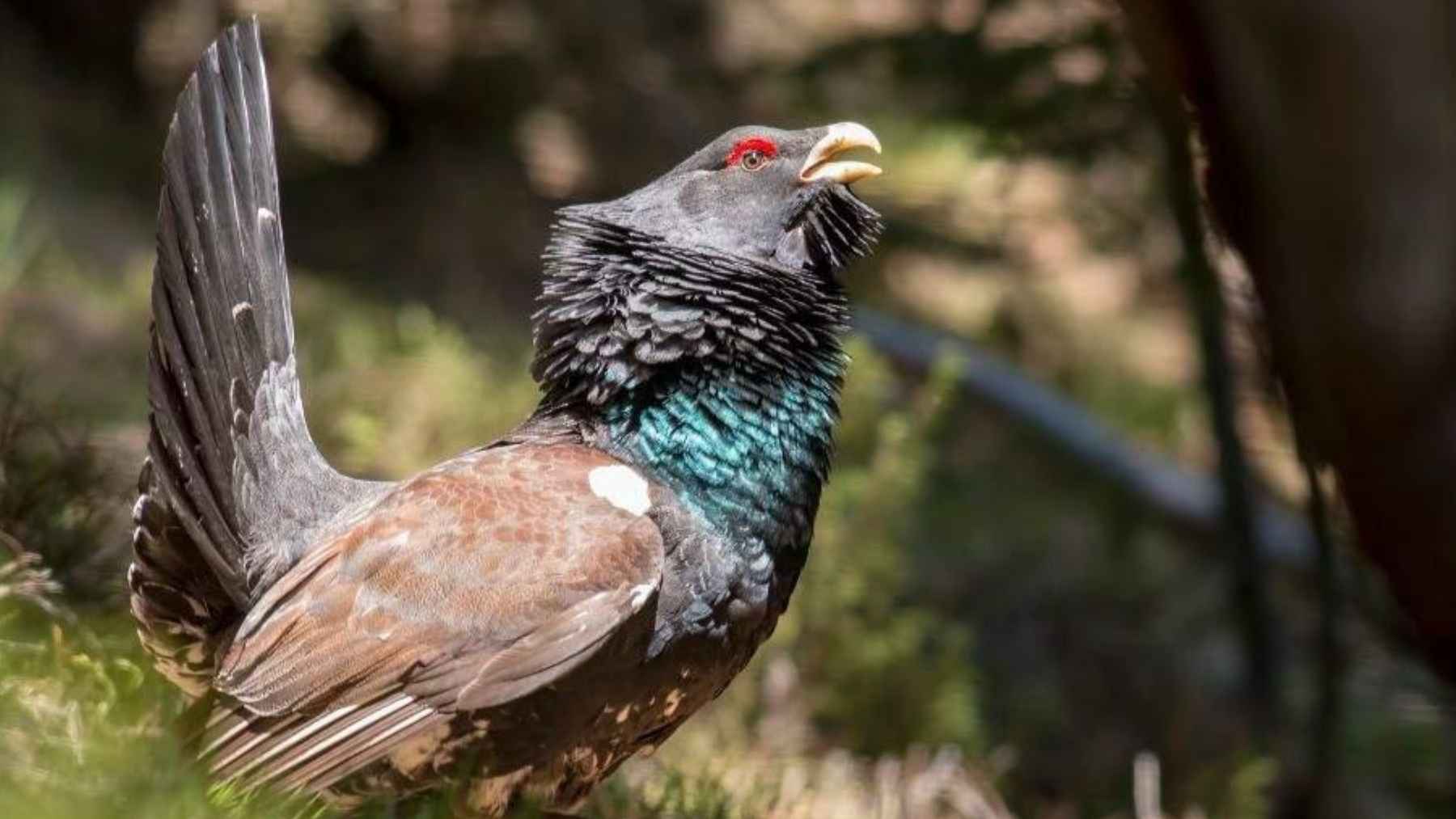
A male Cantabrian capercaillie displays in a forest habitat in northern Spain. The species is the focus of intensive conservation efforts aimed at reversing decades of population decline.
At first, things looked promising. One bird died before the final release phase, but the remaining 29 left the enclosures gradually and without major incidents, according totechnical reports from the Junta de Castilla y León.
Predators moved fast
Then the forest took over. After 180 days, only one female remained alive, leaving a survival rate of about 3.4% among the birds released into the wild.
Foxes were the leading confirmed predator, with 12 deaths. Raptors accounted for six more, and martens were linked to four. In several cases, the exact predator could not be determined.
It is a brutal number. Still, the birds were not simply “eaten by foxes,” as some headlines suggest. The losses came from several natural predators, and that distinction matters because conservation teams need to know which threat to prepare for next.
Captive birds face a steep test
A captive-bred capercaillie does not enter the forest with the same training as a wild bird raised by adults. It must learn where to sleep, when to hide, how to avoid open ground, and what movements or sounds might signal danger.
That is where conservation becomes less like opening a cage and more like teaching survival. If a young bird roosts too low or stays too close to the release site, it may become easy prey before it has any real chance to adapt.
Researchers have seen related problems before. Alberto García-Rodríguez of the University of León co-authored a 2023 study that examined deaths among captive Cantabrian capercaillies and found that infections, stress-related problems, and adaptation issues can all affect survival before birds ever become part of the wild population.
Not just a predator problem
Predation is part of any healthy ecosystem. Foxes, martens, and birds of prey are not villains in this story. They are doing what predators do.
The harder question is why the capercaillie has become so vulnerable to normal forest pressure. When a species is already reduced to a few hundred individuals, every death lands harder, and every weakness in habitat or behavior becomes more dangerous.
The European Union’s LIFE conservation project has long described the Cantabrian capercaillie as an isolated and endangered mountain population, with work focused on improving habitat, managing predators, reducing unnatural mortality, and supporting captive breeding. Effectively, the cage is only one piece of the rescue. The forest itself has to work too.
What the lone female shows
The surviving female is now more than a statistic. Her behavior may help experts understand what worked, even inside a release that looked grim on paper.
Reports from the Junta de Castilla y León cited by El País said the bird was flying well, using the release habitat, and visiting display areas where capercaillies gather during the breeding season. That does not guarantee success, but it gives researchers something useful to study.
At the end of the day, conservation often moves forward through uncomfortable evidence. The failure of 28 or 29 birds to thrive can still point to better enclosure design, stronger anti-predator training, higher roosting structures, and smarter timing for future releases.
A rescue still in progress
The obvious reaction is frustration. More than $5 million, 30 birds, months of GPS and radio tracking, and just one female left alive.
The less obvious point, however, is that this was a pilot effort, not a finished recovery plan. Pilot projects are designed to expose weak spots before larger releases begin, even when the results are painful to read.
For the most part, the message is simple. Breeding endangered birds in captivity may be possible, yet rebuilding a wild population takes more than numbers on a spreadsheet. It takes habitat, behavior, timing, predator awareness, and a bit of luck in the mountains.
Published on Spain’s Ministry for the Ecological Transition and the Demographic Challenge’s.