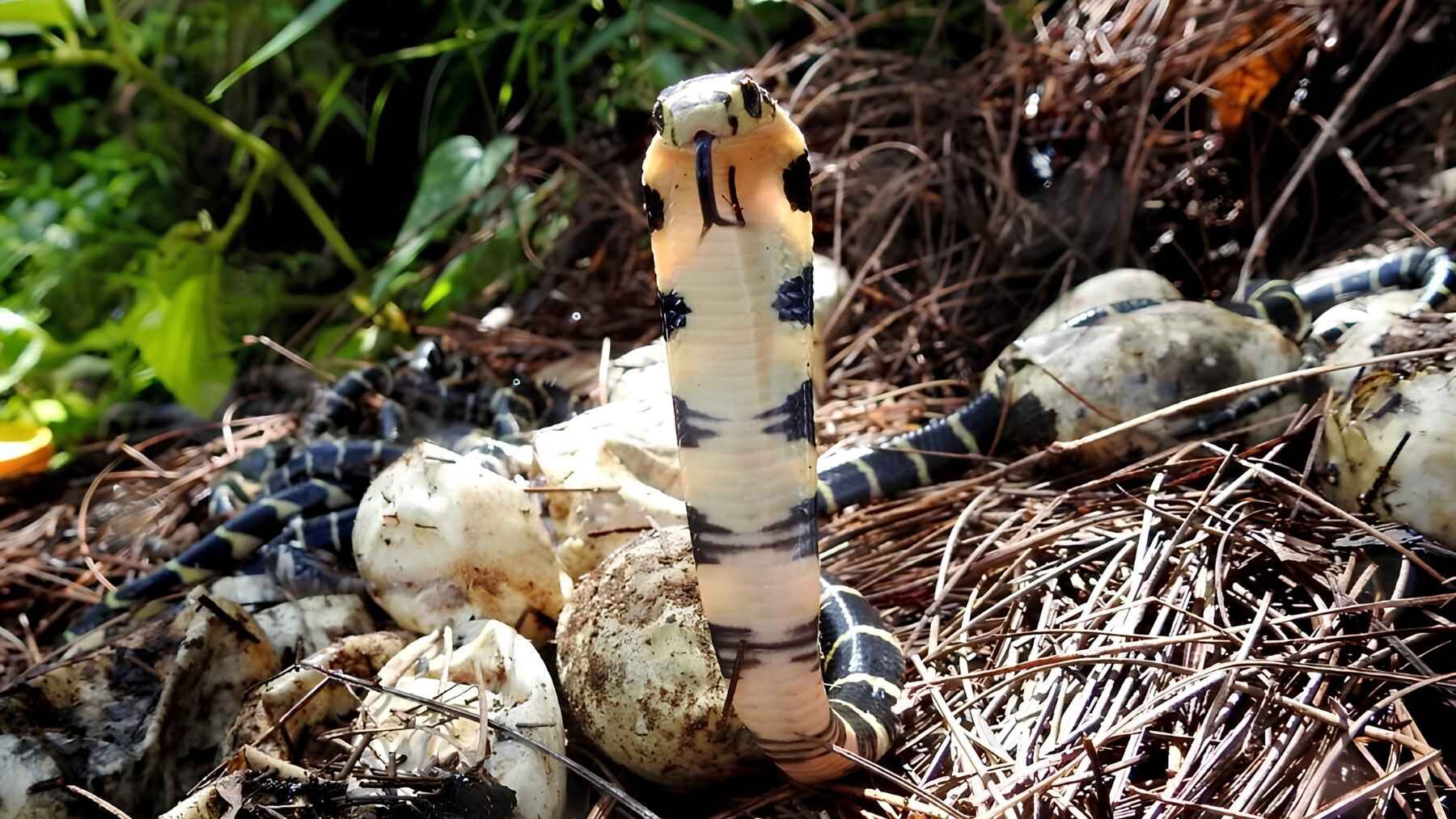
A routine search for wild mushrooms turned into an unexpected wildlife protection effort in Nepal when community forest users found a king cobra nest near Jhakri Sota in the Ambe Community Forest. The nest was discovered on July 15, 2026, in Ward 18 of Ghorahi Sub-Metropolitan City, prompting officials to limit access while conservationists monitor the breeding site.
The response is as important as the discovery. Authorities have left the nest in place and chosen the lower-risk option, giving the female and her eggs space while reducing the chance of a close encounter with people.
A routine search changes course
The forest users alerted conservationists after finding the nest, and snake rescuer Kuldeep Neupane helped secure the site. The Division Forest Office in Dang then increased monitoring in coordination with the community forest users’ committee.
Residents have been asked not to collect mushrooms, grass, or firewood near the nest until the eggs hatch and the cobra leaves naturally. For families accustomed to gathering everyday forest fruits, that temporary pause is a real inconvenience, but it may prevent both disturbance and a dangerous surprise under the leaf litter.
Why this nest is extraordinary
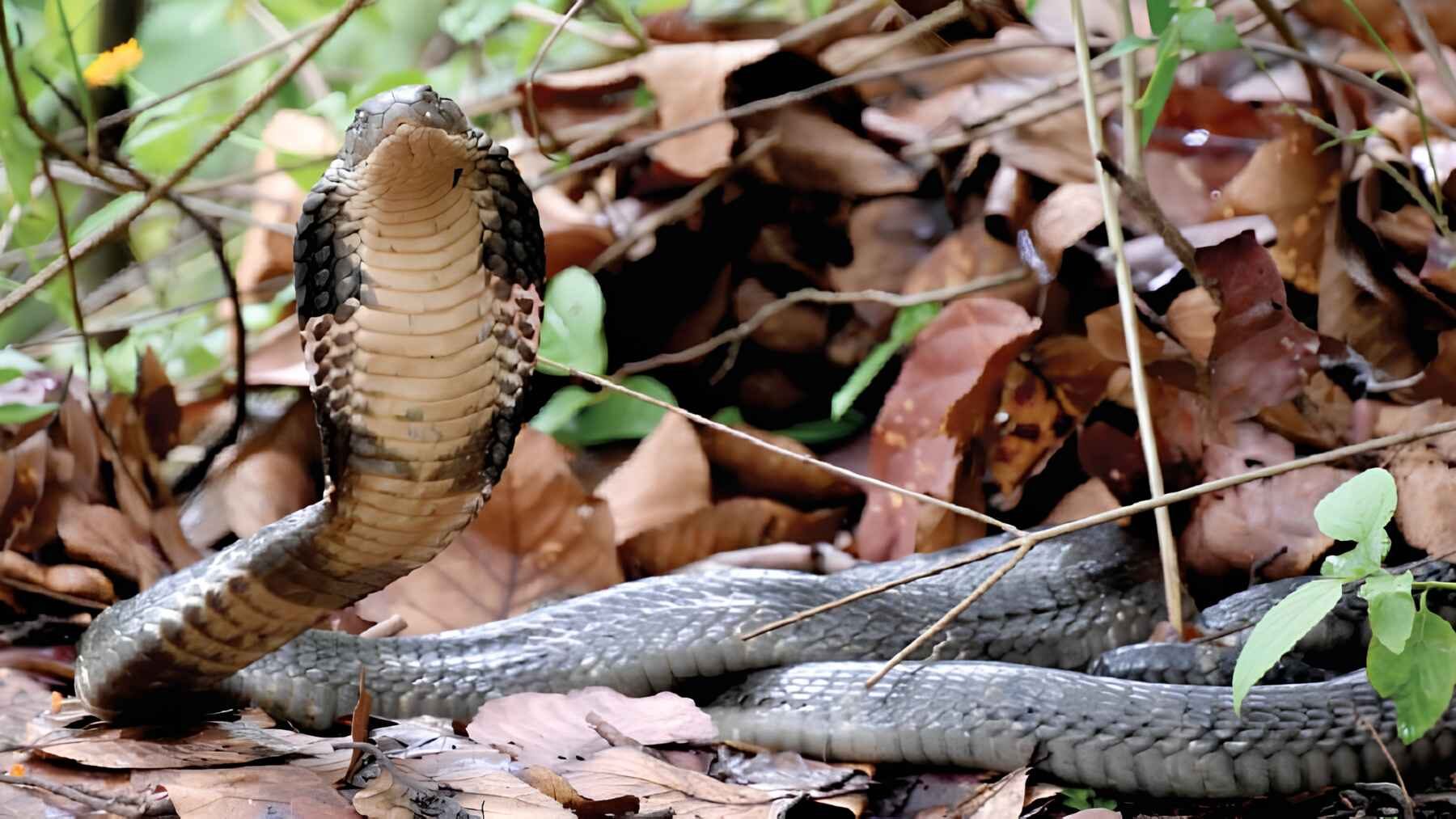
King cobras are widely described as the only snakes known to actively build above-ground nests for their eggs. A female gathers dry leaves, twigs, and other vegetation into a mound, creating a protected chamber that is more than just a simple hiding place.
That mound does practical work. A 2023 study of 25 wild nests in the western Himalayas found that temperatures inside were about 3°C (5.4°F) warmer than outside on average, and researchers called mean nest temperature “the best predictor of hatching success.”
What may happen next
The original report does not state how many eggs are in this particular nest. Local snake researcher Basanta Subedi said females commonly lay about 30 to 40 eggs, while a broader 15-nest field study recorded an average of about 25.
Incubation often lasts roughly two to three months, depending on local conditions. Earlier monitoring in Nepal documented one nest with 14 eggs that all hatched and another with 25 eggs, 23 of which hatched after 65 days.
The safest move is to wait
A nesting female may remain on or near the mound for part of the incubation period, which makes repeated visits risky for people and disruptive for the snake. Keeping collectors and sightseers back is therefore a straightforward safety measure, not an attempt to turn the forest into a permanent exclusion zone.
The key is distance. The public must follow the access limits set by local authorities and leave any handling or relocation decision to trained wildlife personnel.
A predator with a forest role
The king cobra is the world’s longest venomous snake, with published records reaching up to 5.85 meters (19.2 ft.). Field observations also show that its diet is centered heavily on other snakes, including venomous species.
One study followed a wild male that captured and ate 26 pit vipers during the observation period. That does not prove that every king cobra nest directly lowers local snakebite risk, but it helps explain why conservationists view the species as an important predator rather than simply a threat.
Community forests share two jobs
Nepal’s community forests provide households with mushrooms, fodder, fuelwood, and other resources, yet they also hold breeding habitat for wildlife. The nest near Jhakri Sota shows how quickly those two roles can overlap in the same patch of ground.
A 2025 study used 553 occurrence records to identify about 9,150 square miles of climatically suitable king cobra habitat in Nepal, with most of it outside formally protected areas. As such, local forest committees and residents may be doing some of the country’s most important conservation work far beyond national park boundaries.
Protection has not caught up
The International Union for Conservation of Nature’s (IUCN) Red List currently displays the king cobra as ‘vulnerable’ with a decreasing population trend. Nepal’s updated National Parks and Wildlife Conservation Act schedule lists the python, gharial, and yellow monitor among specially protected reptiles, but it does not list the king cobra.
That gap sits beside mounting evidence of human pressure. A 2021 Nepal study recorded 50 king cobra deaths across 20 districts, while a 2025 analysis examined 94 mortality records from 2000 through 2024 and identified high-risk areas where targeted conservation is needed.
A small closure with a larger lesson
The discovery could easily have ended with panic, a killed snake, or a damaged nest. Instead, residents reported it, a rescuer secured it, and forest officials chose temporary restrictions, creating a practical example of coexistence in a landscape people use every day.
The next meaningful update will be simple but important. Officials should document whether the eggs hatch, when the female leaves, and when access can safely resume, turning one unexpected mushroom-gathering trip into evidence that may improve future king cobra conservation.