In May 1998, the Yangtze River rose over its banks in China’s Hubei province, and 36 of the 84 Milu deer living in the Hubei Shishou Milu National Nature Reserve got out. By the end of 2009, the escapees and their offspring numbered more than 500 animals, before a disease hit in the spring of 2010 and the herds shrank again.
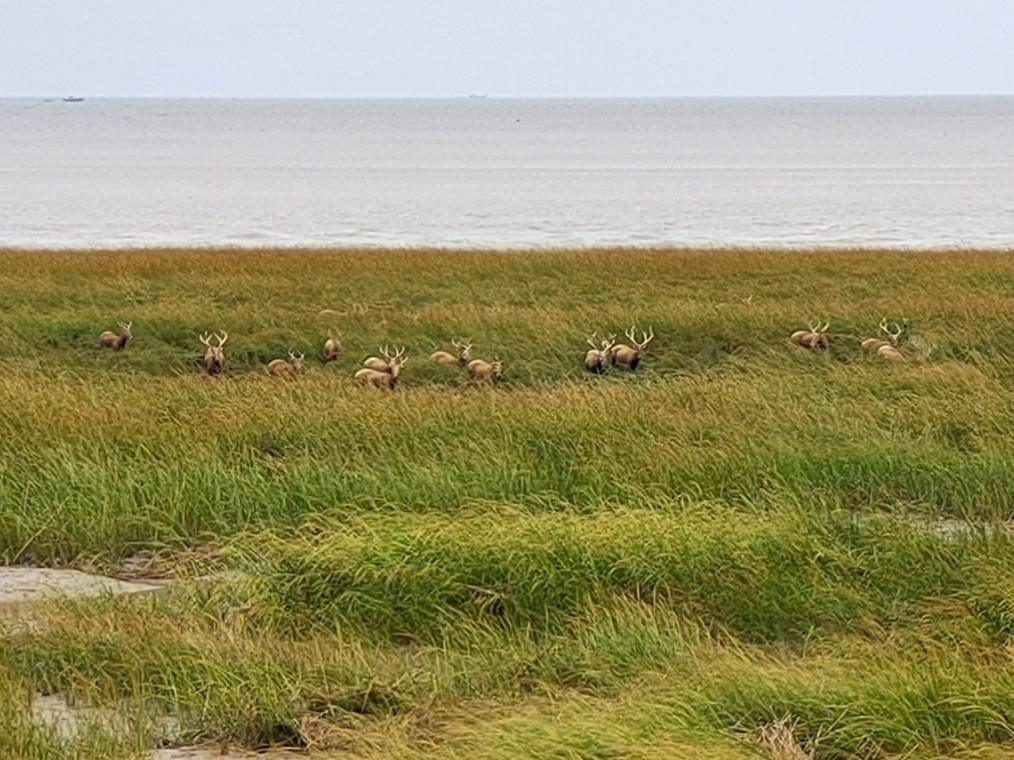
Ten of the deer stopped in the Yangbotan wetland on the north bank, while 26 swam across the river to Sanheyuan, a reed wetland of about 2 square miles (5.39 square kilometers) that serves as a flood buffer.
Daode Yang of Central South University of Forestry and Technology and his colleagues had no way to bring them home. Driving them back through the swamp was “impossible,” they later wrote in Scientific Reports, so they kept notes for the next 14 years.
A deer China had lost
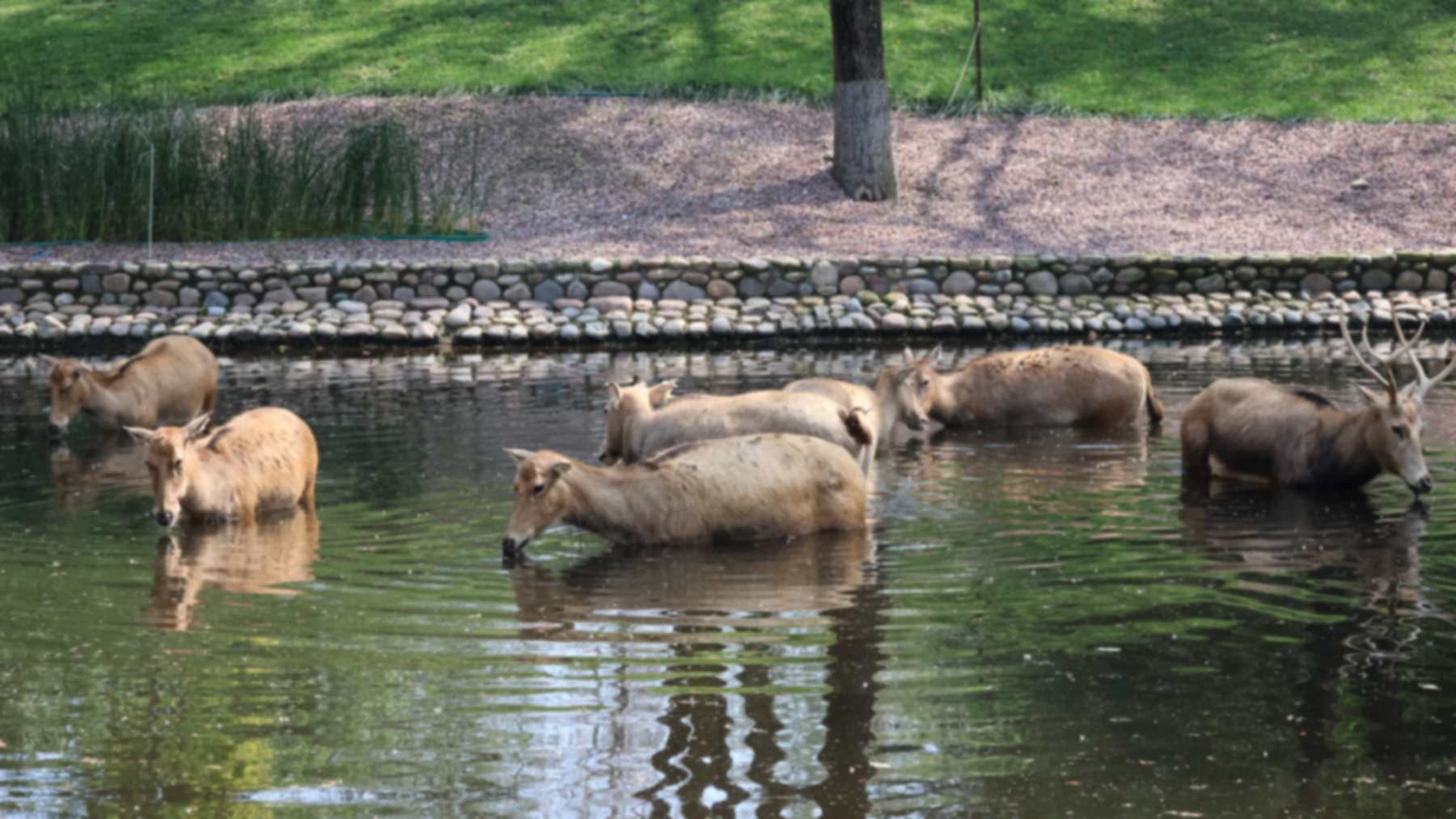
Milu, known in English as Père David’s deer (Elaphurus davidianus), are big, wetland-loving deer native only to China. According to a 2025 paper in the same journal, the species likely became extinct in the wild 1,500 years ago and survived only in captivity.
The last herd lived in the Nanyuan Royal Hunting Garden, a walled marsh south of Beijing. In a 2013 case study for the IUCN, zoologist Zhigang Jiang wrote that the wall was destroyed first by a flood on the Yongding River and then by the cannon fire of allied foreign forces, and the deer that got out were hunted.
A few had already gone to Europe. In the 1890s, the 11th Duke of Bedford gathered the last 18 in the world at Woburn Abbey, his estate in England, and the inbred herd pulled through.
The Bedford herd sent deer back to Beijing Milu Park in 1985, according to Jiang’s IUCN case study. Shishou followed in 1991, on an island in the middle Yangtze, and the 2016 paper counts 64 deer from Beijing arriving in 1993 and 1994.
Following the herds through rice country
The reserve’s south side had no fence until 1998, and a few deer had swum the Yangtze before and come back on their own. The May 1998 flood, which the authors put at a once-in-a-hundred-years event, turned five of that year’s eight moves into permanent herds.
Every month, a few investigators rode motorcycles or bicycles along a fixed route to East Dongting Lake and checked any reported sighting. The Milu is the only large deer in the area, so fresh hoof prints in paddy fields gave the team numbers and direction.
The deer had landed in “the country of fish and rice,” as the area around Dongting Lake is known, where more than 300 people live on each square kilometer (about 780 per square mile). Instead of returning to the reserve, they hopped between what the paper calls “stepping stones,” patches with food and shelter inside unsuitable habitat.
Yang’s team logged 122 of these trips between 1995 and 2012. The average one was about 8.75 miles (14.08 kilometers), and the farthest south any deer turned up was about 31 miles (49.69 kilometers) from the reserve. Many came home again, and the paper counts only 21 effective dispersals out of 113 temporary ones.
Crowds, floods and reed farmers
“We suggest that population density is the ultimate cause for Milu dispersal, whereas floods and human disturbance are proximate causes,” the authors write.
Sanheyuan, hemmed in by dikes, was the test. The deer there seldom crossed the dikes except in floods, but when density reached 30.61 Milu per square kilometer in the spring of 2006, some moved south into the East Dongting Lake reserve.
Reed farmers pushed them too. The deer graze and trample spring reed shoots, which are harvested for paper, so farmers at Sanheyuan and Yangbotan chase them out each March. In March 2003, a big drive forced three groups to leave.
From 500 down to 300
Sanheyuan’s herd more than doubled, from 99 in 2003 to 223 in 2009. From mid-February to mid-March 2010, a disease outbreak caused heavy mortality, and a visit by veterinarians and reserve staff to check the dead pushed 10 groups of deer out to Shengfengxiang, a farming district. Sanheyuan had 167 deer left by the end of 2012.
The 2025 study names the illness as hemorrhagic enteritis and says it killed more than 300 deer inside the Shishou reserve, whose herd took off again in 2015.
“After 5 generations, by the end of 2012, 300 wild Milu were scattered in refuge populations in the eastern and southern edges of the Dongting Lake,” the 2016 abstract reads. The 500 figure is a snapshot from 2009, not a count of the herds today.
Fishponds creep into the wetlands
The 2016 authors argue that accidental escapes into a species’ former range can build viable populations. Isle Royale’s wolves were rebuilt from 19 animals, and New Zealand’s kakapo fell to 51 birds in 1995 and now numbers 325, while wolves, lynx and Przewalski’s horses in the Chernobyl exclusion zone thrived after people left.
A follow-up study published Jan. 2, 2025, with Zhibin Cheng of Northeast Forestry University as first author, carried the counts through 2022. Yangbotan’s herd grew at an average yearly rate of 0.183, significantly faster than in the Dongting Nature Reserve.
But satellite images from 2014 and 2023 showed Yangbotan and Sanheyuan “invaded and occupied by anthropogenic activities such as the construction of a fishpond, planting of economic forest, and farming,” leaving deer there under human pressure.
China had 671 Milu in 1997 and about 9,062 by 2020, with 2,825 of them wild across 83 sites. The 2025 team credits long-term protection in reserves with an irreplaceable role in that recovery.
What the papers cannot tell us
Only 75 of the 122 recorded dispersals were counted head by head in the field. For many others, the team relied on what local farmers remembered, though the authors say every dispersal was checked against Milu traces at the sites.
The sources also disagree a little. The two papers put the founders at 10 at Yangbotan and 26 at Sanheyuan in 2016, and 11 and 18 in 2025, and Jiang’s case study says 91 deer reached Shishou in 1993 and 1995. The newer study notes that no new data have been available since 2020 because of the COVID-19 pandemic.
The full study was published in Scientific Reports.
Photo: TarnishedPath / Wikimedia Commons, CC BY-SA 4.0