NASA on October 20, 2026, released a progress update on the rovers that will open its Moon Base, showing how robotic explorers and crew-carrying lunar terrain vehicles from Astrolab and Lunar Outpost will map the lunar South Pole region before Artemis astronauts arrive. Each vehicle is built to cover up to 3.7 miles (6 kilometers) a day under remote control from Earth.
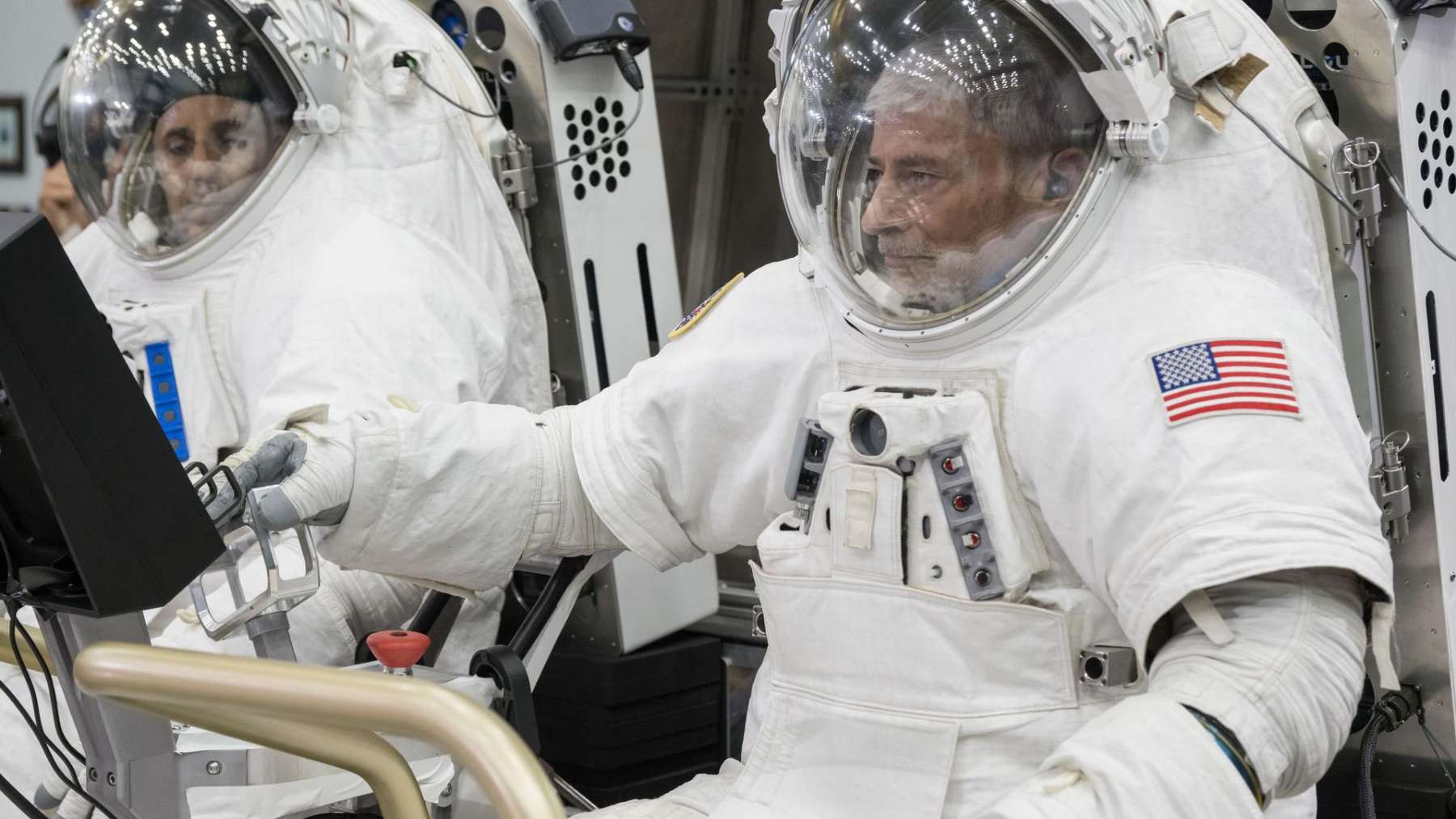
The agency shared the news on X with a short clip of two suited astronauts seated in Lunar Outpost’s Pegasus, one of the two vehicles NASA hired in May. The NASA update lists technology demonstrations, astronaut transport, terrain mapping, science and resource prospecting as the rovers’ jobs in the first phase of the base.
Robert Pickle, director of the Surface Mobility Office within NASA’s Moon Base Program, said the rovers are “central to our surface mobility strategy”.
Robots go first at the South Pole
NASA’s VIPER, short for Volatiles Investigating Polar Exploration Rover, is scheduled to reach the lunar South Pole region in 2027 aboard a Blue Moon Mark 1 lander built by Blue Origin. It is meant to drive more than 18 miles (30 kilometers) and enter permanently shadowed craters in search of water and other resources.
NASA says VIPER is fully built and in final testing at Johnson Space Center in Houston before it moves to Kennedy Space Center in Florida for launch. Its Moon Base phase plan adds that the rover carries a 1-meter drill to look for water ice. Where that ice sits matters, since researchers have estimated how quickly a large lunar settlement could use up the Moon’s water ice.
Both rover makers are also sending smaller robots ahead of their crewed vehicles. Astrolab’s FLIP is set to fly on Voyager Technologies’ Griffin Mission One in late 2026 to test tires, batteries, radios and cameras like those planned for its crewed rover. Lunar Outpost’s MAPP rover operated at the South Pole in 2025, and a second one is scheduled to launch in early 2027.
What the lunar terrain vehicles will do before crews arrive
Before crews arrive, NASA says operators on Earth will drive them across the region to help scientists build high-resolution maps for later crews. They will also record data on lighting, navigation and energy use while driving in and out of permanently shadowed regions, where temperatures can fall to minus 334°F (minus 203°C).
Once Artemis astronauts land, each vehicle will be able to support up to three moonwalks per mission, carry up to 176 pounds (80 kilograms) of samples and tools, and travel up to six miles (10 kilometers) on one battery charge. The vehicles are unpressurized and seat two suited crew members, and NASA’s lunar terrain vehicle page says the agency will buy their use as a service instead of owning them.
Two rovers and a delivery contract
NASA announced the awards on May 26, 2026. In its news release, the agency said Astrolab received $219 million to build and deliver its Crewed Lunar Vehicle 1, or CLV-1, and Lunar Outpost received $220 million for Pegasus.
Getting the rovers there is a separate deal. Blue Origin won $188 million, with an option worth $280.4 million, for two task orders to deliver them to the South Pole region by 2028 through NASA’s Commercial Lunar Payload Services initiative. NASA uses the same model of buying delivery from companies elsewhere in the program, including $590 million in contracts to ship construction materials to the Moon.
NASA describes CLV-1 as a vehicle of about 2,000 pounds that can top 6 mph on level ground. Pegasus is a lighter version of Lunar Outpost’s earlier Eagle rover, rated to work for up to a year and to drive manually, autonomously or by teleoperation at more than 9 mph.
Pegasus in the test lab
Lunar Outpost, based in Golden, Colorado, built two Pegasus mockups before the award and recently delivered a third to Johnson Space Center. NASA photos from September show astronauts Joe Acaba and Mark Vande Hei sitting in the prototype during tests in which crews in pressurized suits judged its design.
In its award announcement, the company says Pegasus seats two astronauts side by side and is built with General Motors, Goodyear and Leidos. Founder and CEO Justin Cyrus said it gives astronauts “the range, reliability, and flexibility needed to thrive in new terrain.”
In the coming weeks, Lunar Outpost will take the rover’s spring mesh tires to NASA’s Glenn Research Center in Cleveland to test traction, and Astrolab will test CLV-1’s airless wheels in the same lab. Lunar Outpost is scheduled to finish its preliminary design review this month and Astrolab by the end of December. Both are on track to hand flight-ready hardware to NASA by the end of 2027.
Where the rovers fit in the Moon Base plan
Phase One of the Moon Base runs from now to 2029 and also includes MoonFall, four hopping drones from NASA’s Jet Propulsion Laboratory due at the South Pole in 2028. Phase Two, from 2029 to 2032, adds power, cargo and communications infrastructure, and from 2032 NASA plans to start assembling a permanent outpost. Power planning is already under way, with a reactor for the Moon targeted for 2030.
The rovers bridge the uncrewed scouting and the first crewed landings near the South Pole, which NASA targets for 2028 after the Artemis II crew’s flight around the Moon. NASA Administrator Jared Isaacman said in May that “every mission, crewed and uncrewed, will be a learning opportunity” as the agency returns to the surface.
What is still uncertain
Most numbers in the update are design targets. The 3.7-mile daily range, the six-mile range per charge and the 176-pound cargo limit describe what the vehicles are meant to do, and the tire tests, crewed mockup drives and design reviews that will check them are still ahead.
Dates also vary slightly between official pages. NASA’s update places VIPER at the South Pole in 2027, while its phase plan says late 2027. NASA expects flight hardware by the end of 2027, and Lunar Outpost’s Pegasus page lists a November 2027 delivery to NASA. The trip to the Moon then depends on Blue Origin, whose delivery task orders run to 2028.
Image credit: NASA/Bill Stafford