In the early 1990s, workers at car parts shipping sites in Japan were reading about 10 barcodes in a row for every single product. Masahiro Hara, a barcode engineer who had joined the company in 1980 and would go on to create the QR code, saw what that did to their day. “It was more like a job to read the barcode than to make the product,” he recalled.
His fix came out in 1994. It held about 7,000 numerals, could store Japanese kanji, and read more than 10 times faster than other codes, according to DENSO WAVE. Since December 2025, the same squares have been used to log sales of glass eels in Japan, and DENSO expects about 10,000 users a year.
A boy who painted model tanks
Hara was born in Tokyo in 1957 and moved to Osaka at age 2. Back in Tokyo for junior high, classmates laughed at his Osaka accent. “So, I began to devote myself to making plastic models,” he said in a 2024 company interview.
He liked giving his model tanks his own camouflage paint jobs. Color TV and the Apollo 11 moon landing did the rest. “As a child, I realized that anything is possible if you have the right technology,” he said. His father, also an engineer, held a patent on making electronic components.
At Nippon Denso, now DENSO, he landed in barcode research. A strict boss asked the hardware man to learn software. “I am a hardware designer, so I can’t do software,” Hara replied. The boss shot back: “In 10 years’ time, we will be in the age of computers, and we won’t need someone who can’t do software.” Hara taught himself in secret.
Oil, bubbles and 20 characters
The QR project started in 1992. “With the bubble economy bursting and the future uncertain, there was an atmosphere within the company that we needed to do something new,” Hara said.
Carmakers had switched from mass production to many models in small runs. Shipping sites handled far more data per part. A barcode holds about 20 characters. “If the barcodes were contaminated with oil, they would become unreadable, so we were asked to do something about it,” he said.
Customers wanted Japanese script too. “We’d like the capability to code Kanji and Kana characters as well as alphanumeric ones,” they told the reader team, according to the development history on DENSO WAVE’s QRcode.com.
Hara had one teammate. Rival two-dimensional codes, which store data across and up and down, were in the works in the U.S. “However, it seemed that the US was focused on the ability to include more information, and the accuracy was only about 1 out of 10 readings,” he said. He gave his own team even odds: “I only had 50% confidence that we would succeed.”
Two glasses of beer on a day off
Speed was the wall. A 2D code carries more, so scanners read it more slowly. Asked how he got past that, Hara answered, “That’s where beer comes in.” The interviewer’s reaction, as printed: “Beer!? No way!!”
He meant it. A colleague had lent him a gadget that measures alpha waves, brain signals tied to relaxation. Hara tried a bath, a look at greenery, and beer. “The one that produced the most was when I drank the right amount of beer. In my case, two glasses of beer!”
On a day off, after some beer, he stared out of a train window at a building whose upper floors had a different pattern of windows from the lower ones. “That’s when I got the idea that if there was a unique mark that said, ‘This is a QR Code,’ it could be read quickly,” he said.
He also credits Go, the board game of black and white stones. On Aug. 18, 2025, the Go association Nihon Ki-in named him a Go ambassador in Nagoya and handed him a fifth-dan certificate. Its notice says Hara described Go as one hint behind the code.
Months of magazines and a crashed computer
That mark became the three squares in the corners of every QR code. Scanners hunt for them first. To work, their black and white stripes had to follow a width ratio that almost never turns up in ordinary print.
“When I went to work, I would take pictures of newspapers and magazines, page by page, from morning to night,” Hara said. He left measuring software running overnight. “There was a time when I left my computer running 24 hours a day during the summer and it crashed, erasing all the data I had stored.”
“I didn’t even know if such a ratio existed, and I was doubtful every day,” he said. About six months in, it showed up: 1:1:3:1:1. “I was relieved to have found it. Without this ratio, there would have been no QR Code.”
Fliers and cardboard boxes went into the survey too. With that rare ratio, a reader can lock on from any angle in a full 360 degrees. Error correction, spare data woven into the pattern, lets a scanner rebuild what a smear of oil hides.
Eighteen months after the start, the code was done. DENSO WAVE, then a division of DENSO, announced it in 1994. QR means “quick response.”
Giving the patent away, almost
Hara himself was unsure buyers would drop barcodes, so he went door to door at companies and industry groups. Automakers took it up for electronic kanban, a communication tool for managing production.
DENSO WAVE kept the patent but said it would not exercise it, and published the specifications. “No matter how good the code is, it cannot be used freely and safely unless the infrastructure, such as peripheral devices, is in place,” Hara said.
Was it a mistake? “I am 100% sure that it was not,” he said, and went back to Go. “If you are too greedy, you will lose. No matter what you do, give a little to your opponent and take a little more than they take.”
ISO made it an international standard in June 2000. In 2002, Japanese phones with QR readers let people open a website or get a coupon with one scan. “What surprised me the most was that it had reached as far as Africa, with QR Code being used for payment in Kenya and QR Code attached to bus stops,” Hara said.
“What is good about QR Code is that anyone can create them freely,” he added. “Recently, I often say that there is nothing more powerful than low-tech.” He is now chief engineer at DENSO WAVE, won the Imperial Prize and the Japan Academy Prize in 2023, and celebrates his birthday on August 8, the day the code was named.
From mad cow worries to glass eels
Food was an early fan. After the mad cow disease scare, “the industry had to respond to consumers’ demands that the whole processes of production and logistics for the foods that ended up on their dining tables be made completely transparent,” DENSO WAVE writes. China now wants to digitally track retired EV batteries.
Glass eels are the latest. These young, nearly see-through eels are caught and traded on to eel farmers. On Dec. 1, 2025, a Japanese law on proper, sustainable trade in certain fishery products started to apply to them.
That means paperwork. A catcher or dealer has to log the date, a 16-digit catch or lot number, the amount and the other party for each deal, then keep it three years. Some dealers do more than 100 deals a day, DENSO noted in its Dec. 10, 2025 announcement.
DENSO’s version works like this. Each catcher gets a QR code to log in with, and scanning it spits out a catch number that already contains that catcher’s registration number. He or she keys in how much is being sold. That’s the record.
When the eels change hands, the dealer issues a new code for the buyer, and it only opens what the buyer needs for the next sale. Only the people on either side of a deal see it.
DENSO tried it out first with traders in parts of Kagoshima, Miyazaki and Aichi. A lot of them are elderly. Feedback from those trials pushed DENSO toward simpler screens and servers ready for more users.
Eels are under strain well beyond Japan. In Spain, fishers in Galicia and Asturias fought a plan to list eels as endangered. Near Valencia, 2,000 eels that had swum 4,350 miles from the Sargasso Sea died in a dried-up river.
What the eel records will not prove
Keep the eel part in proportion. DENSO built a bookkeeping app, and its announcement says nothing about eel numbers in the wild. If tidier records end up helping the fish, someone will have to measure it. The 10,000 figure is DENSO’s own estimate, published only in a Japanese release.
As for the beer, that tale is Hara’s own, told to DENSO’s own media site, DRIVEN BASE. The company notes the interview reflects things as of May 2024.
The full development history is published by DENSO WAVE on QRcode.com, and DENSO announced the glass eel traceability system on Dec. 10, 2025.
Hara still sees requests as fun. “I used to think I became an engineer because I did not like talking to people,” he said. His advice for young engineers: “I would like to tell people that it is rather lucky to fail.”
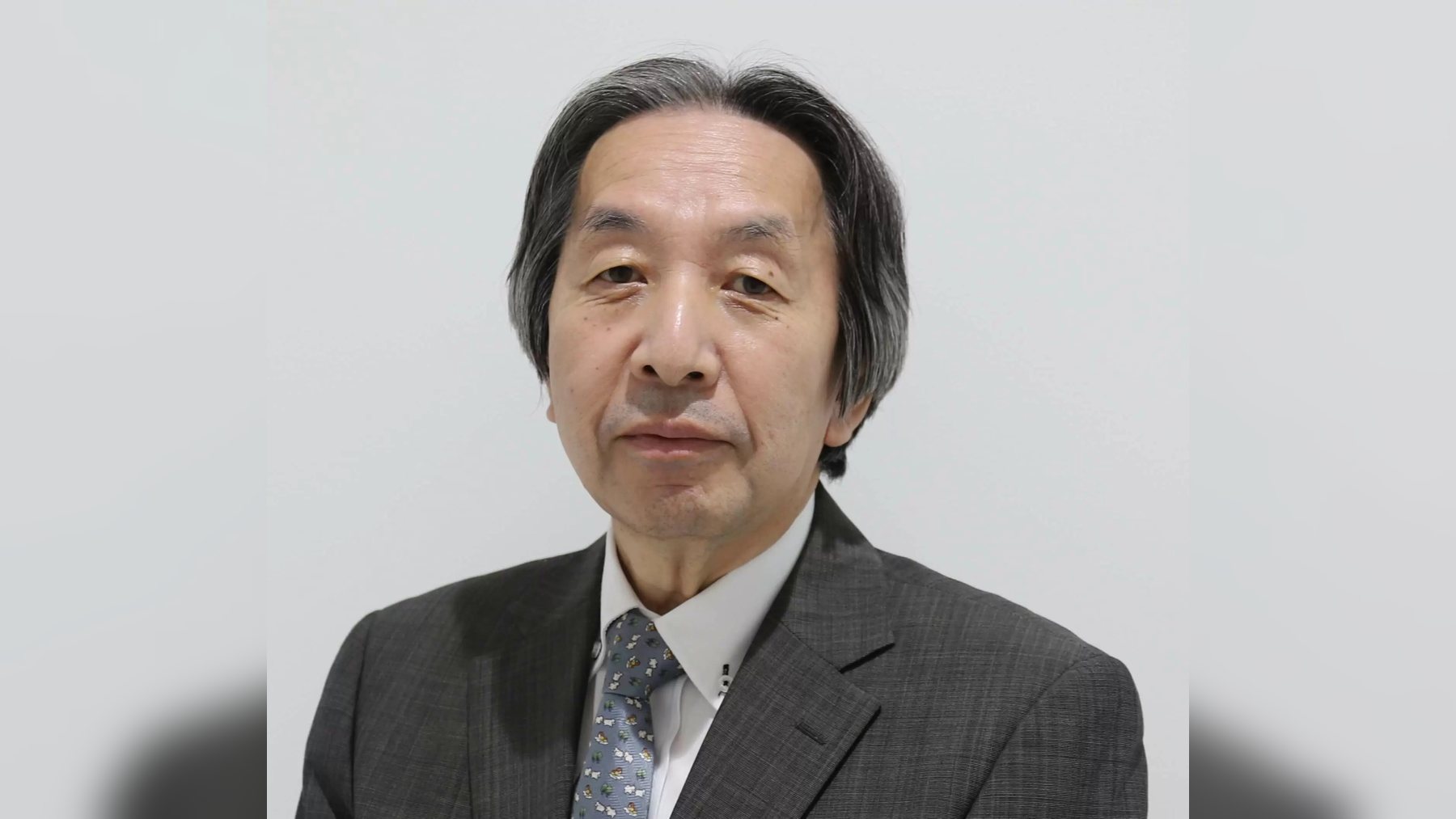
Photo: The Japan Academy / Wikimedia Commons, CC BY 4.0