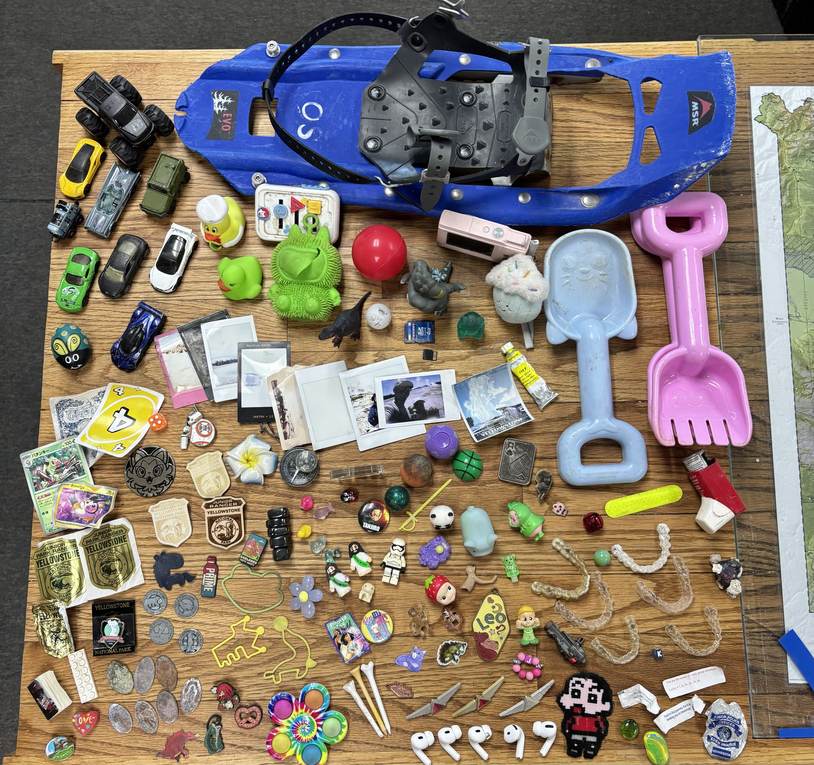
A 2-inch copy of The Vampire Diaries turned up in one of Yellowstone’s thermal areas this summer, along with six Invisalign retainers, five AirPods and a single Uno card. They were the oddest pieces of a record haul pulled from Yellowstone hot springs, geysers and the fragile ground around them in 2026.
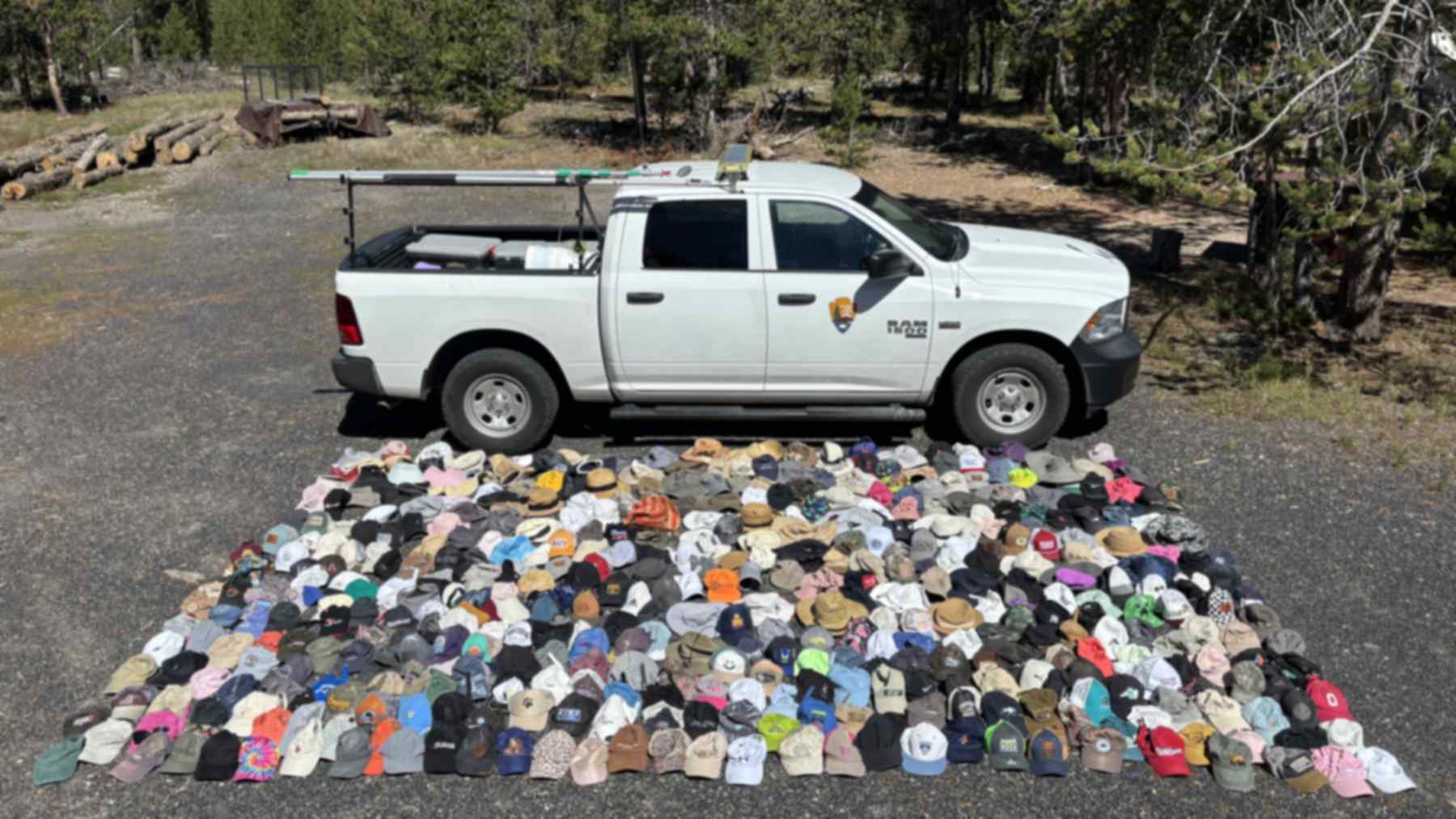
As of early September, the park’s Geology team had removed more than 20,100 pieces of trash, 5,600 rocks and sticks and over 280 hats from Yellowstone’s hydrothermal areas, the ground of geysers, hot springs, mud pots and fumaroles (vents that release steam and volcanic gas). The park gets more than 4.5 million visitors a year.
A record year in the thermal basins
Price is a physical science technician with the Yellowstone National Park Geology Program, the crew in red safety vests that roves the park’s hydrothermal areas. She wrote the team’s 2026 inventory for Yellowstone Caldera Chronicles, the weekly column of the Yellowstone Volcano Observatory.
That column, dated September 14, called the count “a record-setting year so far!” Debris “often builds up in high-visitation hydrothermal areas like Midway Geyser Basin (home of Grand Prismatic Spring) and the Old Faithful area,” it says.
The park’s high winds make it worse, according to the column, because “unexpected gusts easily blow away tissues, maps, food wrappers, and even heavier items like sunglasses and hats!”
Hats, hair ties and hotel key cards
The column lists the most common finds, besides the abundant plastic and paper trash, as camera lens caps (54), hair ties (47), pencils (42), sunglasses (36), hotel key cards (20) and binkies, or pacifiers (17).
Among the hats, the team’s favorites included a FIFA 2026 Men’s World Cup hat, a baseball cap with “COWBOY HAT” printed on it and a Roblox bucket hat from St. Kitts and Nevis. After the season, any rewearable hats will be washed and donated to local organizations.
Much of it is accidental, like items “dropped accidentally off a boardwalk,” the column says, and toys and trinkets from children are a regular find.
Some of it is deliberate, though. Price’s column mentions discarded orange peels and sunflower seed shells, and a separate Caldera Chronicles piece notes that throwing rocks, sticks or other items into hot springs is illegal.
The strange, the gross and the sentimental
Price sorted the haul into categories, describing it as “some wacky, some yucky, and others… puzzling?” Under “most head-scratching” she put 5 AirPods, 3 Delta flight pins, an inhaler, 3 golf tees and an Uno card.
The “grossest” list is about what you would guess, with 6 (!) Invisalign retainers, 15 fake nails, a pile of floss picks and “one lump of glittery pink children’s slime stuck to a handful of geyserite sinter pieces.” Geyserite is the pale silica crust that geysers and hot springs build around themselves.
Kids drop things, of course. The crew fished out 8 mini race cars, 22 figurines, 6 Junior Ranger badges, two rubber ducks and a McDonald’s toy from 2010.
And then there were the ones the staff liked best, including 7 instant photos (several of them showing the same hydrothermal features they were found in), 6 Yellowstone pressed pennies, 4 Pokemon cards and figurines, and the little Vampire Diaries book.
Why one dropped object can change a spring
“Foreign material of any kind can damage or permanently alter a hydrothermal feature, whether from clogging its water supply, blocking or diverting its runoff channel, or polluting it with chemicals and sediment,” Price wrote.
Those hydrothermal features sit on top of the same restless volcanic system behind the more than 86,000 hidden earthquakes beneath Yellowstone.
Hot springs are not wishing wells
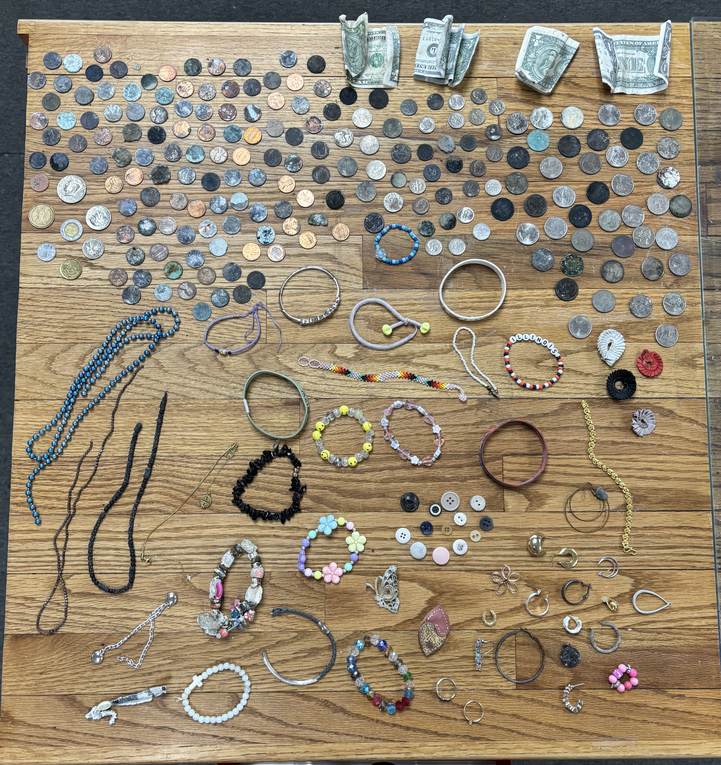
“Contrary to (apparently) popular belief, hot springs are not wishing wells!” Price wrote. Her team picked up more than $18.00 in coins this summer, mostly tossed into hot springs and geysers or lost between boardwalk planks, and not just U.S. change but pesos, yen, euros and Canadian dollars.
Besides clogging vents, she wrote, coins “can harm bacterial and algal formations in hydrothermal areas” and that damage “can take months to years to undo.”
The famous cautionary tale is Morning Glory Pool. It got its name in the 1880s because it looked like the blue flower. By the 1950s staff were calling it the “garbage can,” and in the 1970s rangers partly drained it to dig out the trash. The blue never came back.
“While thermal features naturally undergo changes, we have reason to believe that this color change to Morning Glory was not entirely natural,” Annie Carlson, then a research coordinator at the Yellowstone Center for Resources, wrote in a 2020 Caldera Chronicles column. “The trash settled along the base of the vent, restricting the flow of hot water into the pool.”
Cooler water let orange and yellow microbial mats take over, the same way temperature sorts life along a river in the Peruvian Amazon that runs hot enough to reach 86°C (187°F).
A geology crew, not a litter crew
This is not like the volunteer litter crews in California’s San Fernando Valley. Geology Program staff are trained in safe hydrothermal navigation, and they do the cleanup on top of chemical and temperature monitoring and public education.
What the tally cannot tell us
The column does not say how much of what falls in is never recovered, or whether the record reflects more litter or more thorough collecting. Its tally covers only what the Geology team removed through early September, and the 2026 season was not over yet.
Keeping your hat on your head
The column ends with a request. Put “wrappers, tissues, and other easily windblown items deep in your pockets, a bag, or, even better, a trash can!” it says. “If you’re adventuring in a windy area, consider tightening or taking off your hat. And remember, trails and boardwalks keep you safe, so stay on the path!”
The full inventory was published by the Yellowstone Volcano Observatory on the U.S. Geological Survey website on September 14, 2026.
Photo: National Park Service / Margery Price