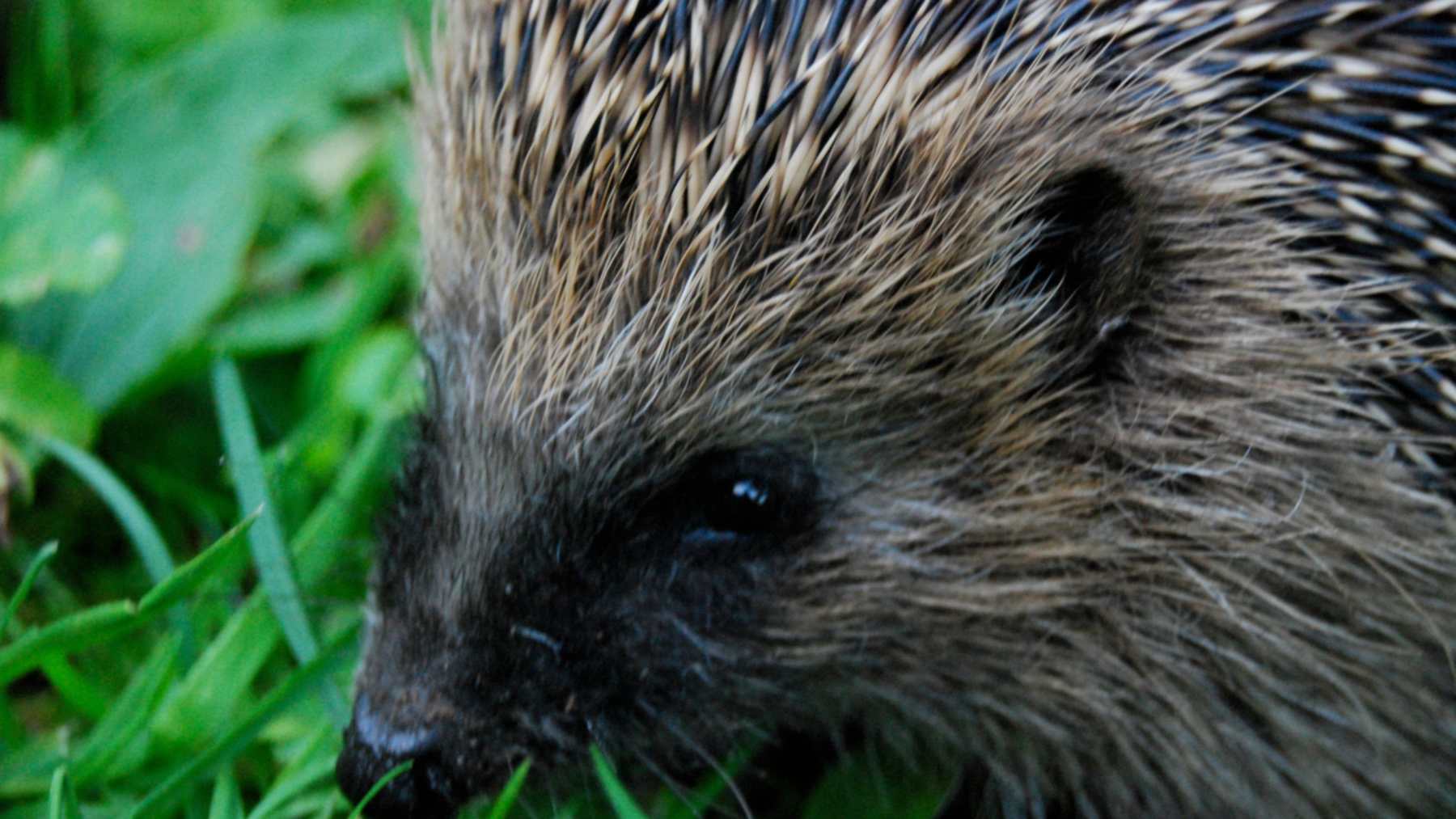
Many hedgehogs cross a lawn at night without being seen, but plenty of people find the dark little sausage it leaves on the patio and assume it came from a rat. In much of Britain and Europe that hedgehog poop has a tell, and the UK’s Mammal Society spells it out in one line: “Crinkly, often studded with shiny fragments from their insect diet. Blue-black colour. Sweet smelling with a hint of linseed oil.”
The charity measures hedgehog droppings at 1.5 to 5 centimeters (0.6 to 2 inches) long. Its entry for the brown rat, on the same page, reads “Putty-like, usually with one blunt and one pointed end,” with a smell it lists as “foul/rancid,” and a length of up to 1.7 centimeters (about 0.7 inches).
The shiny bits are pieces of beetle
Hedgehog Street, the garden campaign run by the British Hedgehog Preservation Society (BHPS) and People’s Trust for Endangered Species (PTES), says the droppings “are firm and typically packed with the exoskeletons of invertebrates, such as beetles.” An exoskeleton is the hard outer shell an insect has instead of bones, and it passes through a hedgehog in pieces.
Its tracks and signs guide says “Often you will see a dropping on its own, and it will be roughly cylindrical, and sometimes tapered,” and that “Droppings sometimes look like a dark slug on the lawn.” It also cautions that “Droppings can vary depending on the diet of the hedgehog.”
The Scottish SPCA, which runs a National Wildlife Rescue Centre, says hedgehog poo “can sometimes seem metallic due to it containing insect body parts like wings.” It adds a warning worth knowing: “If their poo is green and slimy it’s an indicator that the hedgehog nearby is poorly and in need of some help.”
“To identify it, look at the size, shape, and color, and use a stick to break it apart and see what’s inside. But never touch any poo directly, as it can be harmful,” the Mammal Society tells anyone who finds a dropping and wants an answer.
Rat droppings can be pointed and shiny too
The Scottish SPCA describes rat droppings as “much smaller than hedgehogs and are flattened at one end, and pointy at the other,” usually “slimy, soft and smell unpleasantly like urine.” It also says they are “rarely deposited in the open like hedgehog poo.”
NC State Extension, the outreach arm of North Carolina State University, puts rat droppings at “roughly ½ to ¾ of an inch in length, cylindrical and dark in color when fresh.” It says Norway rat feces “are typically more rounded on the ends,” roof rat feces “tend to have pointier ends,” and a rat can leave “between 30 and 50 individual droppings per day on average.”
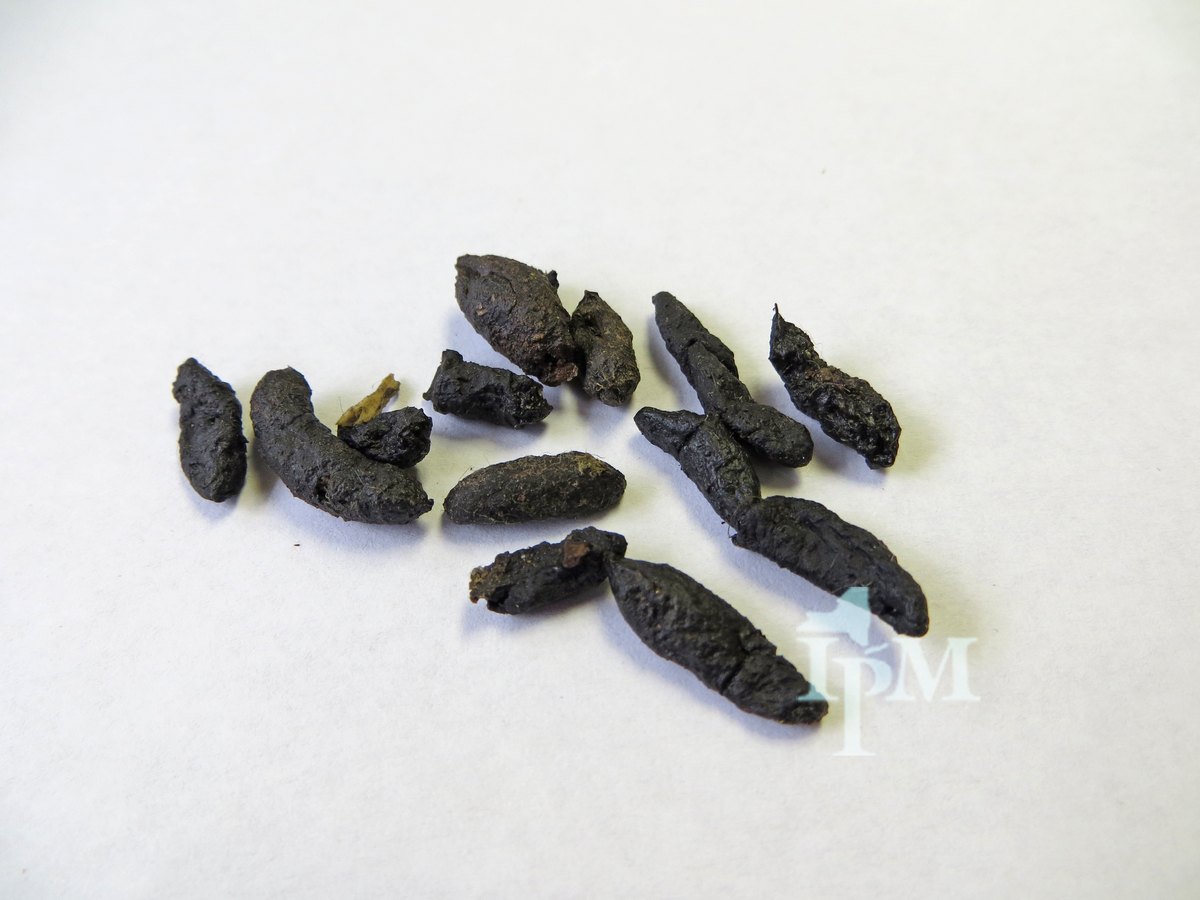
A UK government code of practice on rodent control in poultry farms adds that fresh rat droppings “can be distinguished by their moist, shiny appearance,” and that “Rats will usually deposit droppings at specific locations throughout their territories.” A wet gloss on the outside is one thing; hard flecks of beetle shell inside the dropping are another.
Hedgehogs are losing ground across Europe
In October 2024 the Western European hedgehog was moved from Least Concern to Near Threatened on the IUCN Red List. “Unfortunately, evidence points towards a worrying and widespread downward trend,” said Abi Gazzard of the IUCN SSC Small Mammal Specialist Group in a statement shared by the Mammal Society. “There is still a chance to halt the decline of the Western European hedgehog, and we must aim to prevent any further worsening of status.”
Gazzard wrote that assessment with Sophie Lund Rasmussen, a hedgehog researcher at the University of Oxford’s Wildlife Conservation Research Unit. “The battle to save these beloved species will take place in our own backyards, as they are increasingly inhabiting areas of human occupation due to habitat loss,” Rasmussen said in a University of Oxford release in March 2025.
Hedgehogs need to eat well before they hibernate
Hedgehog Street says “Hedgehogs usually hibernate from October/November through to March/April,” and that “Eating enough before hibernation is vital.” That makes the weeks before hibernation an important feeding time for wild hedgehogs in gardens.
They do not always eat alone, either. One Swiss homeowner’s camera caught a red fox and a hedgehog sharing a bowl of cat food in his garden.
A 5-inch gap in the fence helps
“Hedgehogs travel around one mile every night through our parks and gardens in their quest to find enough food and a mate,” Hedgehog Street says in its guide to linking gardens. It adds that a gap of “13cm by 13cm square is sufficient for any hedgehog to pass through,” which is why the campaign calls these openings Hedgehog Highways.
Thirteen centimeters is about 5 inches, and the campaign notes that a square that size “will be too small for nearly all pets.” Anyone who hears crickets at night has at least some insect life in the garden. Habitat does not always draw the guests people expect, as a Toronto experiment with bee hotels that wasps checked into first showed.
If it is rats, take away the food
NC State Extension tells people to look for rat feces “in and around areas where food is readily available (seeds, pet food, livestock feed, trash).” Spilled birdseed, pet food, livestock feed and open bins come first, and feed is best kept in metal containers with firm-fitting lids. If fresh signs keep turning up after that, a pest professional can take a look.
Clean up droppings without sweeping
“Don’t vacuum or sweep rodent urine, droppings, or nesting materials,” the Centers for Disease Control and Prevention says. Its clean-up guidance calls for rubber or plastic gloves and spraying the droppings “with bleach solution or an EPA-registered disinfectant until very wet,” then a 5-minute soak before wiping them up with paper towels.
The CDC’s mix is 1.5 cups of household bleach in 1 gallon of water (about 350 milliliters in 3.8 liters). The agency also notes that “The bacteria that cause leptospirosis are spread through the urine (pee) of infected animals,” a group that includes rodents.
What one dropping cannot prove
The guides quoted here disagree on details such as how long a rat dropping runs and whether its ends are blunt or pointed, so a single sample is a weak basis for a verdict. Footprints, gnaw marks, burrows and the place where the droppings turn up all count.
The hedgehog advice is also British and European. There are no wild hedgehogs in North America, so in the United States a similar dropping belongs to some other animal.
The full guide to mammal droppings, hedgehog and brown rat included, is published by the Mammal Society.
The charity asks people who find droppings to log a photo in its Mammal Mapper app, and its guidance says: “Our verifiers will do the rest.”
Photo: Jpbw / Wikimedia Commons, CC BY-SA 3.0 (cropped)