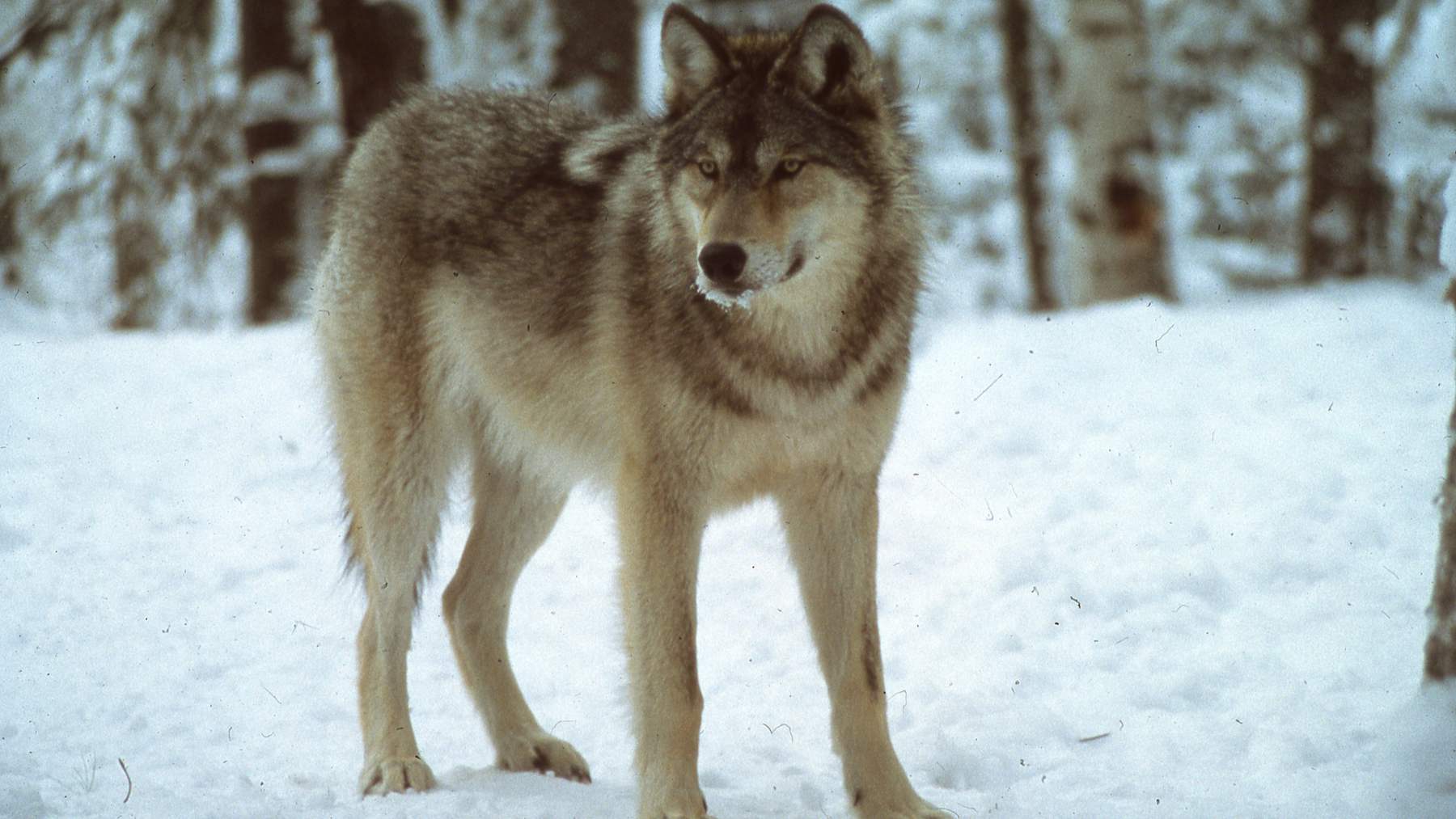
Ten years ago there were just two Isle Royale wolves left, a father and daughter who were also half-siblings, and they weren’t having pups. Now there are about 37 wolves on the island, and a new study says they have a better than 80 percent chance of making it another 20 years, even though they’re inbred.
The research team, led by Adia Sovie of Michigan State University’s Department of Fisheries and Wildlife and including staff from Isle Royale National Park, followed the 19 wolves the park brought in to rescue the population for their first five years on the island.
Nineteen wolves came from four places
Between September 2018 and September 2019, crews caught wolves in Minnesota’s Grand Portage Reservation, Michigan’s Upper Peninsula, Jostle Lake in Ontario and on Michipicoten Island, which sits in the northeast corner of Lake Superior. They flew or shipped them out to Isle Royale and let them go within 36 hours.
The park was picky. It wanted adults in good condition, not too thin, with no mange or lice, and with “no fractures or missing limbs, both eyes present and apparently functional, at least three canine teeth,” the paper says.
Every wolf got a GPS collar. Researchers also put up 156 trail cameras, howled into the woods to get pups to answer, and hiked out to den sites to look for scat.
Some of the wolves didn’t last. Of 11 deaths the team confirmed, five were wolves killed by other wolves, and two died soon after release from a trap wound and pneumonia. Still, about three out of four wolves survived each year, and by 2023 the island had three packs, at least 10 litters and at least 29 pups.
The Michipicoten family took over
Eight of the 19 came from Michipicoten, and they were all one family, a mom, a dad and six of their offspring. A year in, all eight were alive, while four of the 11 mainland wolves had died.
Rolf Peterson, a Michigan Technological University wolf researcher who has been studying Isle Royale wolves since 1971, told Science in December 2019 that their family ties were probably why. “That’s about the only explanation I can think of,” he said.
Doug Smith, then a park service biologist who had led the Yellowstone wolf reintroduction and wasn’t part of this project, told the magazine “all the mortalities are surprising.” He added, “This is an art, not a science.”
Then something happened that nobody planned for. A brother and sister from the Michipicoten family became a breeding pair in October 2019, started the island’s eastern pack and had at least 12 pups by 2023. There were 11 unrelated wolves they could have chosen instead.
“Given the availability of unrelated wolves, it is notable and unanticipated that these animals bonded shortly after translocation,” the study says. The researchers’ best guess is that being dropped somewhere new is stressful, and “familiarity likely reduces stress when acclimating to a new environment.”
Two of their brothers teamed up with a Minnesota female to form the western pack. By the end, the team thought every pup born on the island was related to the Michipicoten parents or their kids.
Inbreeding is the big worry
That matters because inbreeding probably helped wipe out the old Isle Royale wolves. The park service says it “has led to physical deformities and has, at times, resulted in low productivity and survival.”
The researchers ran their numbers 1,000 times in a computer model that looks 20 years ahead. If inbreeding doesn’t hurt the wolves, there’s a 4 percent chance they die out and the population keeps growing. If it does start cutting into pup survival and how many pups they have, the odds of extinction go up to 18 percent and the wolves slowly decline.
Sarah Hoy, an assistant professor at Michigan Tech who helps run the long-running Isle Royale wolf and moose study and wasn’t an author on the new paper, told Bridge Michigan, “The number of wolves that are currently on the island suggest that the population is doing OK. But I would say that issues with inbreeding and inbreeding depression are still an important concern for the population.”
The ice bridge doesn’t show up much anymore
Wolves first got to Isle Royale by walking across the frozen lake from Canada, probably in the 1940s, and scientists think an occasional newcomer may have wandered over the same way since. That doesn’t happen much now.
From 1975 to 1985, only two years had Lake Superior ice cover of 30 percent or less. From 2010 to 2020, only four years had more than 30 percent, according to the National Park Service, which says “the potential arrival of new wolves, who could add diversity to the gene pool, is limited.”
This past winter was an exception. An ice bridge held for about two weeks, from late January to mid-February. “Even though it only lasted two weeks, the extensive ice bridge was a welcome reminder of the conditions that prevailed in the 1970s, when mainland wolves had greater access to the island,” Peterson said in Michigan Tech’s April report.
Moose numbers are down 75 percent
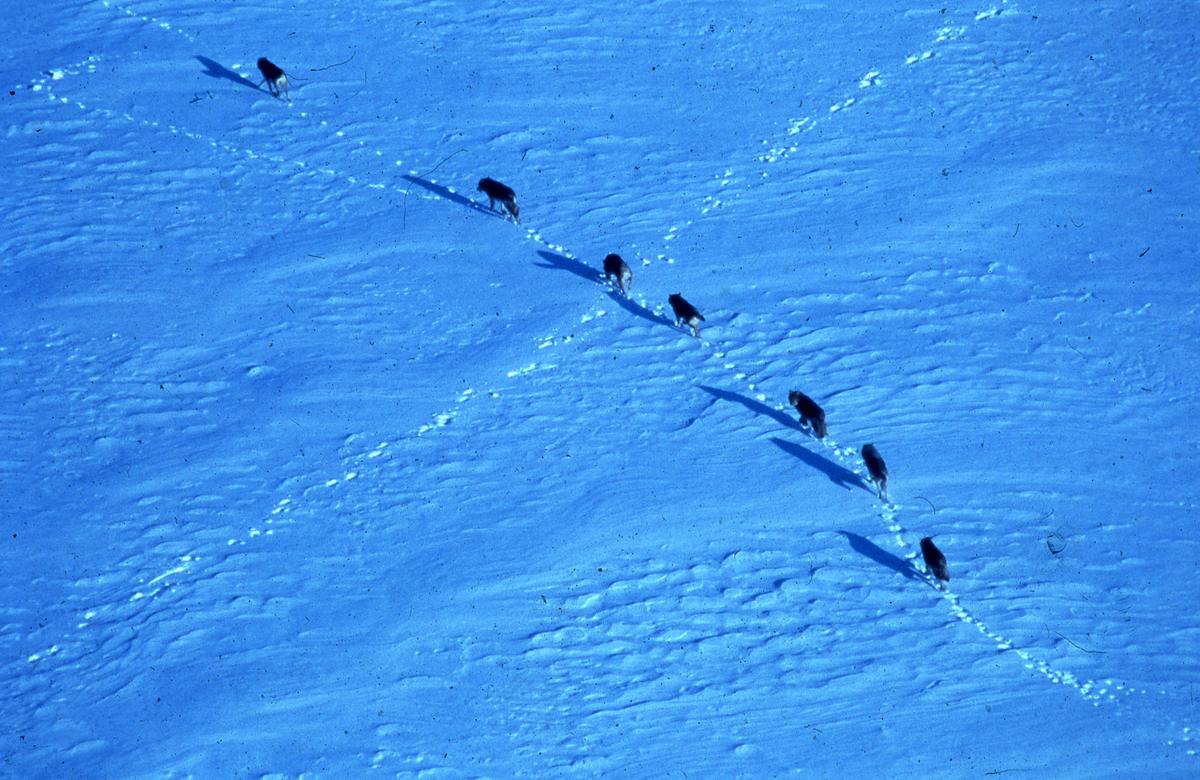
The wolves are eating well, maybe too well. Michigan Tech’s 2026 Winter Study estimated about 524 moose, down from around 2,000 in 2019, and figured wolves killed about 24 percent of the herd last year. For the first time in 68 years, the survey didn’t spot a single calf.
“In the past year, I have only seen one moose calf,” Hoy said. Wolves, on the other hand, were hard to miss. “We saw wolves on all but one survey flight,” she said, and even as the plane left for the mainland, the crew “saw a lone wolf walking out onto the ice by Washington Island.”
“The wolf and moose populations are now approaching the edge of where they have been in the past, with moose low and wolves high,” Peterson said.
It isn’t only wolves. A lot of moose starved between 2019 and 2022 after the herd ate down the young balsam fir, the same kind of damage seen with the moose that are reshaping Newfoundland’s forests. A single moose can eat 30 to 40 pounds (14 to 18 kilograms) of plants a day. In summer 2025, young firs grew about an inch (2.7 centimeters) on average, the worst ever measured.
What the study can’t tell yet
The authors admit their model has soft spots. The results “are sensitive to model assumptions, specifically carrying capacity,” meaning how many wolves the island can actually feed, and Michigan Tech researchers say they’ll be watching whether the packs can hold their balance with moose near historic lows.
Nobody knows yet how fast inbreeding will catch up with these wolves, either. All the founders came from large, outbred populations, and the team wants the park to keep an eye on pup survival, litter sizes and things like spinal deformities, the same close genetic watch that small island populations need.
The park has other wolf problems on its hands, too. In July, the park said a wolf had been spotted in a campground “sniffing and pawing at tents, dragging backpacks away from tents, and entering a tent,” and Mark Romanski, a park biologist who worked on the study, said in a statement that “visitor behavior has emerged as another important management concern.”
The full study was published in Conservation Science and Practice.
“Monitoring the population’s genetic health can help inform future management decisions including the need for additional translocations,” the authors write.
Photo: NPS