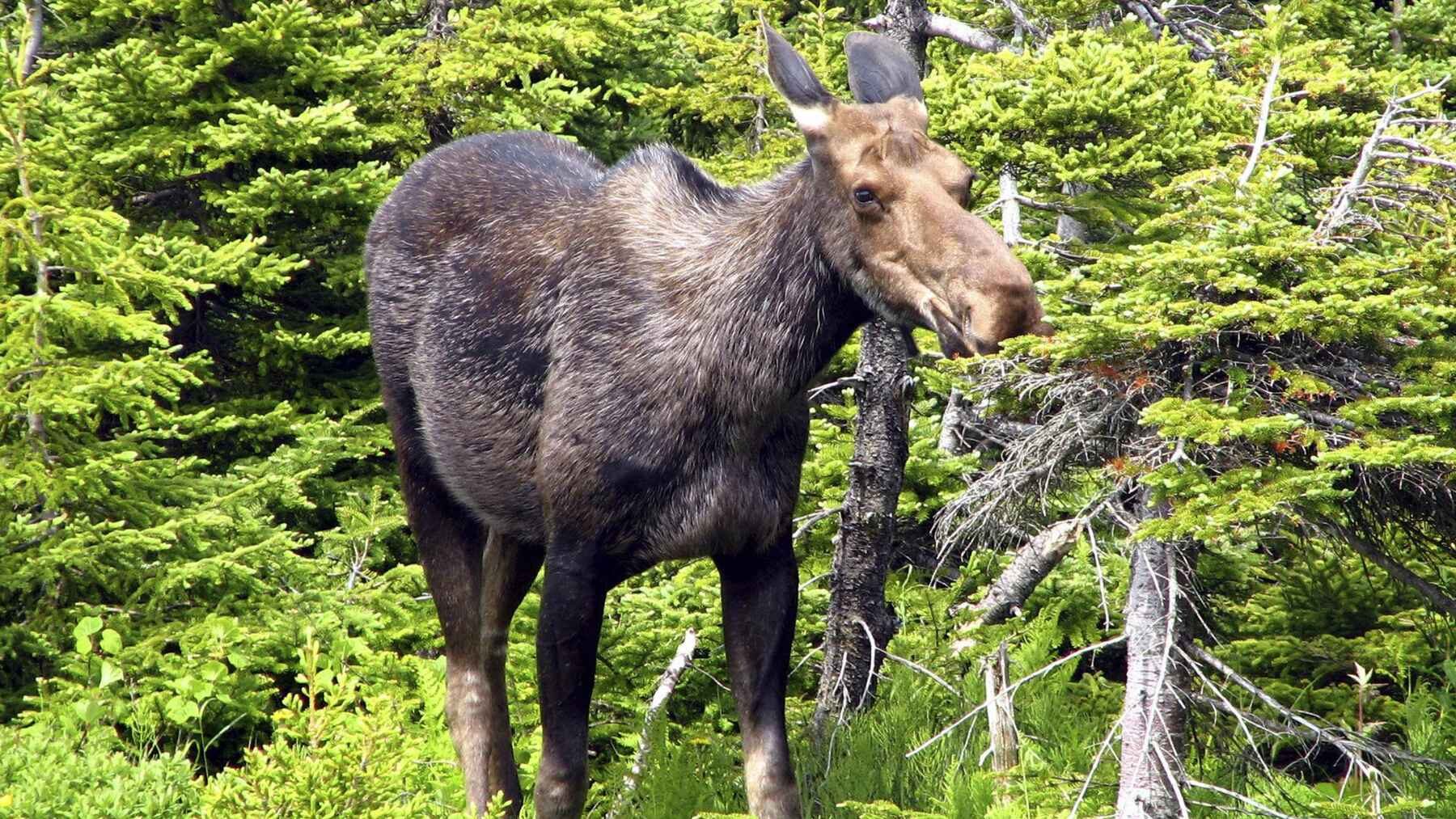
Moose were first introduced to Newfoundland in 1878, and four more were released in 1904 to create a dependable source of meat. Instead, those introductions helped unleash an ecological juggernaut. By the late 1950s, the herd may have reached about 200,000 animals. Today, provincial estimates put the population closer to 110,000.
The introductions achieved what officials had wanted: a new game animal and a dependable source of fresh meat. However, the animals’ extraordinary success also exposed a hard ecological limit, because forests cannot replace young trees and shrubs as quickly as an oversized moose population can eat them.
Why the herd exploded
Moose are native to Labrador, not the island of Newfoundland. On the island they faced no other large herbivore with the same dietary needs, while the Newfoundland wolf, their main natural predator, was already close to extinction and disappeared around 1930.
Young forests added fuel to the boom. Natural disturbances and later commercial logging produced fresh stands packed with leaves, shoots, and saplings, allowing the animals to spread across much of the island by the mid-20th century.
A million-ton appetite
Provincial wildlife information says one moose can consume about 40 to 50 lb. of twigs and shrubs per day in winter and 50 to 60 lb. of vegetation in summer. Applied to the province’s 2022 estimate of roughly 110,000 animals, a simple calculation using those official feeding rates implies a broad annual total of about 720,000 to 1 million metric tons of plant material.
That figure is only a rough estimate, not a measured islandwide total, but it captures the scale of the pressure. Moose favor many of the same young trees and shrubs a disturbed boreal forest needs to rebuild its canopy — the leafy umbrella that shades the forest floor — so repeated browsing acts like a biological lawnmower, stunting surviving trees and replacing regenerating woodland with grasses and ferns.
The first population crash
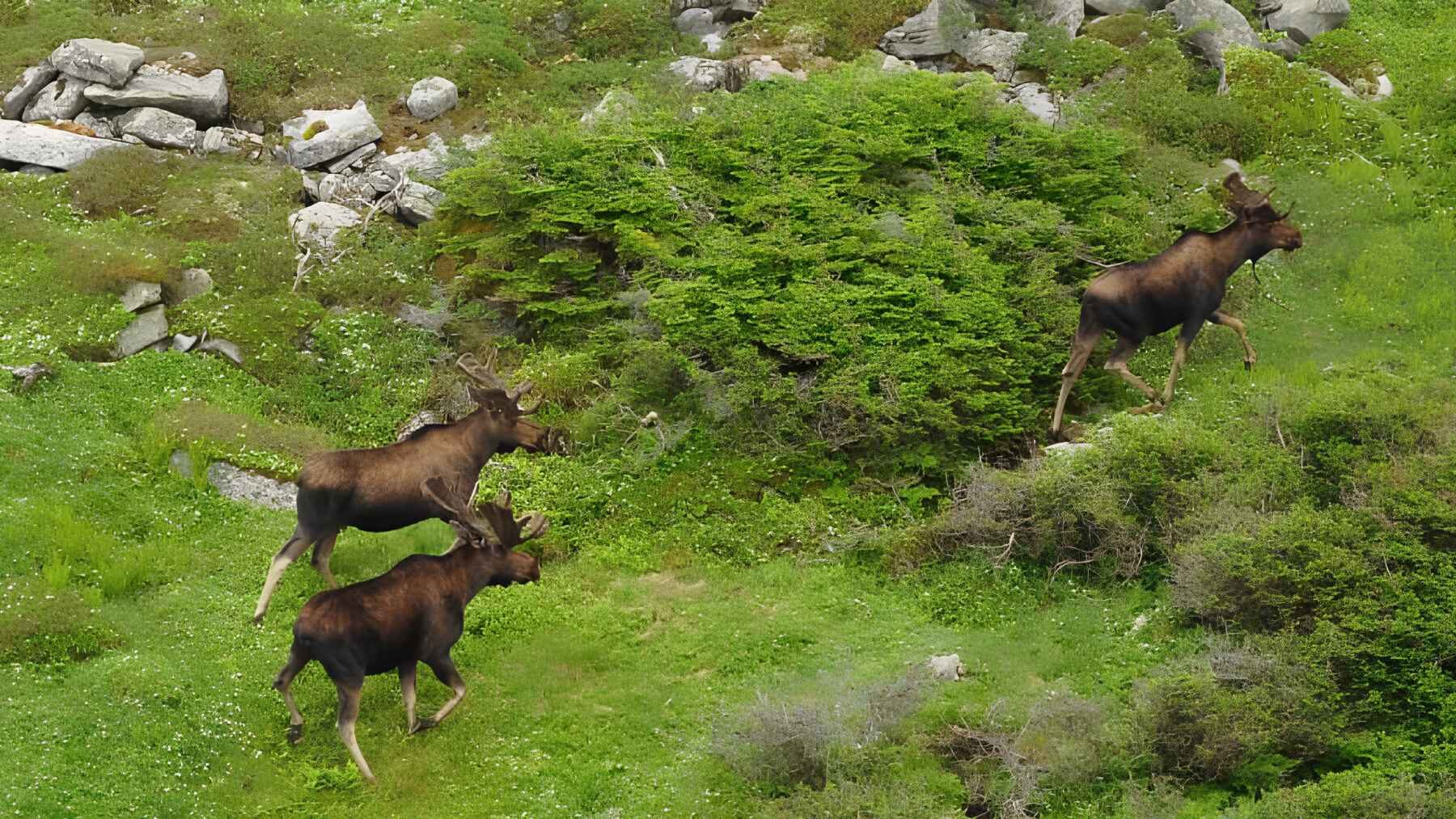
By the end of the 1950s, widespread overbrowsing had begun to catch up with the herd. The provincial plan says habitat damage, combined with localized overhunting, may have pushed the island population below 50,000 by the early 1970s.
Newfoundland responded in 1973 with an area-based quota system that remains central to management today. The approach reduced harvest where moose were scarce and allowed more hunting where dense herds were holding back habitat recovery.
Then the boom returned
The population climbed again for roughly 25 years, helped in part by commercial forestry that created young, browse-rich habitat. By the 1990s the herd had again exceeded 150,000, even as officials raised hunting quotas to prevent another runaway peak.
From the mid-1990s to 2012, moose numbers fell about 25%. Because declines also occurred in areas without hunting, provincial biologists concluded that habitat limits, rather than harvest alone, were the main driver.
Gros Morne became the warning
Gros Morne National Park shows what those islandwide figures can look like on the ground. Its moose population peaked above 7,000 animals in 1998, more than four per square kilometer of habitat, and repeated browsing contributed to failed forest regeneration and the formation of open, grass-dominated “moose meadows.”
Parks Canada began a population reduction program in 2011 and now manages the herd near a target of 2,000 animals. The agency reports lower browsing rates and stronger growth of young trees and shrubs, although some severely altered sites still need active planting and restoration.
Hunting now protects the forest
This is why hunting in Newfoundland is more than recreation or meat gathering. With no apex predator capable of controlling the island herd, provincial managers use aerial surveys, hunter reports, jawbone data, and local habitat conditions to set quotas for individual management areas.
The plan sets lower density targets in eastern regions and along heavily traveled corridors, where vehicle collisions are a concern, and higher targets in other productive forests. The same animal can be culturally valuable, economically important, and ecologically damaging when local numbers rise too far.
The balance is still moving
The 2022 management plan estimated about 110,000 moose and said an islandwide population between 96,000 and 118,000 would result if all management areas met their density targets. The province’s 2026-27 hunting guide now says the overall population has increased in recent years and raised the island quota by 1,090 licenses to 28,705.
That does not mean Newfoundland is automatically heading back to 200,000 moose, but it does show why the lesson of 1878 and 1904 still matters, because introduced species can reshape an island ecosystem for generations and require constant monitoring.