Pennsylvania residents get their say tonight on a proposed data center's runoff into tributaries of Coplay and Jordan creeks and wetlands
State regulators will only weigh comments on the data center's stormwater and stream permits, and written comments stay open until December 7.

· 3 min read
Residents of Lehigh County can question state regulators and the developer tonight about a proposed data center called Project Atlas in South Whitehall Township. The Pennsylvania Department of Environmental Protection holds a public meeting at five thirty p.m. at Cedar Crest College's Alumnae Hall in Allentown. It covers two permits: one for stormwater discharges to tributaries of Coplay and Jordan creeks and to wetlands, and one for water obstructions and encroachments. Each resident may ask one question, and a formal hearing follows from seven thirty to nine thirty, with testimony limited to three minutes. The department can only consider comments about those two applications. Written comments are accepted until Monday, December seventh. The announcement does not give the size of the data center, since it focuses only on the water permits.
Key points
- Each resident may ask one question during the meeting.
- Testimony is limited to three minutes per speaker.
- Pennsylvania labeled about 19,000 miles of streams impaired in 2016.
- The announcement does not give the data center's size.
Residents of Lehigh County can question state regulators and the developer tonight about a proposed data center and the water running off its site. The Pennsylvania Department of Environmental Protection holds a public meeting and hearing on Monday, November 23. The project is known as Project Atlas.
It starts at 5:30 p.m. at Cedar Crest College's Alumnae Hall, at 100 College Drive in Allentown. The developer is CDE Acquisitions LLC, and the site is in South Whitehall Township, Lehigh County.
The session covers two state permits, according to the department's announcement. One is an individual NPDES permit for stormwater discharges to tributaries of Coplay Creek and Jordan Creek and to other wetlands. The other is a water obstruction and encroachment permit.
How the evening works
From 5:30 to 7:30 p.m., DEP will explain its role as the reviewing and regulatory agency. CDE Acquisitions will then present the project.
During the question-and-answer portion, each resident may ask one question, to be answered by DEP and the developer. The formal hearing follows from 7:30 to 9:30 p.m. Residents can then comment on the documents and plans.
DEP asks speakers to keep testimony to three minutes so everyone gets a turn. People who register in advance get priority, and requests are accepted up to the day of the hearing.

What the state can weigh
The department can only consider testimony about the two applications. They are NPDES permit PAD390390 and water obstruction and encroachment permit E3902226-002. Oral and written comments carry equal weight, it says.
Written comments will be accepted until Monday, December 7. The application documents and conceptual plans are available at the Lehigh County Conservation District office in Allentown. They can also be reviewed at DEP's Northeast Regional Office in Wilkes-Barre.
The announcement does not give the size of the data center, such as its acreage, number of buildings or power demand. It focuses only on the water permits under review.
What the permits regulate
Construction stormwater falls under Pennsylvania's Chapter 102 program. DEP says it covers erosion and sediment control and post-construction stormwater management. Construction projects that disturb an acre or more of earth need NPDES permit coverage, while plowing, timber harvesting and road maintenance are treated separately.
Builders who are eligible may seek coverage under one of the state's general permits, PAG-01 or PAG-02. Those who are not may apply for an individual NPDES permit. CDE Acquisitions has applied for an individual permit, and the announcement does not say why.
The second permit comes from the state's Chapter 105 program. It regulates water obstructions and encroachments in streams, floodways, wetlands and other bodies of water. The same program handles water quality certifications under the federal Clean Water Act and joint permitting with the Army Corps of Engineers.
That joint process covers Section 404 of the Clean Water Act and Section 10 of the Rivers and Harbors Act. The program also handles submerged lands license agreements for regulated obstructions and encroachments.
Why runoff matters
Stormwater runoff is one of the biggest reasons Pennsylvania streams are in poor shape, according to DEP. In 2016, the department labeled about 19,000 miles of rivers and streams as impaired for water supply, aquatic life, recreation or fish consumption.
Runoff can carry sediment, car oil, lawn fertilizers, pesticides, bacteria and litter into waterways. Sediment smothers small stream creatures and clogs the spaces between rocks, destroying habitat, the department says.
Fertilizers feed algae blooms that strip oxygen from the water, and fish cannot survive when oxygen runs low. When rain runs off instead of soaking in, groundwater is not fully replenished, and springs and wells can go dry.
About 950 Pennsylvania municipalities are required to have stormwater management plans, according to DEP. Most also need pollutant reduction plans. Counties, for their part, prepare watershed stormwater plans under the state's Act 167, which DEP considers current only if updated within the last five years.
Part of a wider debate
Water is not the only environmental question raised about data centers. A Massachusetts Institute of Technology model estimated that data center air pollution caused about 650 early deaths in the US in 2023.
In Lehigh County, tonight's questions are narrower. They must concern the two permit applications, and both DEP and CDE Acquisitions will answer them.
DEP asks anyone who plans to speak or ask a question to send a written notice of intent to the contact in the announcement, though attendees may also testify without registering. People who need accommodations can also use the Pennsylvania Hamilton Relay Service at (800) 654-5984.
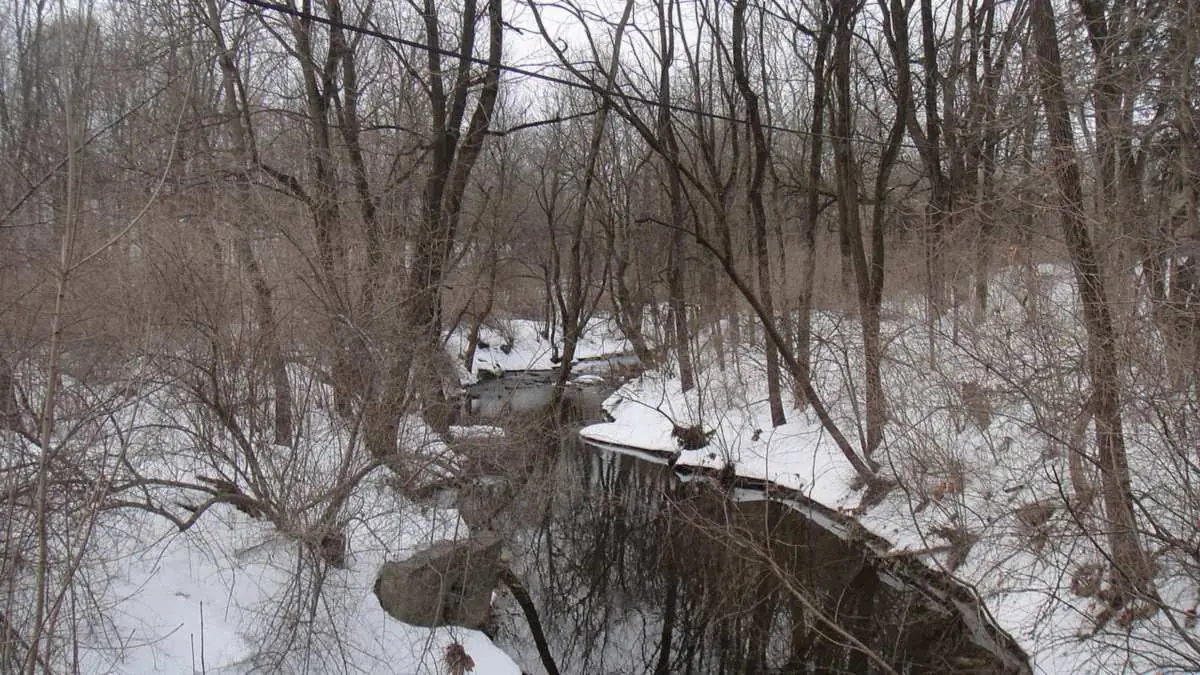
Photo: CyberXRef / Wikimedia Commons, CC BY-SA 3.0
Glossary for this story
- Wetlands
- Areas covered by water all or part of the year, such as marshes, swamps and bogs. They teem with life and store a lot of carbon.
- Pesticides
- Chemicals used to kill pests, weeds or fungi on crops.
ECOnews Newsroom
Writer at ECOnewsA team of journalists specializing in socio-environmental news, sustainability, climate change, the environment, responsible consumption, and innovation. At EcoNews, we provide clear, reliable, and relevant coverage of the environmental and social challenges shaping our era.
More from ECOnews NewsroomComments · 0
Rules ›No comments yet. Be the first to share your view.