More than 160 years ago, Mormon settlers founded a farm town on Nevada's Muddy River; its last resident rowed away in 1938, and its ruins can be seen again with Lake Mead low
Colonist Thomas Smith founded the Lake Mead town site in 1865; the lake later rose more than 60 feet above its tallest structure, the NPS says.

· 3 min read
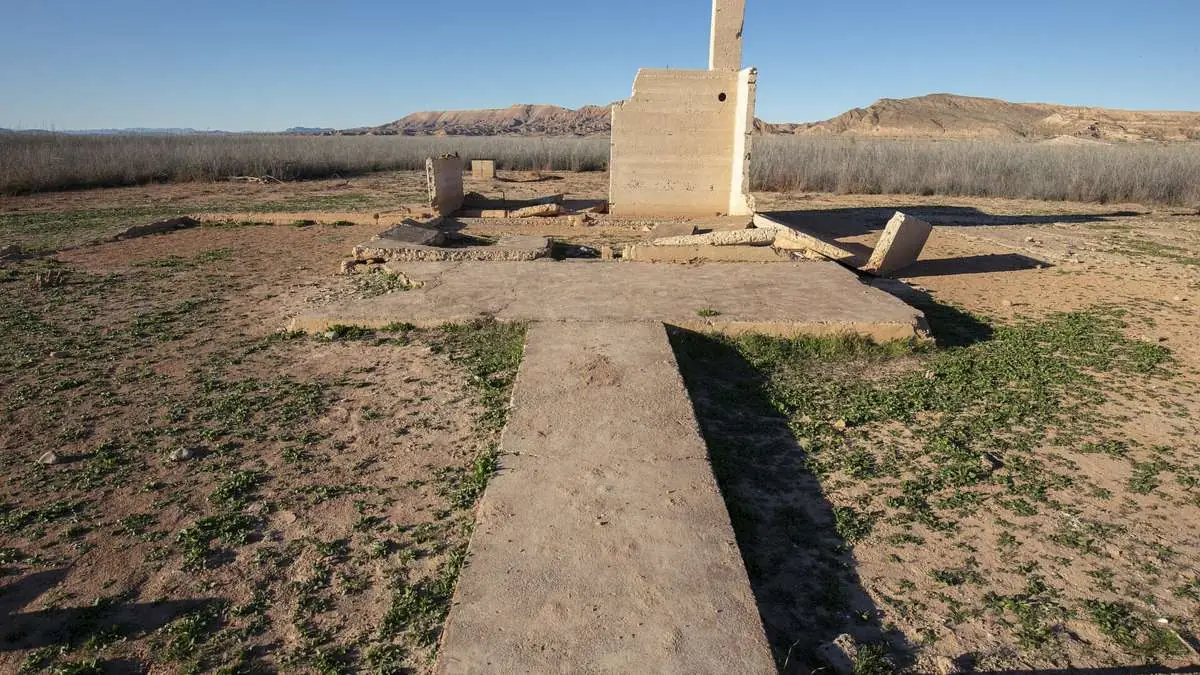
On June 11, 1938, Hugh Lord rowed away from his house in St. Thomas, Nevada, the last resident to leave a town that Lake Mead was slowly swallowing. Mormon settlers founded St. Thomas in 1865 along the Muddy River, and it grew into a town of farms, homes and stores. After Hoover Dam was built, the rising water eventually stood more than sixty feet above the town's tallest structure. Now, with the lake lower, its streets and foundations are back on dry land, and a three-mile loop trail leads down through them. The park asks visitors not to climb on foundations or disturb artifacts. The park service blames the falling water on climate change and an unprecedented twenty-year drought. On November 20, the park announced it is preparing low-water operations at Temple Bar Marina, and it has secured 539,000 dollars to keep access there down to 1,020 feet.
Key points
- Brigham Young sent 183 colonists to the Virgin and Muddy rivers in 1864.
- A three-mile loop trail runs through the old streets.
- Callville, another Mormon settlement, lies under 400 feet of water.
- Temple Bar Marina needs about 1,030 to 1,035 feet of lake elevation to operate.
On June 11, 1938, Hugh Lord rowed away from his house in St. Thomas, Nevada. He was the last resident to leave a town that Lake Mead was slowly swallowing, according to the National Park Service.
St. Thomas began as a pioneer settlement in 1865 and grew into a town of farms, homes and stores. Today, with lower water levels, its streets and foundations can be seen again inside Lake Mead National Recreation Area.
The lake is still falling, and on November 20, the park announced that it is preparing low-water operations at Temple Bar Marina, on the Arizona side of the lake.
A townsite on the Muddy River
In 1864, Mormon leader Brigham Young sent groups of 183 colonists to the area south of St. George, Utah. They set up colonies on the Virgin and Muddy rivers, the park's history page says.
In 1865, along the Muddy River, which feeds into the Colorado, colonist Thomas Smith founded a townsite soon known as St. Thomas. With room for a variety of crops, it became a successful small Mormon community.
The settlements in the area supplied food to miners downriver, the park notes. The town was also a popular stopping point for travelers, according to the NPS.
The lake rises
Life passed slowly until Hoover Dam was built. In 1928, President Calvin Coolidge signed off on what was then called Boulder Dam. The rising Colorado River then slowly filled canyons and valleys, creating Lake Mead.
Residents sold their land and tore down homes that families had lived in for generations. They said goodbye to friends and neighbors, the park recounts, and the community was soon covered by the lake.
As the lake grew, the water eventually rose more than 60 feet above the town's tallest structure, according to the NPS. Hugh Lord's departure by boat in 1938 marked the end of St. Thomas as a living town.
Back on dry ground
Now the remains are on dry land in the northern part of the park. The town site can be seen from higher ground at the trailhead, and a three-mile loop trail leads down through the old streets.
The access road to the trailhead is bumpy, so the park warns drivers of low vehicles to be careful. It also asks visitors not to climb on foundations or disturb any artifacts.
"These remnants remind us of the people of St. Thomas, those who played, worked and lived here," the park says on its page about the ruins. Rangers can be reached at 702-293-8998 to report vandalism, off-road driving or theft of artifacts.
Not the only place lost
St. Thomas was not the only settlement the lake covered. Bishop Anson Call founded another Mormon colony, Callville, about 15 miles from where Hoover Dam now stands, the park says.
Callville became a landing for Colorado River steamboats during the Civil War, until it was judged too far upriver for them. After the dam was built, it ended up under 400 feet of water and almost 80 feet of river sediment.
Bonelli's Landing, meanwhile, ran a ferry across the Colorado before the dam. Today the spot, off Temple Bar Road, is a remote beach campsite on Bonelli Bay.
Some of what the lake hides is far newer. A B-29 Superfortress that took off for a research test area near the lake on July 21, 1948, and crashed rests under the water, and falling lake levels have made the site shallower for dive tours.
Why the water keeps dropping
The NPS blames the decline on climate change and an unprecedented 20-year drought. Falling water has reshaped the park's shorelines, the park says. Keeping marinas, ramps and visitor services running has become harder.
The Bureau of Reclamation projects lake elevations of 1,040 to 1,041 feet through the rest of 2026, falling below 1,020 feet by May 2027. Temple Bar Marina needs roughly 1,030 to 1,035 feet to keep operating at its current location.
The park has secured $539,000 to maintain access there down to 1,020 feet. Below that, it plans an orderly transition that includes removing or repositioning marina infrastructure, while lodging, dining and the trailer village keep running.
"Lake Mead has a long history of adapting to changing conditions while keeping recreational opportunities available to the public," said Ed Clark, the park's acting superintendent. The work is consistent with the park's 2023 Sustainable Low Water Access Plan.
Photo: Andrew Cattoir, National Park Service
Glossary for this story
- Climate change
- A long-lasting shift in the planet’s climate: temperatures, rainfall and extreme events. Today’s change is caused mainly by burning fossil fuels.
- Drought
- A long period of much-lower-than-normal rainfall that reduces the water in rivers, reservoirs and soil.
Adrián Villellas
Writer at ECOnewsAdrián Villellas is a computer engineer and entrepreneur in the fields of digital marketing and advertising technology. He has led projects in data analysis, sustainable advertising, and solutions for new audiences. He also contributes to scientific initiatives related to astronomy and space observation. He writes for science, technology, and environmental media outlets, where he makes complex topics and innovative advances accessible to a broad audience.
More from Adrián VillellasComments · 0
Rules ›No comments yet. Be the first to share your view.