Rick Bellavance, charter fisherman and captain: "A healthy and accurate understanding of what our resources are doing is necessary for our survival"
Charter fisherman Rick Bellavance shares his sightings with NOAA, which wants Northeast fishermen to report 2026 observations by December 15.

· 3 min read
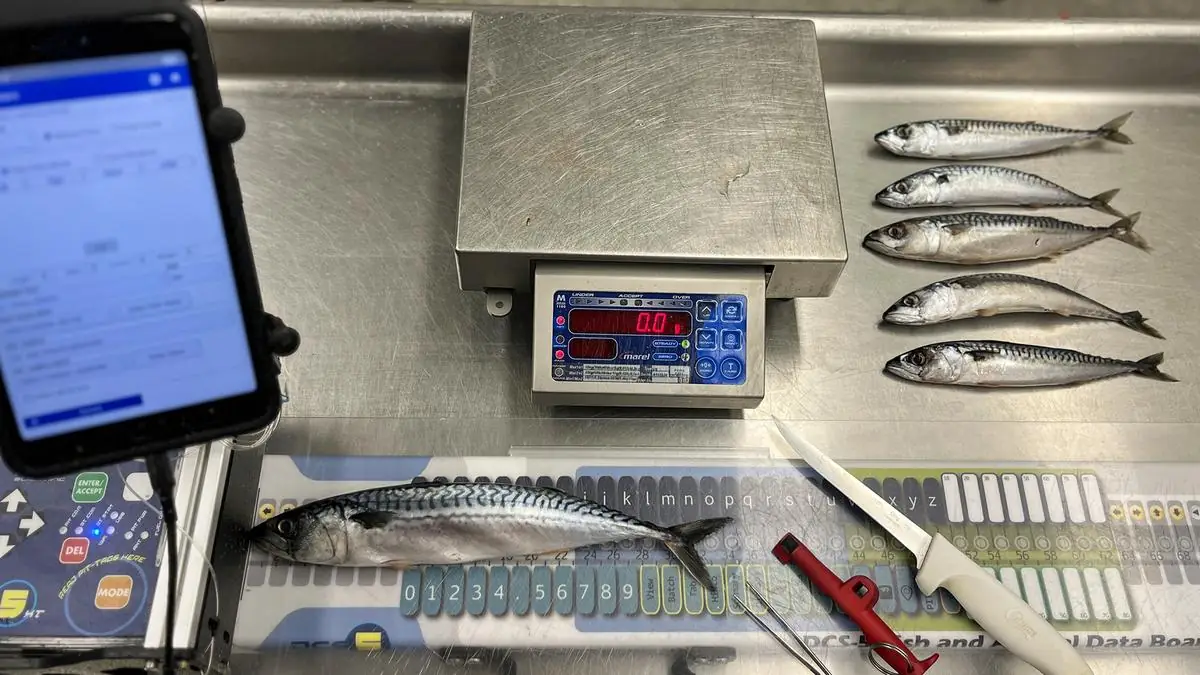
NOAA Fisheries is asking fishermen in the Northeast to share what they see on the water, and the deadline for the best chance of inclusion is December 15. Charter captain Rick Bellavance has been sending scientists his observations since 2024. He says a healthy and accurate understanding of what our resources are doing is necessary for survival. The input feeds NOAA's State of the Ecosystem reports for Georges Bank, the Gulf of Maine and the Mid-Atlantic Bight, which inform regional fishery councils. Fishermen can use an anonymous online form, send an email, or leave a voicemail. Their reports have already made a difference. Sightings of huge Atlantic mackerel schools, along with the 2025 stock assessment, led the Mid-Atlantic council to feel confident raising mackerel catch limits. Fishermen also reported excellent squid fishing this summer and two persistent warm core rings near Georges Bank.
Key points
- NOAA confirmed reports of very large shortfin squid this summer.
- Fishermen spotted mackerel schools the size of Olympic swimming pools.
- Two warm core rings have pushed warm, salty water onto the shelf near Georges Bank.
- Atlantic mackerel can live up to 20 years.
Rick Bellavance, a charter fisherman, has spent many decades fishing in the Northeast. Since 2024, he has been sending federal scientists what he sees on the water. Now NOAA Fisheries is asking other fishermen to do the same by December 15.
"I believe any fisherman who wants to protect their interest in a fishery should be willing to pass along their observations," said Bellavance, a charter fisherman and captain of the F/V Priority Too. He was quoted in a NOAA Fisheries feature published on November 23.
"A healthy and accurate understanding of what our resources are doing is necessary for our survival," he added. According to NOAA, he has also taken part in several cooperative research projects for many years.
What NOAA is asking for
The agency wants observations from commercial and recreational fishermen and anyone else regularly on the water in the region. That includes interesting or unusual ocean and fishing conditions and events in 2026.
The input feeds NOAA's annual State of the Ecosystem reports on Georges Bank, the Gulf of Maine and the Mid-Atlantic Bight. These reports inform the New England and Mid-Atlantic Fishery Management Councils.
Observations are collected year-round, but those sent by December 15, 2026, have the best chance of being included. Fishermen can use an anonymous online form or email northeast.ecosystem.highlights@noaa.gov. They can also leave a voicemail at (508) 470-1143.
NOAA asks for the general area and when the event was seen, including whether that timing was unusual. It also wants to know what the person was doing and their overall impression of the 2026 fishing year.
Why fishermen's eyes matter
"The fishing industry is on the water far more often than our scientific, fishery-independent surveys," said Kimberly Hyde. She is a biological oceanographer in NOAA's Ecosystem Dynamics and Assessment Branch, and she called fishermen's expertise and historical ecological knowledge invaluable.
Michelle Bachman, a senior fishery analyst at the New England Fishery Management Council, agreed. Fishing community members can gather information from areas and seasons that surveys miss, she said. They may see changes that other channels do not detect.
In 2025, some fishermen said they saw record levels of white marlin, according to NOAA. They also reported higher abundance of other billfish, sand lance, shortfin squid and Atlantic mackerel than in recent years. Some saw species arriving or leaving earlier or later than expected.
Fishermen's numbers also show up in NOAA's data. Study Fleet vessels self-report haul-by-haul catches, and their shortfin squid catch rates were much higher in 2026 than in 2025, according to a NOAA chart.
Sharing observations is only one route, and NOAA lists others, including its Study Fleet program and environmental monitors on lobster traps and large trawlers. Research set-asides and exempted fishing permits are also on the list. Together, the agency says, these help build a two-way relationship between the fishing industry and its science center and increase trust in the science.
When reports change the rules
Commercial and recreational fishermen have reported large schools of Atlantic mackerel, some the size of Olympic swimming pools, NOAA says. Council staff discussed those observations with the mackerel assessment lead at the Northeast Fisheries Science Center.
The 2025 stock assessment also showed a recent large increase in Atlantic mackerel recruitment and abundance. "Taken together, the council felt confident to increase mackerel catch limits," said Brandon Muffley, a fishery management specialist at the Mid-Atlantic Fishery Management Council.
Similar reports from many voices can also bring research money, NOAA notes. The Atlantic Mackerel Cooperative Research Initiative is a two-year effort between scientists and the fishing industry to better understand the stock.
According to the 2025 stock assessment, Atlantic mackerel is not overfished but still rebuilding to its target level, NOAA's species page says. The fish grow fast, up to 16 and a half inches and 2.2 pounds, and can live up to 20 years.
An unusual year at sea
NOAA received multiple reports of excellent shortfin squid fishing throughout the summer, with very large individual squid, Hyde said. NOAA confirmed those reports through its Collaborative Squid Size Monitoring program. Squid even washed ashore on Cape Cod this summer, the agency notes.
For months, two persistent warm core rings have sat along the Gulf Stream near Georges Bank. According to Hyde, they have been a source of warm, salty water onto the continental shelf. That can affect habitat for species that prefer colder water.
The rings can also open a path for warm-water species and create biological hotspots. Highlights from this year's observations will be presented to the councils and at NOAA's public science seminar in early summer 2027.
Photo: NOAA Fisheries/Sarah Salois
Glossary for this story
- NOAA
- The National Oceanic and Atmospheric Administration: the U.S. agency that tracks weather, climate, oceans and fisheries.
- Ecosystem
- A community of living things and the environment they live in, together with the relationships between them.
- Gulf Stream
- A warm ocean current that flows from the Gulf of Mexico up the U.S. East Coast and across the Atlantic, softening the climate of Western Europe.
Javier Niño
Writer at ECOnewsJavier Niño has been a Spanish National Police officer since 2017 and a journalist specialising in employment, labour law and Social Security, with more than seven years of writing experience. At ECOnews he covers environment, energy and sustainability news, focusing on how new regulations and court rulings affect people in their everyday lives.
More from Javier NiñoComments · 0
Rules ›No comments yet. Be the first to share your view.