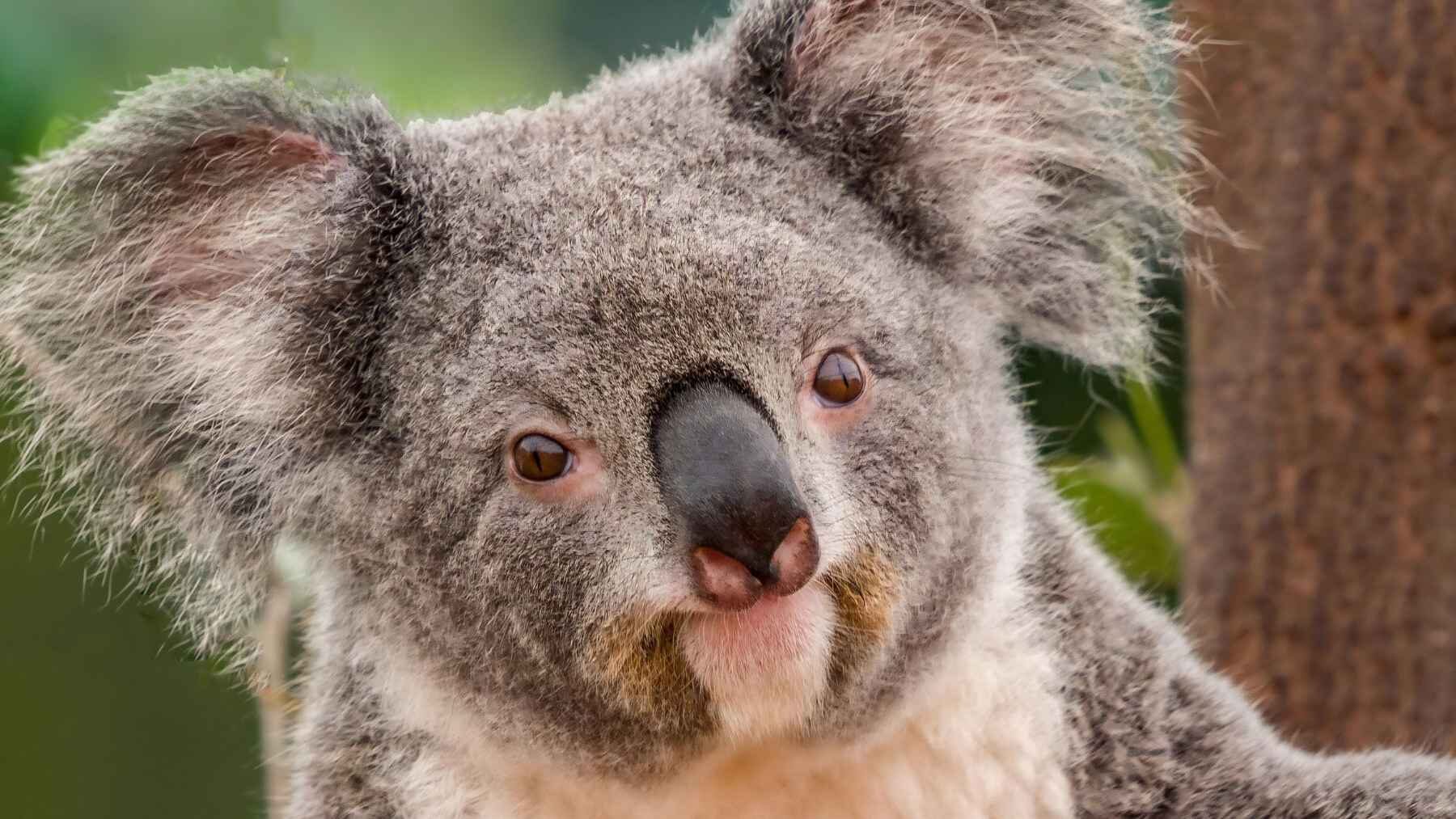
Fewer than a half-dozen koalas, and possibly only two or three, were moved to French Island in Victoria in the 1920s after hunting and habitat loss pushed southern koalas close to collapse. It sounded like a genetic dead end. How much future can a species carry when so few animals are left?
A century later, the answer is more complicated than expected. After analyzing 418 whole koala genomes, researchers found that some populations long considered genetically fragile are showing early signs of recovery, not simply decline. The finding does not make koalas safe, but it does challenge a simple idea used in conservation for decades.
Koalas nearly vanished
By the early 20th century, koalas had been hammered by the fur trade, land clearing, and wildfire. In southern Australia, historical records show that mainland populations were nearly erased, while a few island groups became the basis for later rescues.
French Island became one of the most important of those refuges. Earlier genetic research described the island population as being founded by as few as two or three koalas, a tiny starting point that would normally raise red flags for inbreeding and weak genetic health.
What scientists tested
A genome is an animal’s full set of DNA instructions, a bit like a very long cookbook for building and running a body. When many animals in a population share almost the same instructions, they may have fewer ways to respond to disease, heat, or other stress.
Researchers from the University of Sydney and Cesar Australia looked across New South Wales, Queensland, and Victoria to see what was happening inside koala populations now. The team, including Dr. Collin Ahrens, Dr. Luke Silver, and Dr. Andrew Weeks, did not just ask how much genetic diversity existed. It asked which direction those populations seemed to be moving.
The surprise in Victoria
On paper, Victoria looked like the cautionary tale. Many of its koalas trace back to severe bottlenecks, which means their numbers once fell so low that much of the old genetic variety disappeared.
Yet the new study suggests that some of these populations are growing and reshuffling genes through reproduction. That reshuffling is called recombination, and it can create new combinations of old DNA. Think of it as mixing a deck after many cards have been lost. It does not restore every card, but it can still change the game.
Ahrens described the result as “a story of genetic recovery” in some populations. The key point is not that low diversity is harmless. It is that a population can sometimes move in a better direction over generations.
Why the old scorecard may miss the picture
Genetic diversity still matters. It is one of the ways a species keeps options open when the world changes, whether that means a new disease, a hotter summer, or fewer eucalyptus trees in the neighborhood.
The study adds another layer, known as genetic load. That term means the burden of harmful mutations in a population. A group can have more diversity and still carry more risky genetic variants, while another group with less diversity may be reducing some of that burden over time.
That is why a single DNA snapshot can mislead. Weeks said conservationists have often treated genetic diversity as “a simple scorecard of extinction risk.” The new work argues that trends matter too, including whether a population is expanding, shrinking, or stabilizing.
Koalas still face trouble
None of this means koalas are out of danger. In northern parts of Australia, many koala groups are still under heavy pressure from habitat loss, disease, road accidents, dog attacks, drought, heat, and fire. Anyone who has seen a koala near traffic can understand how ordinary human life can become a deadly obstacle.
The Australian government lists koalas as endangered under national environmental law in Queensland, New South Wales, and the Australian Capital Territory. Victoria and South Australia have a different problem in some places, where local overpopulation can strip trees and leave animals hungry.
The lesson beyond koalas
For conservation biology, this is the bigger takeaway. A bottleneck is a sharp population crash that leaves only a small number of survivors. The usual fear is that those survivors pass on too little variety, along with harmful hidden mutations.
That fear is still valid, for the most part. But this study shows that scientists may need moving pictures, not just still photos. Population growth, gene reshuffling, and the changing burden of harmful mutations can all shape whether a group is slipping toward extinction or inching back from it.
The idea could matter for many animals squeezed by hunting, habitat fragmentation, disease, or climate change. Conservation teams often have to decide where to spend limited time and money, and those choices can affect whether a species gets another chance. A better genetic reading could help managers avoid missing a population that is quietly recovering, or underestimating one that is still in deep trouble.
A rescue with a long echo
The small koala rescue of the 1920s was not a perfect conservation plan. It was a last-minute move in a country where koalas had been reduced by fur hunting and habitat destruction. Even so, those few animals left a mark big enough for scientists to measure a century later.
That is the part that feels almost surprising. A handful of koalas moved to an island now helps researchers rethink how extinction risk is measured. Not a miracle. Not a guarantee. But a reminder that nature can be messier, and sometimes more resilient, than our neatest scorecards suggest.
The official study has been published in Science.