An intelligence-led operation at Cape Town International Airport has turned a single suitcase into a much bigger warning about wildlife trafficking. South African authorities arrested a 28-year-old man on Friday, June 12, 2026, after police found 150 live scorpions hidden among clothing in his luggage.
The destination of the scorpions has not been made public, and officials have not said what the suspect allegedly planned to do with them. The case lands in the middle of a growing concern for conservationists, however: the global trade in arachnids for venom, cosmetics, research, and exotic pets.
Airport arrest
The South African Police Service said the arrest followed an operation involving the Kuilsriver Stock Theft and Endangered Species Unit and CapeNature. Officers were reportedly acting on information about a person allegedly carrying scorpions at the airport.
After police identified the suspect, they searched his luggage and found the scorpions concealed between items of clothing. Photos shared by authorities showed the animals individually wrapped in clear plastic, a strange and unsettling sight for something that should have been crawling under rocks, not packed for a flight.
Police said the man was charged under South Africa’s Nature and Environmental Conservation Ordinance Act for possession of a wild animal. The commercial value of the seized scorpions had not yet been determined, and the investigation is still underway.
Why smugglers want scorpions
So why would anyone try to move 150 scorpions through an airport? The answer, generally, comes down to demand.
Scorpion venom can be extremely valuable in some markets, with certain types reported to reach about $37 million per gallon. Scientists study venom compounds for possible medical uses, while some cosmetic products market scorpion venom as a wrinkle-smoothing ingredient, a bit like the beauty industry’s more dangerous cousin to Botox.
Then there is the exotic pet trade. Rare or dangerous arachnids attract collectors around the world, and that demand can create pressure on wild populations, especially when species are taken from places where no one is carefully counting how many are left.
Tiny predators with a real job
Scorpions are easy to fear, especially when a headline mentions venom. They are not just creepy extras in the desert, however.
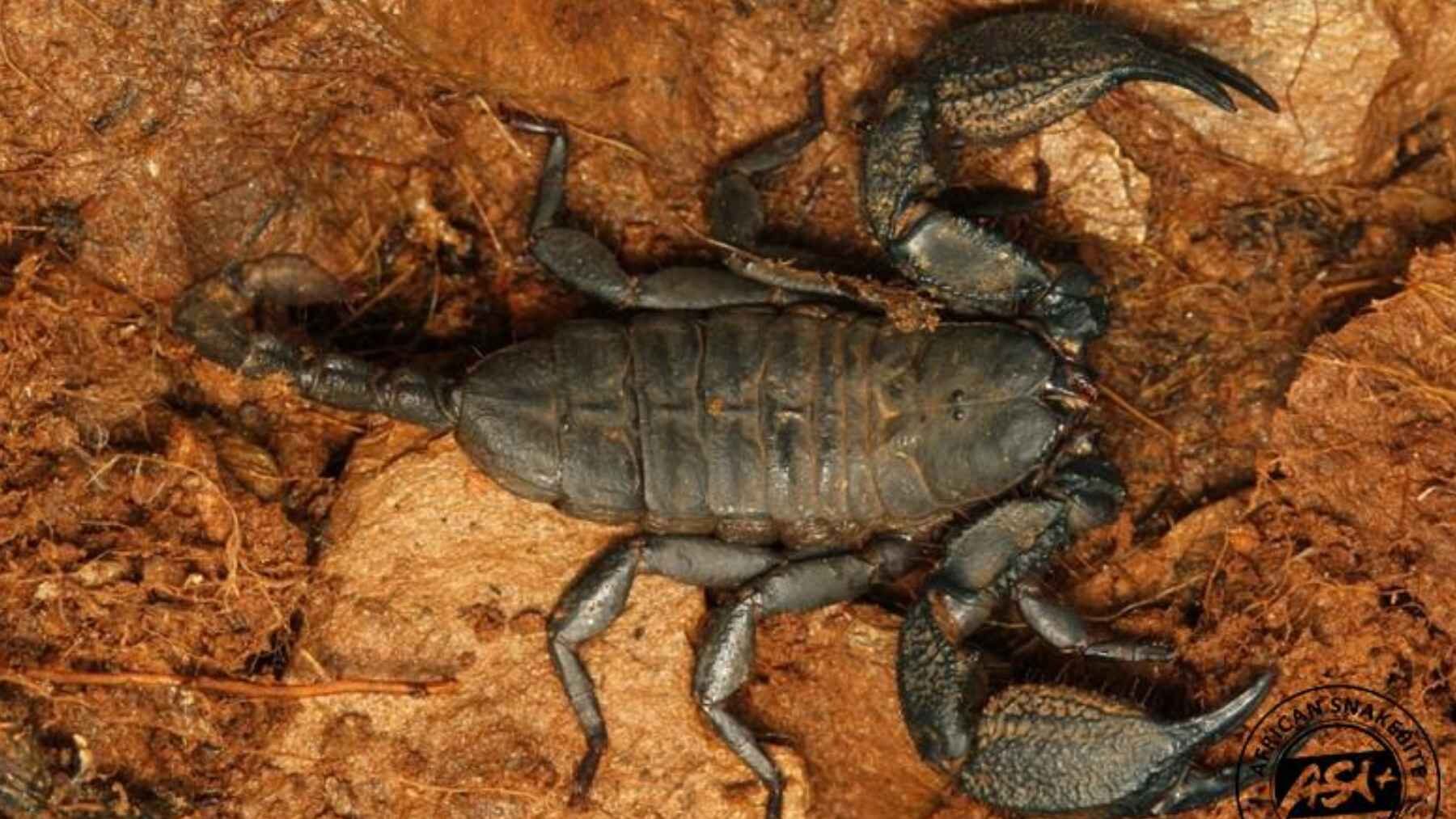
Scientists now recognize nearly 2,900 scorpion species, and many are specialized for very specific habitats. All scorpions are venomous, but only a small share have venom strong enough to pose serious danger to humans.
In ecosystems, they work as both predators and prey. They help control insects and other small animals, and burrowing species can turn and aerate soil in the process. Small creature, big job.
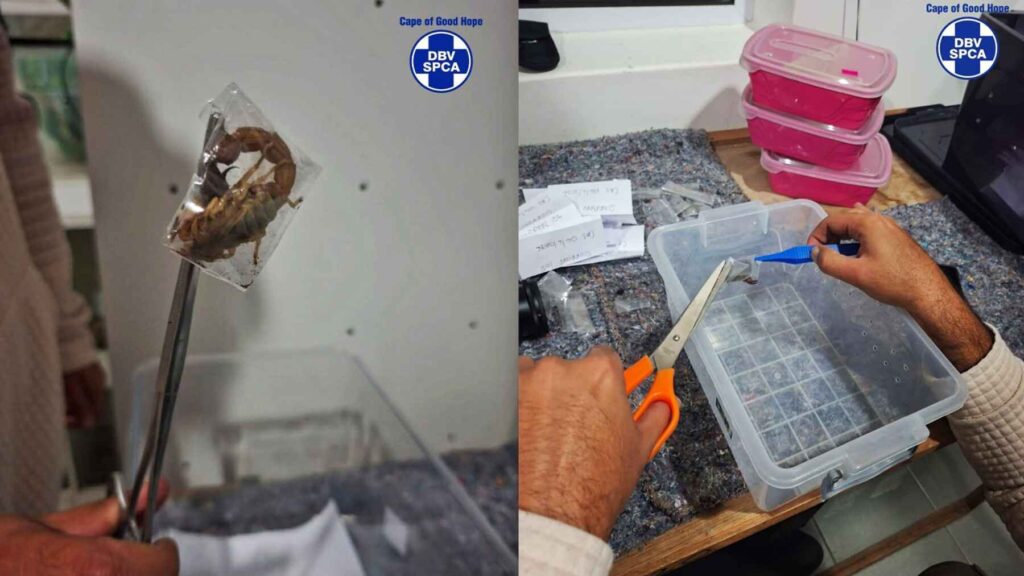
Authorities inspect and safely handle live scorpions recovered from a passenger’s luggage after a wildlife trafficking operation at Cape Town International Airport.
A trade full of blind spots
The Cape Town seizure is not just about one suspect or one bag. It points to a larger problem in wildlife trade, where invertebrates often receive far less attention than rhinos, elephants, parrots, or reptiles.
A 2025 study in the Proceedings of the National Academy of Sciences found that 21,097 species and more than 2.85 billion individual animals were recorded in U.S. wildlife trade data from 2000 to 2022. When CITES records were added, the number rose to more than 29,000 wild species.
That is a staggering amount of life moving through trade systems. For arachnids, the blind spots are especially troubling because many species are small, poorly monitored, and easy to overlook.
Conservation is catching up
Researchers warned in Science in 2025 that scorpions need a stronger place in global conservation planning. The paper noted that fewer than 1% of known scorpion species had been assessed on the IUCN Red List, while only a handful are regulated under CITES.
That matters because scorpions are also losing habitat to agriculture, mining, urban expansion, and climate pressure. Effectively, it means some species may be traded, collected, or displaced before scientists even understand where they live or how vulnerable they are.
The trouble is, the clock is moving faster than the paperwork. Once a narrow-range species disappears from a hillside, cave system, or dry scrubland, there may be no second population waiting somewhere else.
What happens next
For now, the seized scorpions are the most immediate concern. The Cape of Good Hope SPCA said the animals were being cared for and that efforts would be made to return them to their place of origin when possible.
Authorities still need to determine where the scorpions came from, where they were headed, and whether the arrest connects to a wider trafficking route. Until then, the case is a reminder that wildlife crime does not always arrive with tusks, horns, or cages. Sometimes it fits inside a suitcase.
The official statement was published on the South African Police Service.