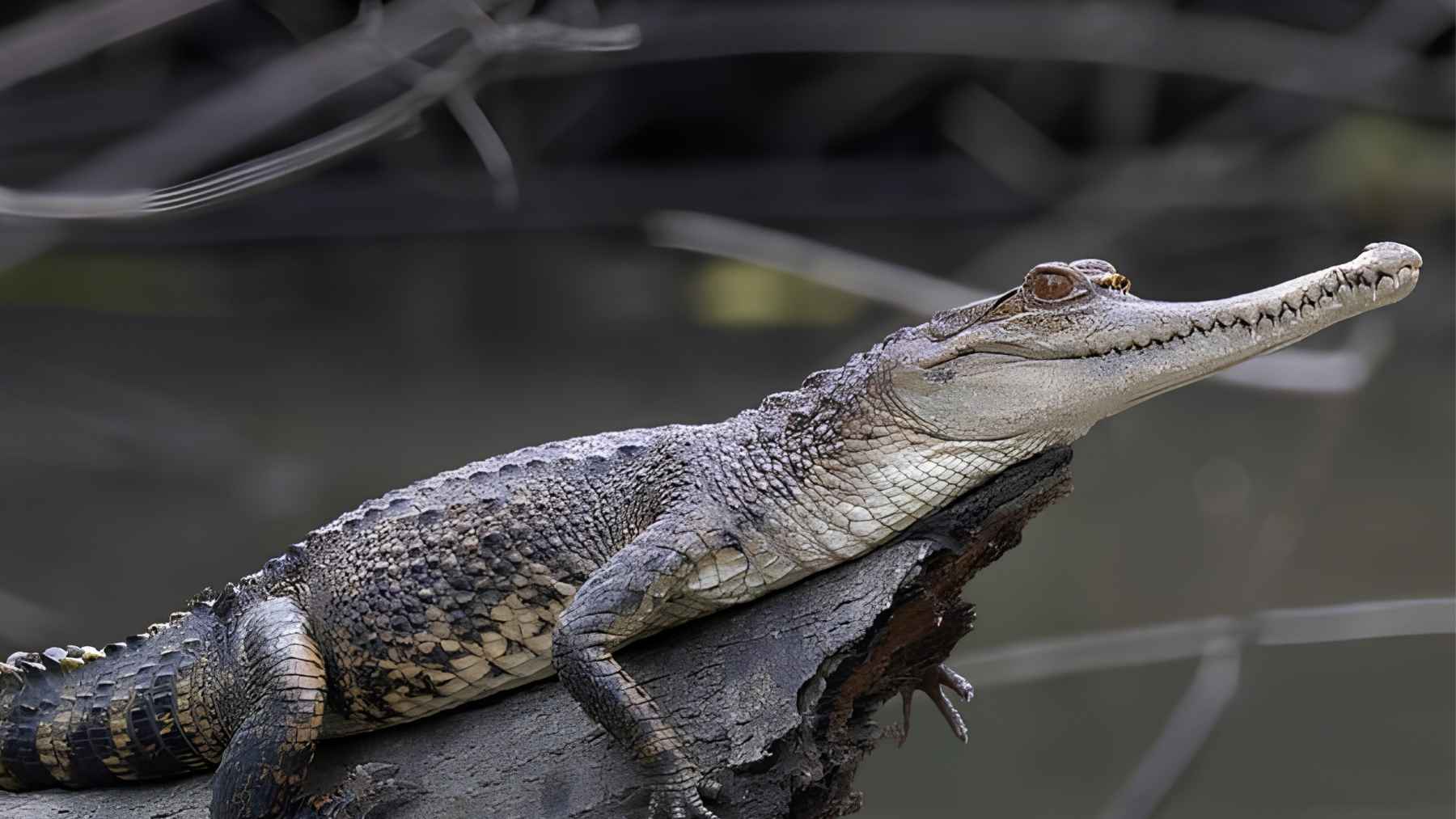
In the dark forest rivers of Côte d’Ivoire, one of Africa’s rarest crocodiles is still holding on. The West African slender-snouted crocodile (Mecistops cataphractus) has found one of its most important refuges in Taï National Park, where Ivorian environmental scientist Christine Kouman says protecting the forest and the Hana River may decide whether the species survives.
This is not the broad-snouted monster people imagine from movies. It is a shy, mostly fish-eating crocodile that can haul itself onto fallen tree limbs, hide under riverbank vegetation, and disappear before most people even know it is there.
Florida International University’s Tropical Conservation Institute estimates that fewer than 500 adult West African slender-snouted crocodiles remain in the wild, making Taï more than another protected area. It is a lifeline.
A crocodile few people know
Kouman, co-founder of the conservation NGO EBURCO, has studied this crocodile in her home country for more than a decade. Her work has been supported by Project Mecistops, a conservation effort focused on the critically endangered West African slender-snouted crocodile and other threatened species in West and Central Africa.
She describes the animal as surprisingly calm. “I can say that it is a docile crocodile, because it feeds mainly on fish, and I have never heard of it attacking people,” Kouman told Mongabay.
That does not mean the work is easy. Field research often happens at night, from a boat, in remote areas where researchers must carry their own supplies and set up camp. The largest slender-snouted crocodile Kouman captured was about 9 feet long, using a snare pole.
Why it climbs trees
The “tree-climbing” part needs a little explanation. This crocodile is not racing up trunks like a monkey, but it does use fallen trees and branches that stretch over the water.
In forest streams, there are few open riverbanks where a crocodile can bask in the sun. So the slender-snouted crocodile uses rocks and fallen trees, pulling itself out of the water in a way that shows just how closely its life is tied to the shape of the rainforest.
It also hides under vegetation hanging over the river. Why there? When fruit drops into the water, fish gather, and fish are exactly what this long-snouted predator is built to catch. The EDGE of Existence program notes that the species’ slender snout is especially suited for capturing fish, its main food source.
A river turning cloudy
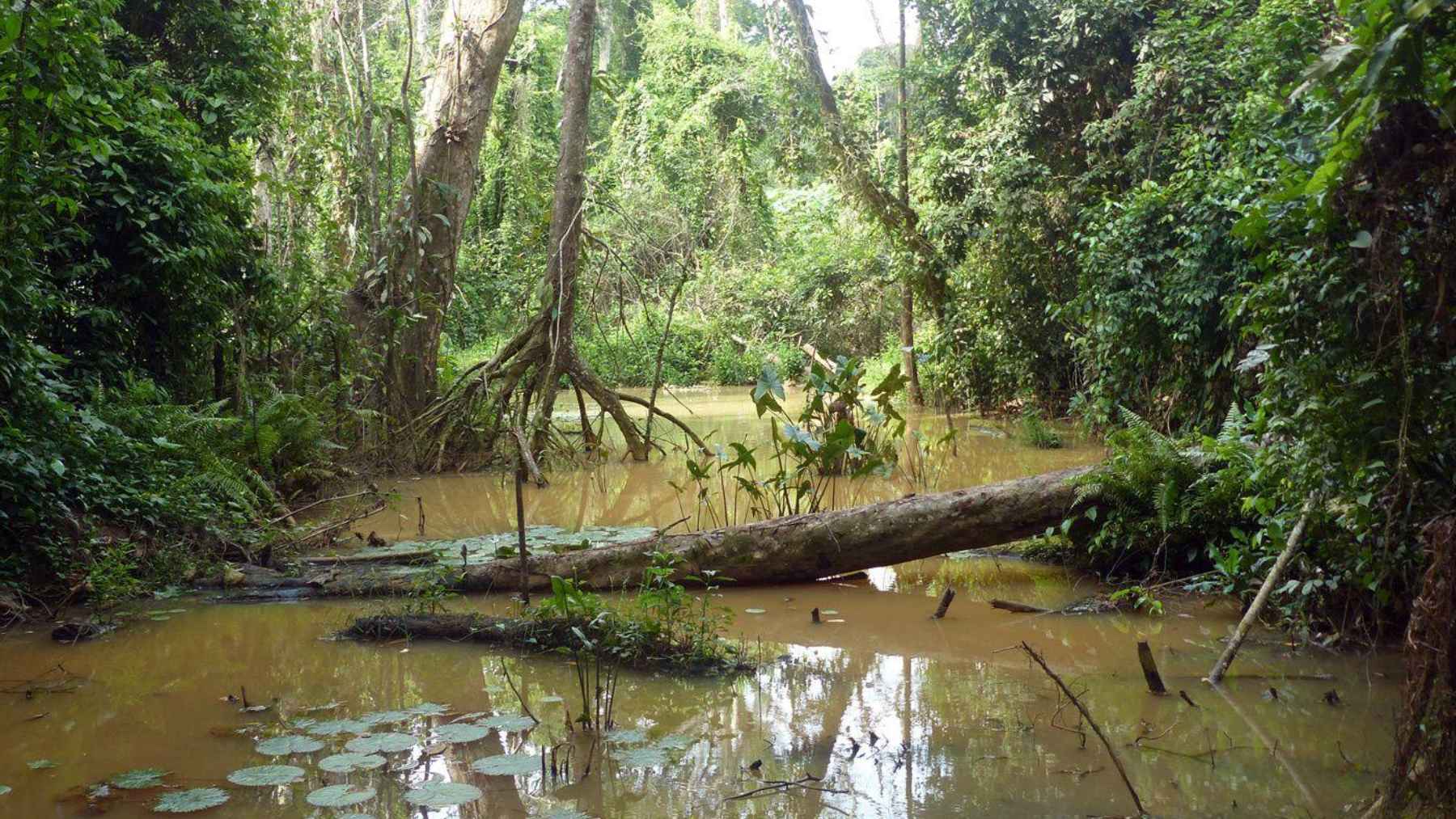
For Kouman, one of the most worrying changes is the Hana River itself. When she began her doctoral research more than 10 years ago, she said the water was so clear it could be drunk without filtering.
Since 2019, that has changed. The river has become muddy and turbid, a shift Kouman and local farmers and fishers link to mining near the park’s eastern boundary and, at times, inside the park. That kind of change is not just ugly to look at. It can reshape the food chain.
If the fish decline, the crocodile loses the meal it depends on most. Clean water also matters to nearby communities, where fishers described the park as a kind of natural bank, a protected reserve that can help replenish fish outside its borders.
Forest is the real shield
The crocodile’s future is not only about water. It is also about trees.
Kouman is direct about this point. The West African slender-snouted crocodile is a forest species, and without forest cover, she says, it cannot survive. A study by her colleague Dr. Ahizi Michel found that places in Côte d’Ivoire where the species once lived no longer had it in unprotected areas, while viable populations remained in well-protected forest zones.
That pattern fits the broader warning from conservation groups. The species faces pressure from habitat degradation, fragmentation, human disturbance, hunting, and fishing practices across its range. In practical terms, that means a crocodile can vanish not only when it is hunted, but also when the river gets silted up, the trees come down, or the fish disappear.
Taï may be its best chance
Kouman has called Taï a “paradise” for slender-snouted crocodiles. It is easy to see why. The park still offers the kind of shaded river habitat this animal needs, along with rocks, fallen trees, overhanging plants, and fish-rich waters.
But paradise does not protect itself. Keeping illegal or harmful mining away from the river, maintaining forest cover, and supporting long-term monitoring all matter. So does training local conservationists, one of the goals Project Mecistops highlights in its work with national partners and graduate students.
At the end of the day, this is not just a story about a rare crocodile with an unusual climbing habit. It is a story about how a muddy river can warn us that an entire ecosystem is under pressure. Save the water and the forest, and the crocodile has a chance.
The field interview was published on Mongabay.