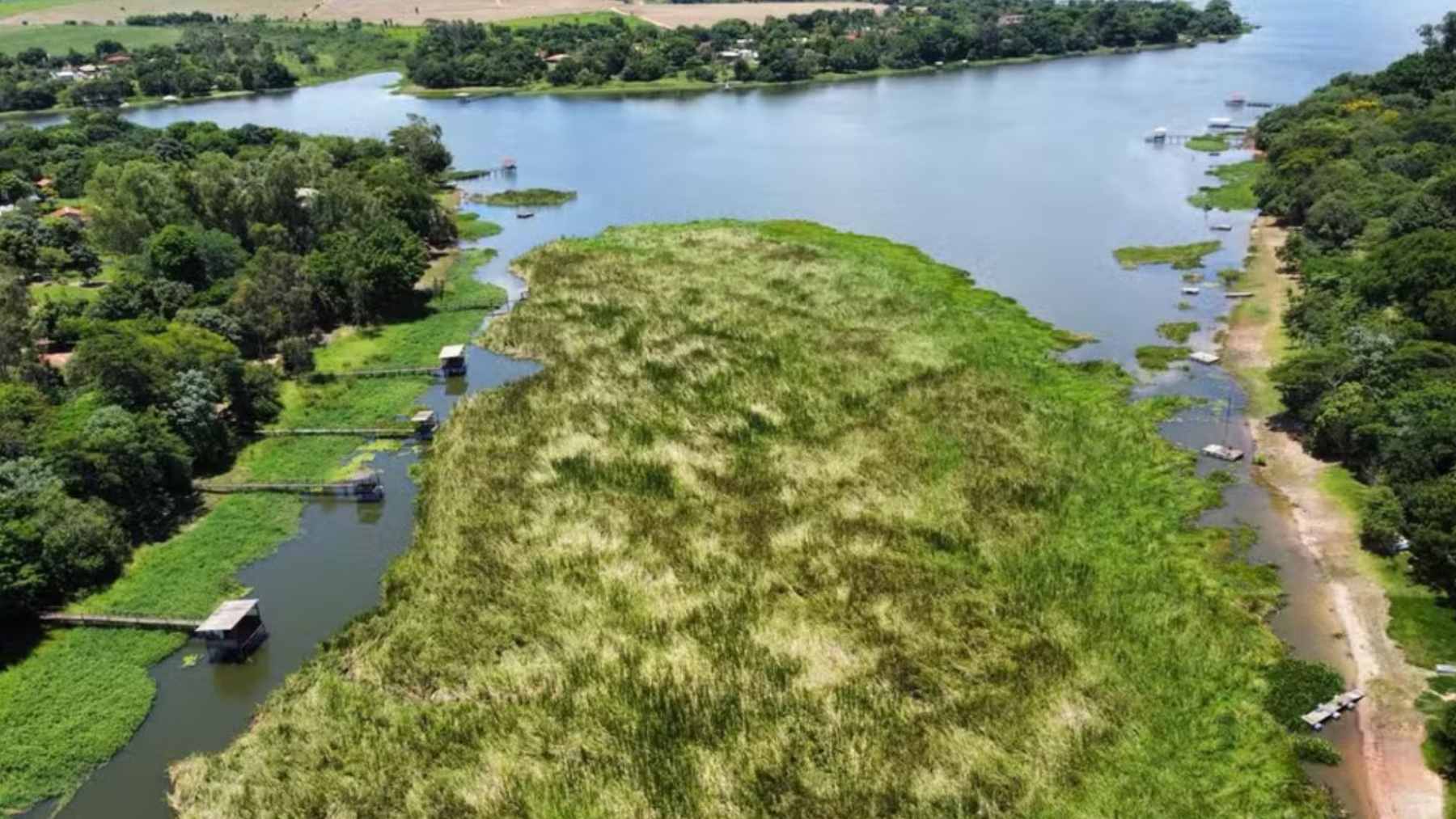
A thick green layer of aquatic plants has spread across part of the Rio Dourados in Lins, São Paulo, turning a stretch used for boats, tourism, and weekend homes into a slow-moving obstacle. Local reports say the vegetation has blocked boat traffic, damaged wooden docks, and worried residents who depend on the river for access and recreation.
At first glance, it can look almost like a floating lawn. But the problem is not just cosmetic. Environmental agencies point to eutrophication, a process in which too many nutrients in the water help plants and algae multiply faster than the ecosystem can handle.
A floating mat blocks the river
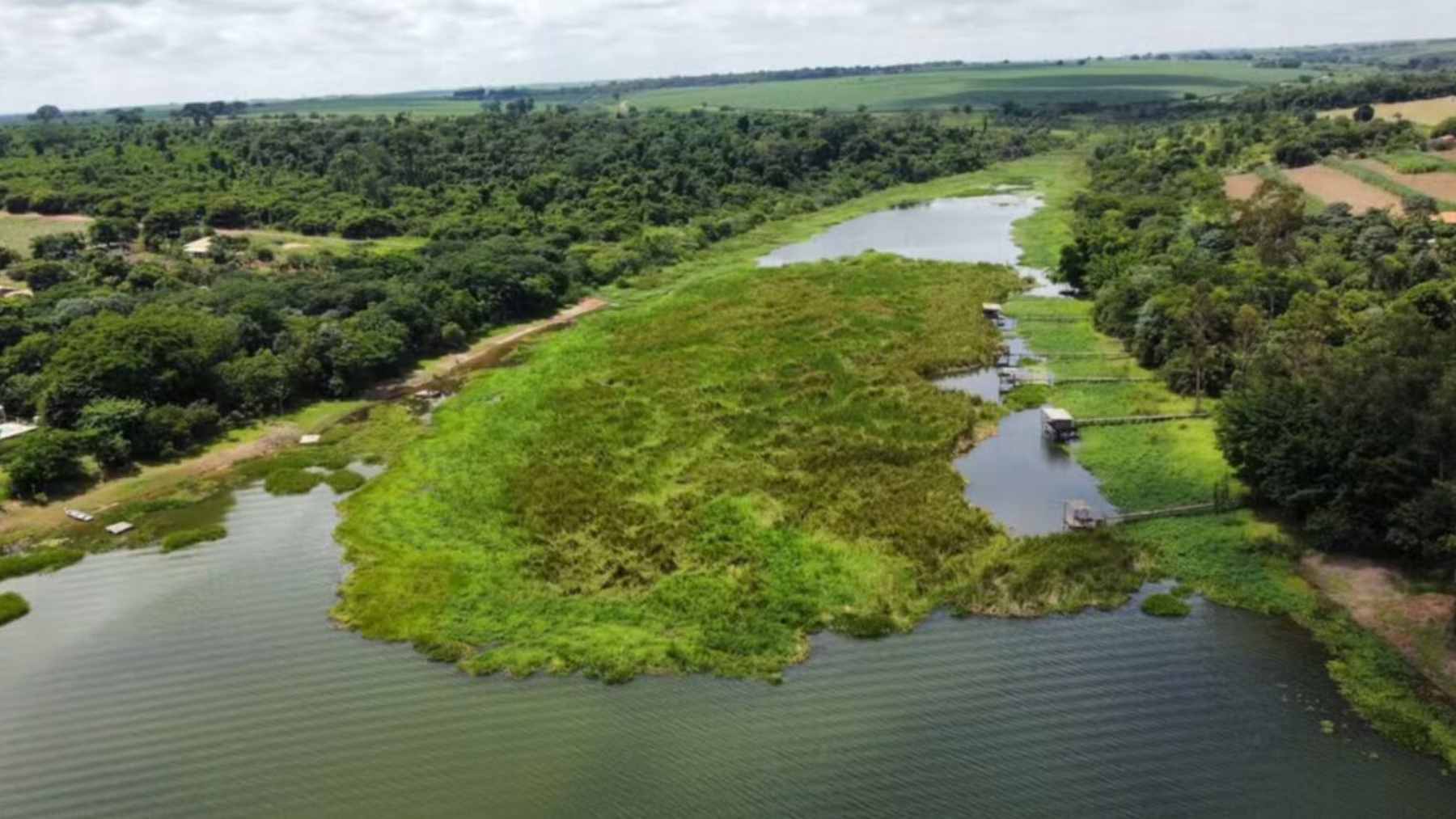
Videos and reports from the area show aquatic vegetation covering large parts of the riverbed. Residents say boats and jet skis have had trouble passing, while tourism and leisure activities have taken a hit in a place where river life is part of the weekend routine.
The buildup appears to be worse near the bridge connecting Lins and Sabino. According to local accounts, the larger plants struggle to pass under the structure, creating a natural traffic jam on the water and pushing the green mass toward riverfront properties.
Why these plants spread
The plants are known as macrophytes, a technical word for aquatic plants large enough to be seen with the naked eye. They can be part of a healthy river, offering shelter for fish and other small animals.
So what turns useful plants into a problem? The main suspect is eutrophication, which means the water has become too rich in nutrients such as nitrogen and phosphorus. Brazil’s National Water Agency explains that this process can reduce navigation, change fish communities, cause bad odors, and encourage excessive growth of aquatic plants.
The warning sign in the water
Warm weather and rainy periods can make the situation worse, especially when nutrients are already available in the river. In practical terms, that means the same conditions that make plants grow in a garden can also help them explode across a waterway.
Cetesb, São Paulo’s environmental agency, monitors a measure called the Trophic State Index, which tracks water quality based on nutrient enrichment and effects such as excessive algae and cyanobacteria growth. It is a way to read the river’s health before the symptoms become impossible to ignore.
Removal is not simple
Residents want the plants removed, and understandably so. A dock smashed by a heavy mat of vegetation is not an abstract environmental debate for someone who keeps a boat tied there.
But pulling the plants out without planning can create new problems. Technical teams still need to identify the dominant species and choose a method that does not spread fragments, disturb wildlife, or shift the damage downstream.
That is the tricky part. A quick cleanup may look good for a few days, but if roots, stems, or nutrient sources remain, the green blanket can return.
State inspections add pressure
The local problem comes as São Paulo officials are already tightening environmental enforcement in the broader Tietê River region and its tributaries. State authorities reported 401 inspections by the integrated Tietê inspection group, with fines totaling 13.7 million Brazilian reais, which is about $2.7 million using Brazil’s central bank conversion rate.
Those inspections included sewage systems and industries, two possible sources of nutrient loads when waste is not properly managed. That does not prove one single cause for the Rio Dourados outbreak, but it shows why officials are looking beyond the plants themselves.
At the end of the day, the plants are the visible part. The harder question is what the water is carrying before the green mat appears.
Auren points to natural growth
Auren Energia, which lists the Promissão hydroelectric plant among its São Paulo assets, has said in local reporting that macrophyte growth in tributary rivers occurs naturally and is not directly tied to power generation. The company also cited heat, rain, and available nutrients as factors that favor the spread of the plants.
That explanation does not erase the residents’ concerns. For the most part, people along the river are dealing with immediate damage, blocked access, and the fear that the next wave of plants could break more wooden structures.
The dispute now sits in a familiar place for environmental problems. One side is asking for urgent action, while technical teams and public agencies say the response has to be careful enough not to make the river worse.
What happens next
The next step is identification. Once specialists confirm which plant species is dominating the stretch, authorities and operators can weigh removal options, containment, and longer-term controls on the nutrient buildup that feeds the growth.
This case is also a reminder that river pollution does not always look like dark water or floating trash. Sometimes it looks green, alive, and almost harmless, until boats cannot move and docks begin to break.
For residents in Lins, the answer cannot come only from reports and inspections. They need the river to move again.
The official state update on monitoring and enforcement has been published by the São Paulo Secretariat for Environment, Infrastructure and Logistics.