A female Edwards’s pheasant born at Bioparc Fuengirola in Málaga has completed a journey of thousands of miles to Vietnam, where conservationists hope she can help restart a species missing from its native forests for decades. The bird, born two years ago on Spain’s Costa del Sol, is now part of Bring Back Blue, an international reintroduction effort built around patient breeding, careful science, and protected habitat.
This matters because the Edwards’s pheasant, also called the Vietnam pheasant, has not been reliably observed in the wild since 2000. The International Union for Conservation of Nature lists it as Critically Endangered and Possibly Extinct in the Wild, a warning that the species may now survive mainly because zoos and conservation centers kept it alive under human care.
A long trip home
Before reaching Vietnam, the female traveled to Germany, where selected birds passed through quarantine, health checks, genetic screening, and behavioral evaluation. She was chosen through the European Endangered Species Programme, known as the EEP, which looks for birds that can strengthen the future population rather than simply increase the number of animals.
What does that mean in plain terms? This was not a one-way trip from one zoo to a random forest. The team is trying to build a population that is healthy, diverse, and able to raise future chicks in the climate where the species once belonged.
The bird itself
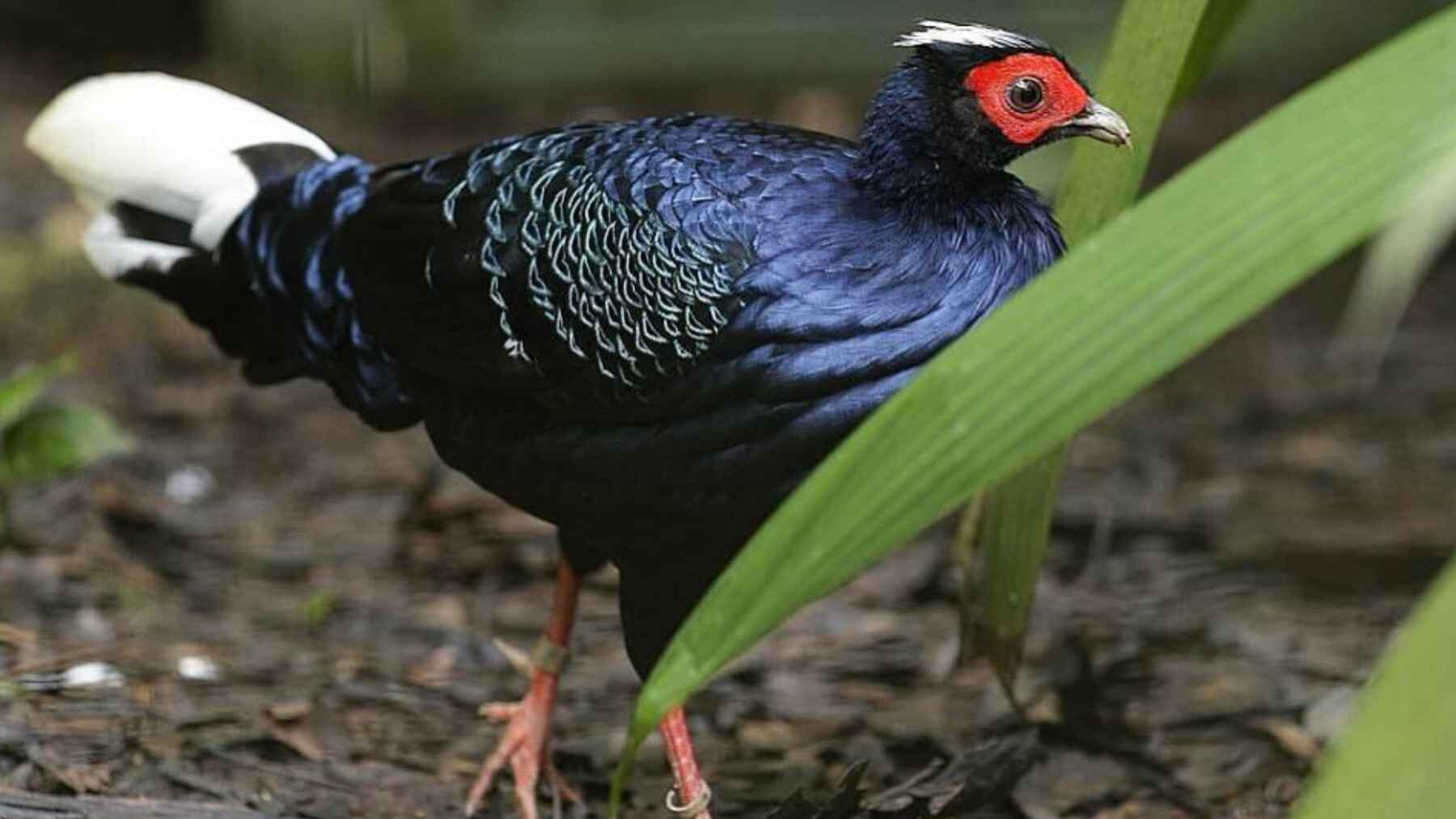
The Edwards’s pheasant is a medium-sized forest bird, roughly 23 to 26 inches long in males and weighing about 2.2 to 2.4 pounds. Males are dark metallic blue, with a short white crest, scarlet facial skin, and crimson legs, while females are mostly chestnut brown, a color that helps them blend into the forest floor.
The simple version is camouflage and display. The male is built to stand out during courtship, while the female is built to disappear into leaves and shadows. These birds spend much of the day scratching at the ground for seeds, fallen fruit, leaves, and small insects.
Why it vanished
The species once lived in dense, humid forests in central Vietnam, where low vegetation worked like a shield. But hunting, trapping, forest loss, and the long-term ecological damage left by the Vietnam War pushed the bird toward disappearance.
For an animal that lives close to the ground, losing thick cover is like losing both a home and a hiding place. Add snares and habitat fragmentation, and the problem becomes more than one bird can outrun. That’s why conservationists now treat the species as one of the clearest examples of how a forest can go quiet before most people notice.
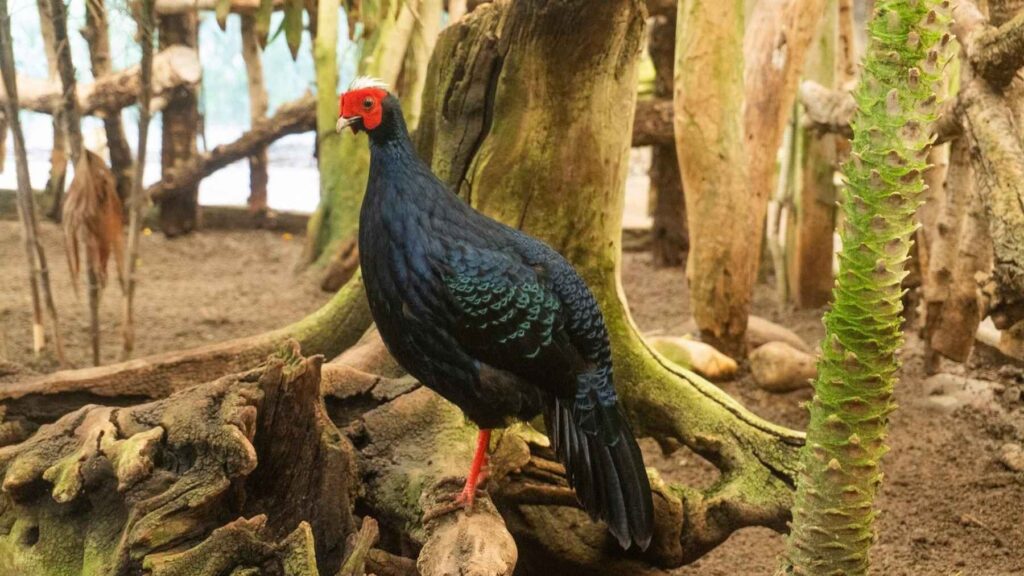
An Edwards’s pheasant at Bioparc Fuengirola, where captive breeding supports the international Bring Back Blue program to help reestablish the species in its native Vietnamese forests.
No quick release
The birds sent to Vietnam will not be released immediately into the wild. They will first adapt inside specialized conservation and breeding centers, form breeding pairs, and produce new generations raised in Vietnam by their own parents.
Reintroduction is the process of returning a species to an area where it has vanished or nearly vanished. It sounds simple, but it is closer to rebuilding a small village than opening a cage door. Food, shelter, disease risk, predators, genetics, and local protection all have to line up.
That slower approach may feel less dramatic, but it gives the project a better shot. In practical terms, the Málaga-born female is not expected to save the species by herself. Her real role is to become part of a breeding foundation for birds that may one day step into protected Vietnamese forest.
Forests are part of the plan
Conservation is also happening away from the aviary. Zoo Berlin says Viet Nature, the World Pheasant Association, and BirdLife International are among the partners working to protect and restore former habitat, including a 30-year lease signed in 2015 for about 1,900 acres in the Khe Nuoc Trong area.
That land matters because birds cannot return to a memory. They need real forest, fewer snares, and local communities that see the animal as part of their natural heritage rather than a forgotten name in a field guide.
The European Association of Zoos and Aquaria has also described work on a breeding center in Le Thuy district, in Quang Binh province, with holding aviaries and breeding spaces designed to prepare birds for the long path back to the wild. By the organization’s own account, the broader goal is that Vietnam could again be home to these pheasants by the next Year of the Rooster in 2029.
What happens next
The next stage is patience. Birds born in Vietnam will need to grow, pair, reproduce, and eventually prove that they can handle a carefully managed return to protected forest. For the most part, success will be measured in chicks, survival data, and whether habitat protection holds up over time.
Dr. Leah Williams, Lead Conservation Scientist at Chester Zoo, said, “When reintroducing a species, it’s really important to know how well they are able to survive in the wild.” That is why teams are testing radio tracking methods that could allow scientists to follow released birds without constantly disturbing them.
A bird that disappeared from the forest is not back yet. But, for the first time in years, part of the path home is visible. The Málaga-born pheasant is a small traveler in a much larger rescue plan, and that is exactly why her journey matters.
The official press release has been published by Bioparc Fuengirola.