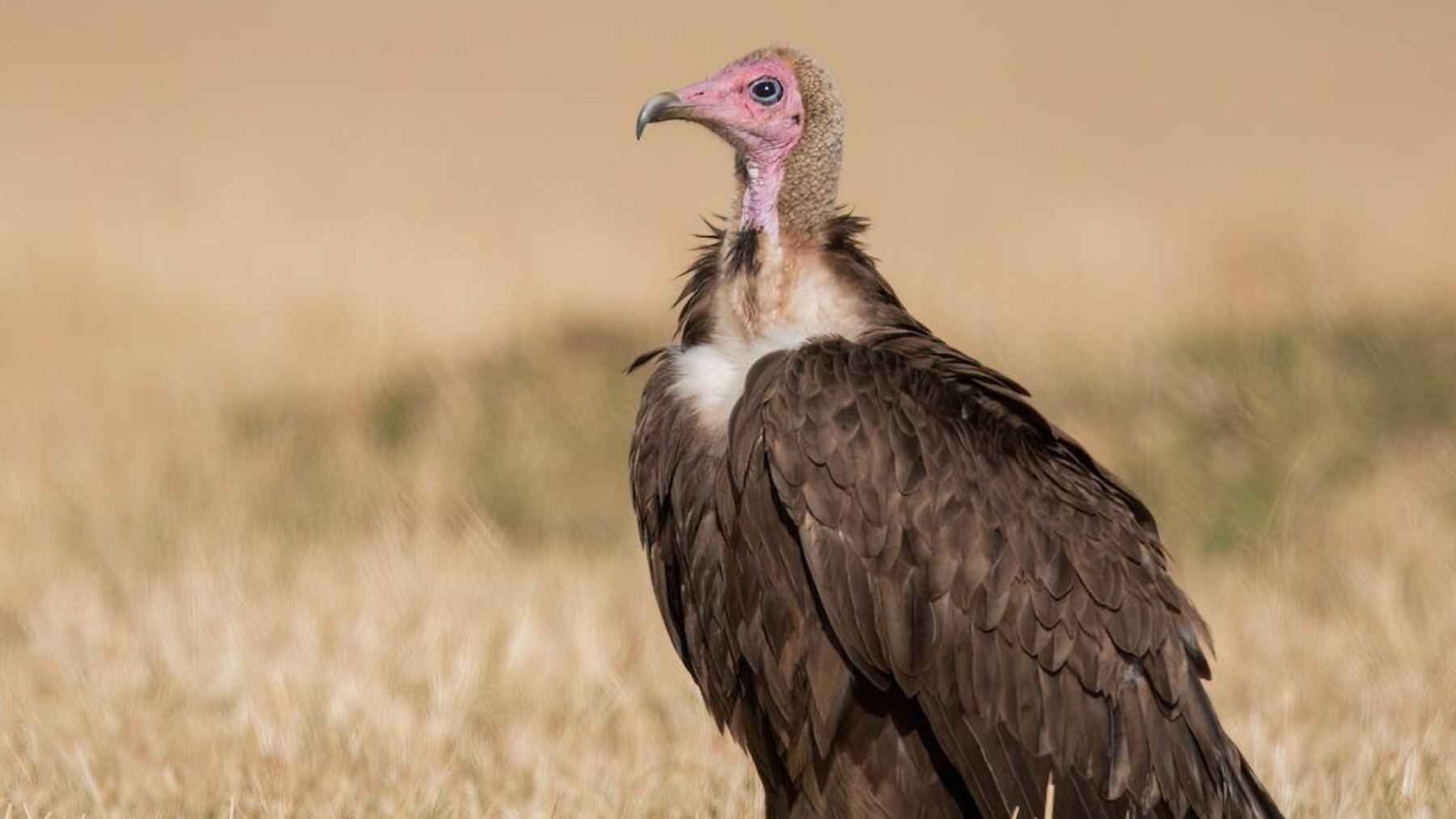
At slaughterhouses and dumps near Chad’s capital, vultures should be easy to find. There is plenty of food, and these birds are built for the job. Yet new research suggests that demand for vultures in West Africa may now be draining populations farther east, including in Central Africa.
The concern centers on the hooded vulture, a critically endangered bird that cleans up carcasses before they rot in the open. Researchers found the birds missing from many places where they would normally gather near N’Djamena, while local interviews pointed to poisoning and cross-border poaching as likely threats.
A troubling gap in Chad
The Chad study was led by Djekillamber Djekadjim and colleagues, working through the International Bird Conservation Partnership. Partner institutions included the University of Abomey-Calavi, the University of Oxford, the Swiss Ornithological Institute, and the University of Nebraska-Lincoln.
What they found was hard to ignore. Hooded vultures appeared to be absent from more than half of the surveyed sites, and the researchers estimated only about 113 birds across the remaining places. Nearly half of the people interviewed said they knew of recent poisoning incidents, while more than a third reported that foreign poachers used poison to trap or kill vultures for trade.
Why vultures matter
Vultures are nature’s cleanup crew. They feed on dead animals, which helps remove carcasses quickly and can reduce the chances that disease spreads through feral dogs, rats, or contaminated waste. That may sound like a small detail, but in a busy city with open garbage and animal remains, it matters.
In practical terms, fewer vultures can mean more rotting carcasses left for other scavengers. It is not the kind of problem most people notice right away, like traffic noise or smoke in the air, but it can quietly change the way a city’s environment works. A 2016 study in Conservation Letters found steep declines across African vulture species and identified poisoning and trade in traditional medicine as major threats.
The belief trade
In this case, researchers are pointing to what conservationists call “belief-based use.” That means whole vultures or their body parts are used for supposed mystical or medicinal purposes, including protection, luck, success, or defense against witchcraft. An official West African vulture threat analysis describes this as one of the main drivers of intentional poisoning.
Chaffra’s field account brings the issue down to earth. While he was in Chad photographing vultures, a man reportedly offered to help him catch them by using a poisoned donkey carcass as bait. It was a chilling detail because the man said he had helped many others capture vultures the same way.
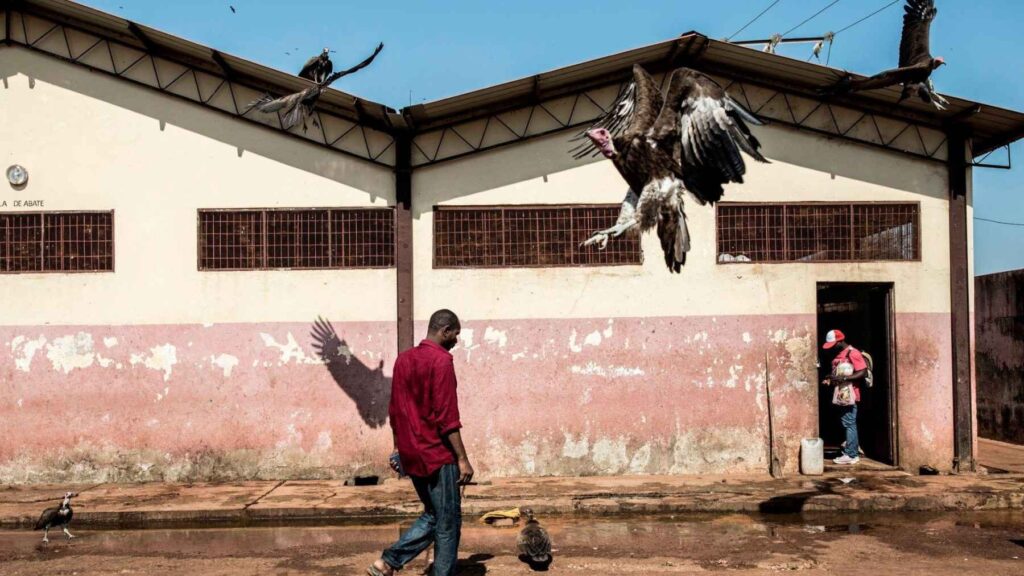
A hooded vulture in Chad, where scientists say poisoning and cross-border trafficking are contributing to the decline of one of Africa’s most important scavenger species.
Markets reaching farther
A related 2025 study in Bird Conservation International looked at markets in southern Benin and found a much broader trade. Researchers interviewed 115 vendors in nine markets and counted 522 hooded vultures or vulture parts over four months. Most were whole dried carcasses, while others were heads or live birds.
The same study found that vultures sold in Benin came from at least ten foreign countries, not just from nearby areas. Vendors reported major sources in Ghana, Burkina Faso, Nigeria, and Niger, but smaller numbers were also said to come from Cameroon, Gabon, Guinea, Mali, Togo, and Côte d’Ivoire. That is where the story widens from a local wildlife problem into a regional one.
Prices help explain the pressure. In Benin, vultures and vulture parts were reported for sale from about $25 to as much as $833, and the average price exceeded the country’s average monthly income. Live birds could bring especially high profits, which gives poachers and middlemen a strong reason to keep searching for birds where any still remain.
The pressure is moving
Darcy Ogada, director of Africa programs at The Peregrine Fund, was not involved in the Chad study, but she said the widening supply chain is not surprising because vultures have become scarce in West Africa. “That should set off alarm bells,” she warned, according to the supplied reporting. “It will keep moving toward areas where populations are in relatively much better shape.”
That is why Chad matters. If demand in Nigeria and Benin is strong enough to pull birds from countries where belief-based consumption is not common, then protecting vultures only inside one country will not be enough. The birds do not recognize borders, and neither do the trade routes that threaten them.
The official threat analysis by the Convention on Migratory Species and conservation partners also points to cross-border trade in vulture parts. It notes that poisoning for belief-based use has been documented across multiple West African countries and that conservation work needs to address the social and economic forces behind the trade.
What researchers want now
The recommendations are straightforward, but not easy. Researchers are calling for community awareness campaigns, stronger law enforcement, and conservation work in both wild areas and cities where vultures still survive. That last point matters because hooded vultures often live close to people, feeding around slaughterhouses, markets, and waste sites.
Chaffra also called for continued investigation of supply chains and sustainable alternatives that could reduce demand for vultures and their parts. Ultimately, the goal is not only to punish poachers, but to understand why the market exists and how to make it less profitable. Otherwise, the pressure will simply move to the next place with birds left to catch.
For now, the warning is clear. Vultures may not be glamorous, but they do a job that cities and landscapes quietly depend on every day. Losing them would mean losing one of nature’s most efficient cleanup systems, and once that system is gone, replacing it will not be simple.
The main study has been published in Frontiers in Bird Science.