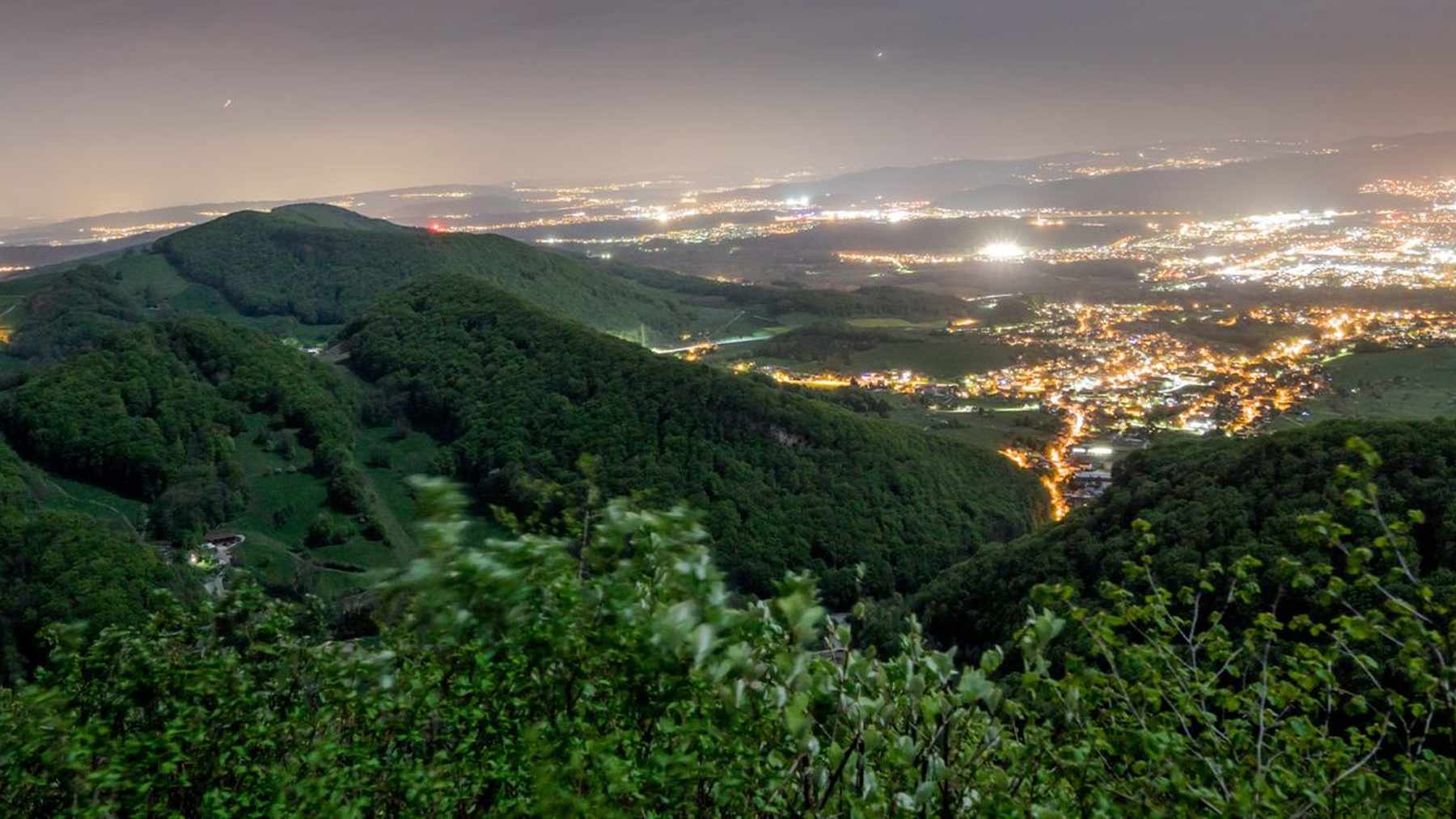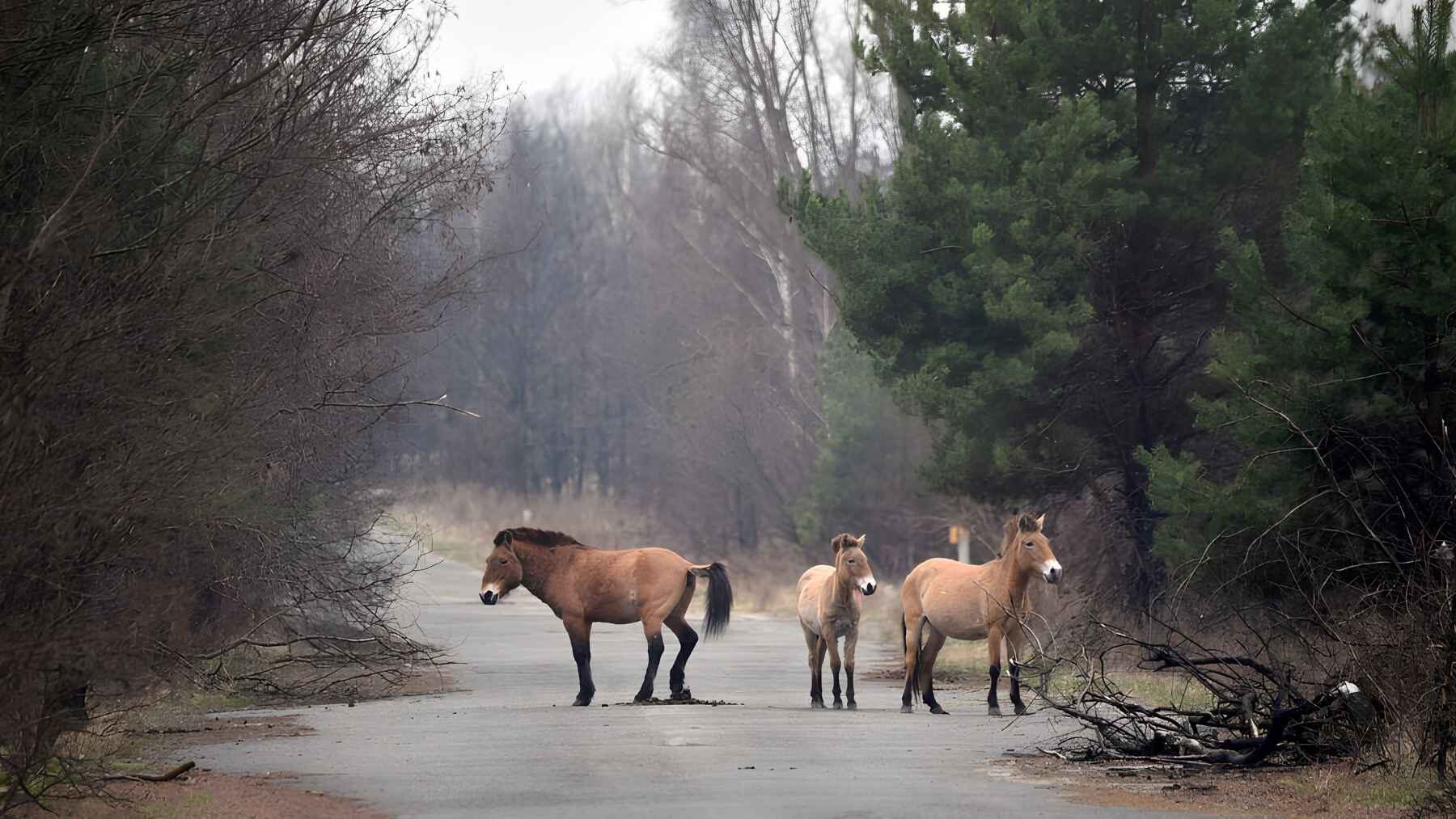
Forty years after the catastrophic Chernobyl reactor explosion, the surrounding exclusion zone has transformed into something no one expected: an accidental wildlife refuge. With permanent human settlement, farming, and everyday traffic erased from the map, wolves, lynx, deer, wild boar, and introduced Przewalski’s horses are now reclaiming a landscape once written off as a toxic wasteland.
The strongest conclusion is also the least sensational. Chernobyl shows how quickly large mammals can benefit when human pressure falls across a vast connected area, but it does not show that radiation is harmless or that every animal living there is healthy.
What the sevenfold figure really means
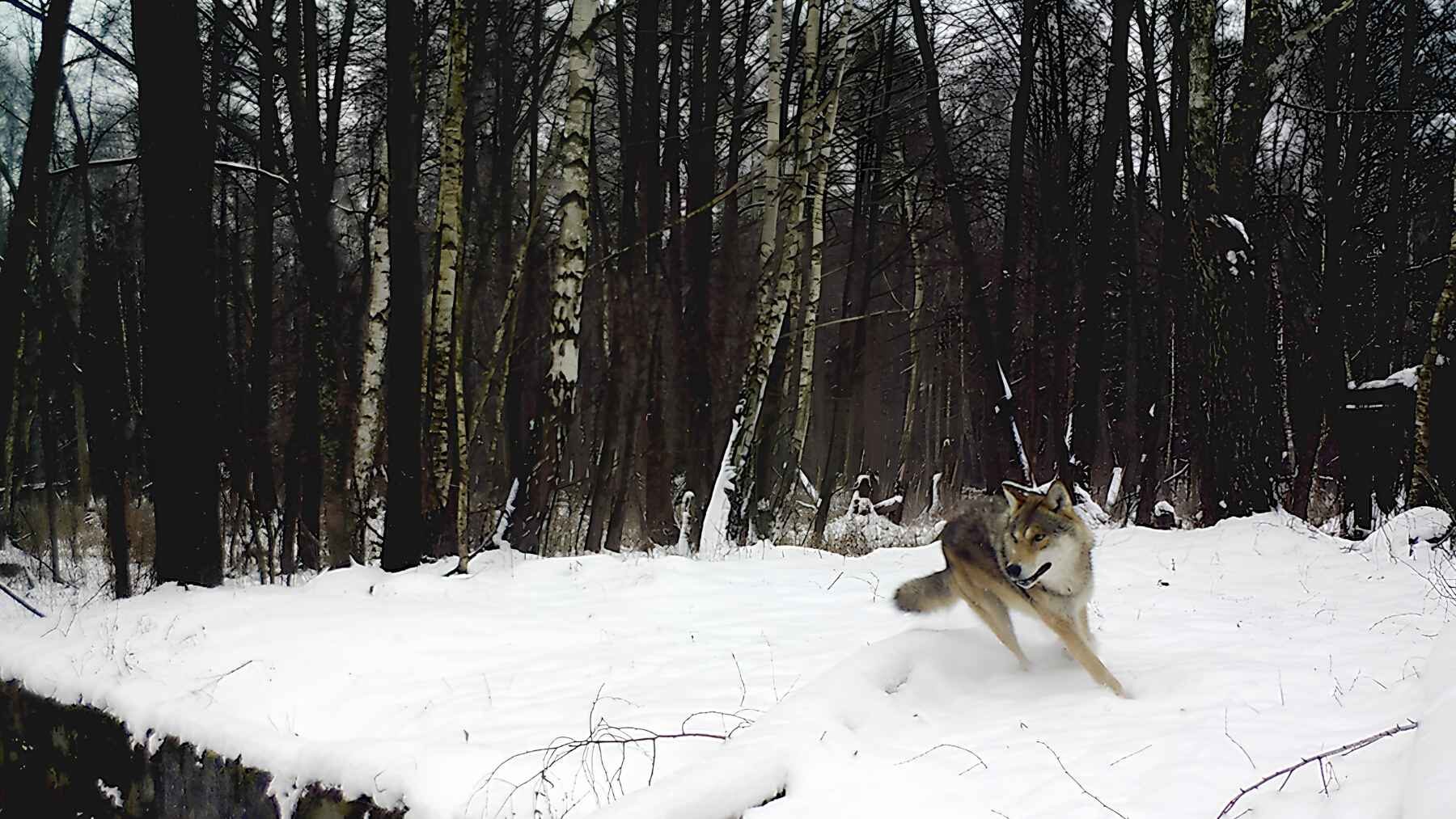
A 2015 study in Current Biology examined the Belarusian part of the exclusion zone using winter track surveys and official density estimates. Moose, roe deer, red deer, and wild boar were found at broadly similar levels to those in four uncontaminated nature reserves, while wolf abundance was more than seven times higher.
That number applies to wolves in one major comparison, not to every species and not to the entire zone. It measured relative abundance across landscapes, rather than proving that wolf numbers rose sevenfold after the accident or that chronic radiation caused them to flourish.
Human absence changed the landscape
About 116,000 people were evacuated in 1986, and the combined exclusion zone in Ukraine and Belarus covered roughly 1,660 square miles. As farms closed and roads quieted, fields shifted toward scrub and forest, while predators gained more territory and faced fewer conflicts with livestock, hunters, and expanding settlements.
Think about what vanished from an animal’s daily path. There were fewer tractors, headlights, fences, construction sites, and crowded roads, and that removal of constant disturbance appears to have changed the ecological equation.
New cameras reinforce the refuge story
A study published in 2026 analyzed camera-trap data collected in 2020 and 2021 at 174 locations in the Ukrainian exclusion zone, six other protected areas, and unprotected land across northern Ukraine. It found that mammal diversity, occupancy, and detection were highest in the exclusion zone and the neighboring Drevlianskyi Nature Reserve, with Przewalski’s horses, Eurasian lynx, moose, and red deer showing their highest estimated occupancy there.
Occupancy is the probability that a species uses a surveyed area — think of it as checking for footprints on a beach to prove people were there, rather than doing a direct head count of every swimmer. Even so, the pattern supports a practical conservation lesson, since “small, fragmented regional protected areas may simply be too small,” study leader Svitlana Kudrenko explained.
Lynx and wild horses found room to recover
A separate lynx study used camera-trap records gathered from 2013 through 2018 across nearly 30% of the Ukrainian zone. Researchers recorded lynx 302 times, identified 50 individuals, and estimated a total population of about 53 to 68 animals, with density comparable to favorable habitats elsewhere in Europe.
Przewalski’s horses tell a different but equally important story because they did not return on their own. Introduced in 1998, they reached at least 137 animals in the Ukrainian sector by 2018, including 24 foals, while at least four more were documented in Belarus and the recorded herd had grown sevenfold over 20 years.
Abundance is not the same as health
Tracks and camera images can show where animals live and how often they appear, but they cannot reveal every damaged cell, failed pregnancy, shortened life, or inherited mutation. A population may remain numerous even when some individuals experience biological harm.
That distinction matters because the scientific record is not unanimous. A 2020 Scientific Reports analysis reconstructed radiation doses for 12 mammal species at 161 sites and reported lower abundance as estimated dose increased, using a different dataset and exposure model from the long-term Belarusian census.
War has changed the experiment
The newest broad refuge study relies on images taken before Russia’s full-scale invasion of Ukraine in 2022. A separate 2026 paper in Science found that red deer, roe deer, red foxes, and wild boar changed their daily activity patterns during the 36-day Russian occupation of the zone, showing that military disturbance can quickly alter wildlife behavior.
Chernobyl is therefore no frozen laboratory. Armed conflict, mines, forest fires, and interrupted monitoring have added another layer of risk to a landscape already shaped by radioactive contamination.
Two truths share the same ground
Chernobyl is neither a dead zone nor a pristine wilderness. Radiation can harm living organisms, while the long absence of intensive farming, settlement, and routine human disturbance can allow some large-mammal populations to become abundant at the same time.
That uncomfortable combination is the real lesson. Large, connected protected areas with meaningful limits on human access can give wide-ranging wildlife room to recover, but a nuclear catastrophe should never be mistaken for a conservation strategy.
The most recent study discussed here was published in Science.