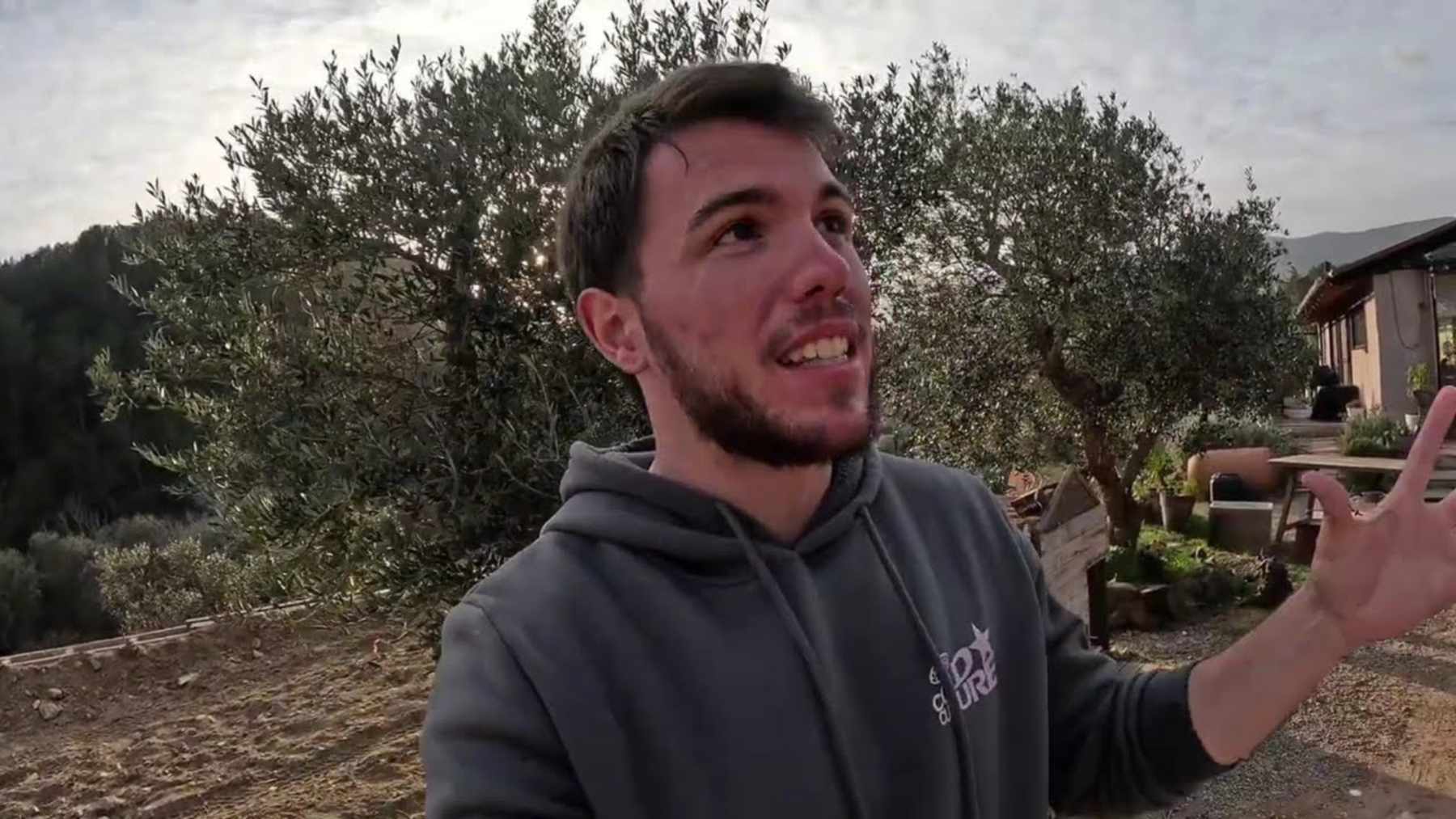
Sina Studinger counts glow-worms at dusk for the Jurapark Aargau, a Swiss nature park that has made light pollution its big theme, and her method plays a trick on the beetles. “With these LED traps we can detect local populations of the large glow-worm,” she told the park’s magazine. “The males take the little lamp for a female glow-worm ready to mate, want to mate with it and therefore collect in the bottom of this PET bottle.” (Her words, like every quote in this story, are translated from German.)
“For these surveys I set up ten light traps in a small area at dusk, let them glow for 20 minutes and then take stock,” she said. On one evening along the Sissle, a stream in northern Switzerland, “males had gathered in almost all the traps, up to nine per light trap, 71 in total.” She switched the traps off after counting so the males could go back to their search, and she counted 16 real females nearby.
“Glow-worms are indicators of night-dark habitats and locally high biodiversity, and that is why we do these surveys,” said Studinger, a landscape gardener who co-founded the garden company Igel Gartenbau in Frick and maps the beetles as a volunteer.
Twenty-nine towns went dark for a night
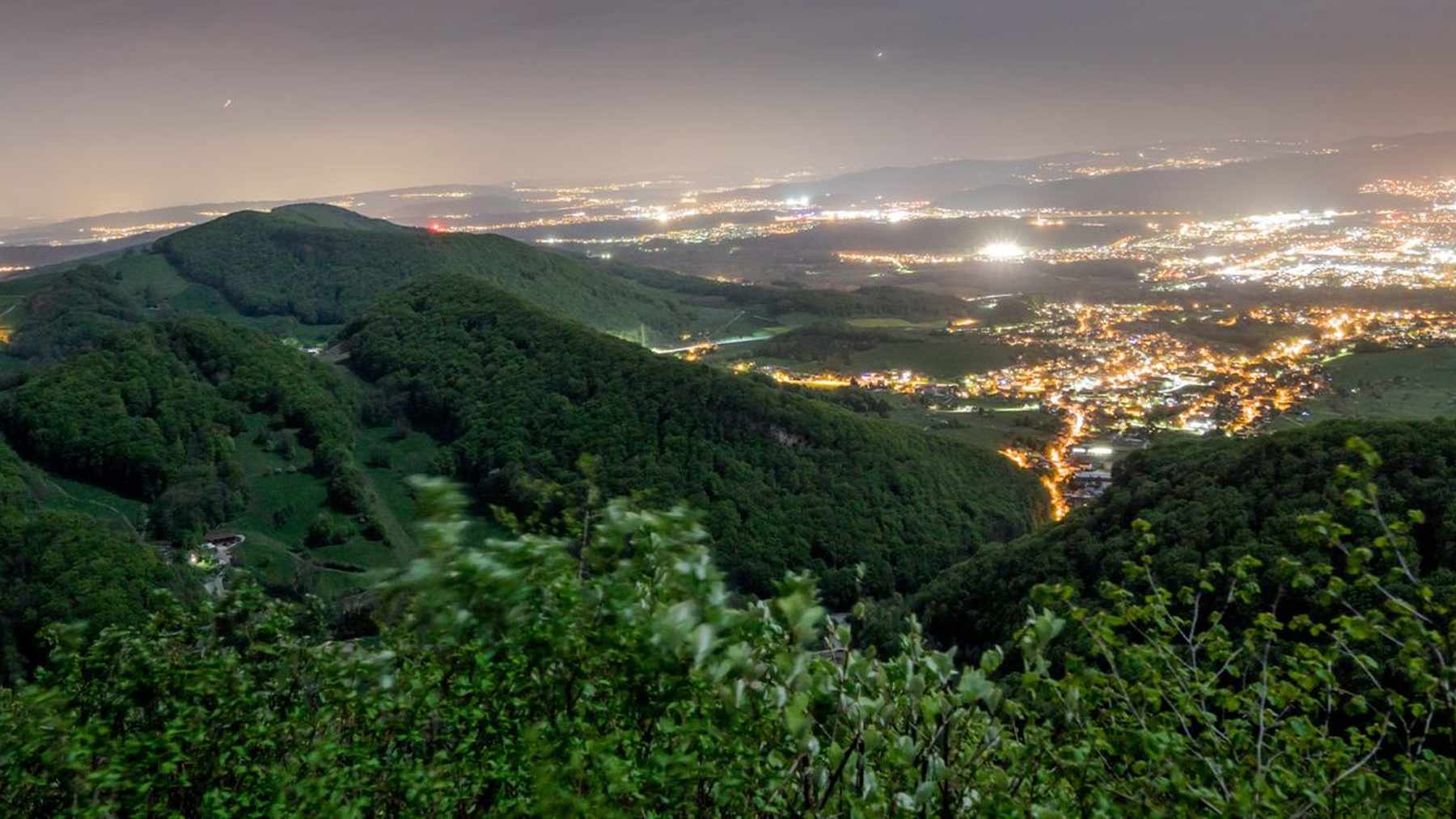
On the night of September 19 to 20, 2026, 29 of the park’s 31 municipalities switched off their public lighting for the first “Night of the Stars.” The event, the park says, invited people “to experience the night sky together and consciously, and to take a stand against light pollution and for a responsible use of artificial light.”
It also opened a one-year campaign called “Lights off, life on!” Swiss public broadcaster SRF reported that the nature park north of Aarau “lies in a rural, thinly populated region. There it should stay as dark as before, according to the plan.”
Dark places are getting scarce in Switzerland. “In 1994, natural darkness could only be observed on 28 percent of the area of Switzerland, in 2009 only on 18 percent,” the Federal Office for the Environment writes, and light emitted upward or reflected “more than doubled between 1994 and 2020.”
“We really became aware of it in 2019 through the bachelor’s thesis of the student Yumi Bieri. Using satellite images, she showed that the Jurapark Aargau is one of the darkest areas in northwestern Switzerland,” said Christine Neff, the park’s co-managing director.
Hugo Blikisdorf, the 78-year-old president of the Cheisacher observatory in the middle of the park, describes “surprisingly good astronomical conditions” for an area between the brightly lit suburbs of Basel and Zurich, shielded by the Jura hills.
Ten energy suppliers in one park
Was switching off the lights as simple as it sounds? “No, that’s not trivial at all. We have ten different energy suppliers in the park perimeter. The lights can’t just be switched off at the push of a button at one control point,” Neff said.
“It takes a lot of preparation and clarification, and there can even be additional costs,” she added. “Some energy suppliers are happy to cover them, others want to charge them to the municipalities, which then think twice about whether they should turn off the lights.”
At the campaign launch in Wittnau on September 10, Dieter Egli, the member of Aargau’s cantonal government who heads the Department of Economic Affairs and Interior, opened with a confession. “I enjoy walks in the dark because then, for example, I perceive the air and the wind much more intensely than usual, or sounds too,” he said. “In the military I always volunteered for night watch.”
“I love the night,” Egli said. He also pointed to a rule with money behind it: municipalities that want cantonal contributions for lighting cantonal roads in built-up areas must, among other things, use energy-efficient LED lights and “a situation-appropriate night dimming or night switch-off of street lighting.”
Residents and police weigh in on safety
“Many people feel unsafe with less lighting,” SRF noted. In the fall of 2025 the park asked, and 728 people took part in its survey, 340 of them from park municipalities.
“The survey shows a surprisingly clear picture,” Sandra Kyewski-Ditz wrote in the park’s magazine. “More than half rated their sense of safety on a scale of 0 to 10 with values of 8 to 10. Only around four percent said they felt very uncomfortable in the dark.”
Werner Bertschi, chief of the Oberes Fricktal regional police, told the magazine that “the sense of safety in the dark is very individual and shaped by personal impressions.” He went on: “From a police perspective, however, experience shows that in municipalities with reduced or switched-off night lighting, burglaries or offenses do not increase.”
Oberhof already dims its own streets
Oberhof, a village of about 600 people at the foot of the Jura, is one of the park’s model towns for street lighting. “New LED street lamps light the village only minimally, with 15 percent of the maximum output,” the magazine reported after a dusk walk with council members Susanne Häfliger and Heinz Herzog. “Only when someone approaches a lamp does it briefly shine at 80 percent,” and from 12:30 a.m. to 5 a.m. “there is total darkness.”
Häfliger pushed for the new lamps when the old ones had to be replaced. Glow-worms still glow in the middle of the village, and the nearby streetlights are switched off on purpose during their breeding season.
For homeowners, SRF passed on the park’s advice. “Only light what has to be lit. Decorative garden lighting doesn’t have to burn all night,” the report said.
Glow-worms, hedgehogs and bats need the dark
In the large glow-worm, the most common species in the park, “only the flightless females glow,” according to the Wilde Nachbarn Aargau project, which collects sightings for the park. Females that happen to settle near a lamp during the day “usually die unmated after about two weeks.”
“Adult beetles live only a few weeks and no longer eat, since their main task is reproduction,” the project explains. Thanks to reports from residents, the park now knows the large glow-worm still occurs in every Jurapark municipality.
Hedgehogs, those prickly garden visitors, have the same problem. “Hedgehogs are active at dusk and at night. They avoid bright areas. Light disturbs their search for food and partners,” SRF reported.
Anja Trachsel and Mathias Villiger, who wrote the magazine’s feature on night animals, describe what happens to the greater mouse-eared bat, which has several large nursery colonies in the park. “The poorer in structure and the more brightly lit the surroundings, the more cautious the animals are: they fly out of their roosts later and lose valuable time for foraging,” they write.
Denmark has tried to swap white streetlamps for red light to protect bats.
“Migratory birds, such as barn swallows, orient themselves by the moon and stars. These are increasingly difficult to make out due to the brightening of the night sky,” SRF reported. On northern coasts, light pollution is a threat to puffins as well.
What one park cannot fix
“We have to stay realistic, we can’t influence all the factors,” Neff said. “We have no influence on large-scale scattered light or satellites, for example, and in the end it is up to businesses, the municipalities and their residents to switch off or reduce the lights.”
“In recent decades light pollution has increased significantly, so a slowdown of this development would already be a great success,” she said.
“In fact, scientific studies show that good lighting can improve the subjective sense of safety,” the survey article adds. “At the same time, however, there are no clear indications that more light automatically leads to less crime.”
Anyone could fill in the survey, which took about five minutes according to the Aargauer Zeitung, so the results reflect the people who chose to answer, not a random sample.
The interviews and survey appeared in the September 2026 issue of Jurapark-Zytig, and campaign details are on the Jurapark Aargau night darkness page.
Neff’s own favorite spot for stargazing lies between Oberbözberg and Mönthal. “There is a great expanse and silence there, and the starry sky seems huge,” she said.
Image: Jurapark Aargau