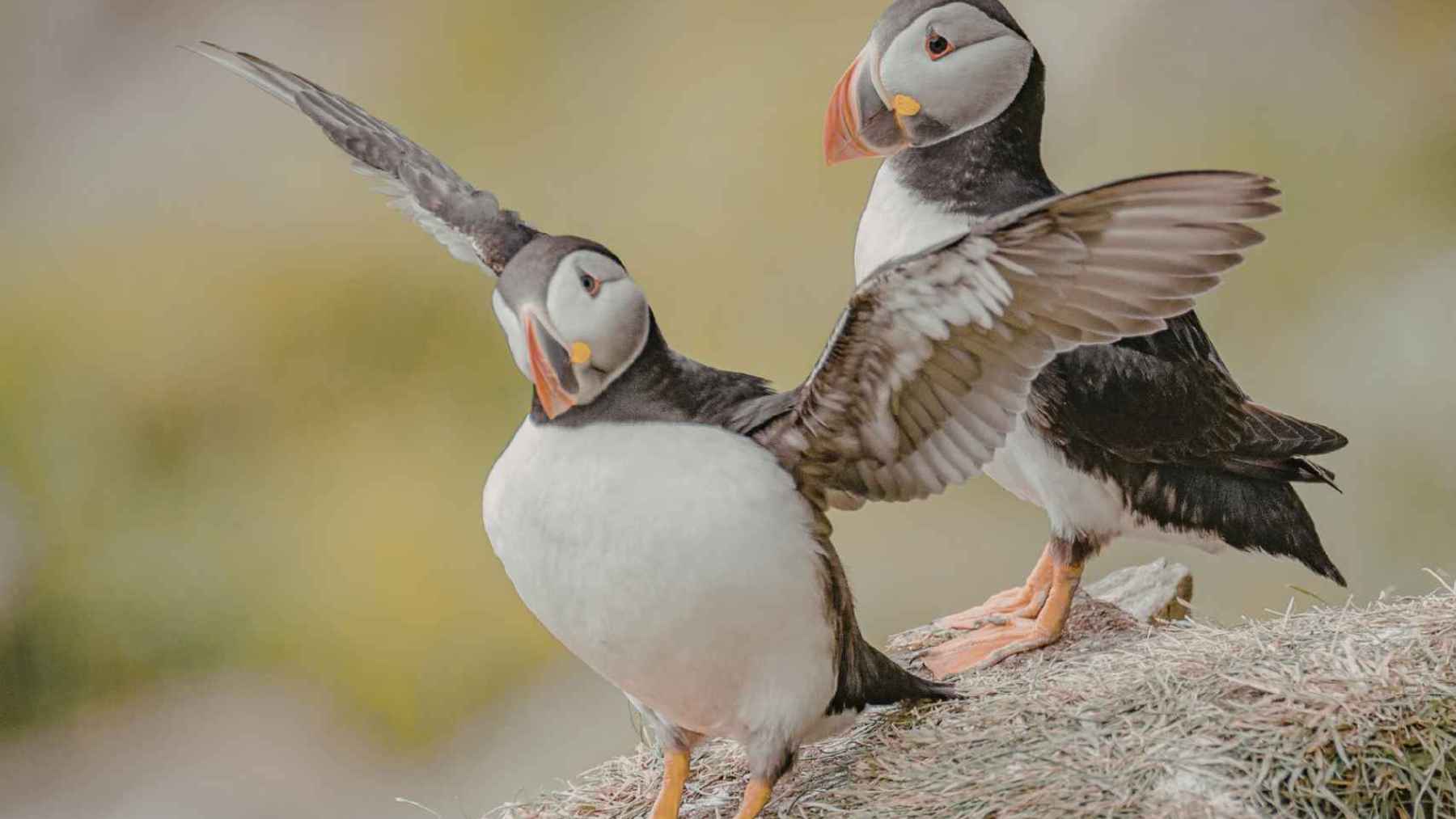
If you see a photo of someone in Iceland letting a baby puffin drop into the wind, it can look cruel. In reality, it is a rescue ritual meant to undo a problem humans created with artificial light at night.
The Atlantic puffin is listed as Vulnerable globally, with an estimated 12 to 14 million mature individuals and a declining trend. In Iceland, the picture is even more urgent, where the breeding population is classified as Critically Endangered in the country’s 2025 bird red list, and scientists and residents are scrambling to keep young birds alive long enough to reach the ocean.
A rescue that looks harsh
The story starts at the end of the breeding season, when puffin chicks known as “pufflings” leave their burrows for the first time. They are supposed to follow natural night cues toward the sea, but in places like Vestmannaeyjar, bright harbor and street lights can pull them inland instead.
That is why locals go out at night looking for grounded birds in gardens, streets, and industrial areas. National Geographic reported that in 2024 more than 3,000 pufflings were rescued in Vestmannaeyjabær alone, a town of about 4,300 people that sits beside what it calls the world’s largest puffin colony, around 1.6 million birds, in a country some researchers estimate holds about 40 percent of the world’s Atlantic puffins.
In the morning, the last step can look dramatic. Volunteers release the pufflings from cliff edges so the birds can catch the wind and fly out over open water, rather than staying in town where cats, gulls, cars, and dehydration can turn a wrong turn into a death sentence. It looks harsh, but it saves lives.
City lights break a moon compass
Why do lights matter so much to a seabird that has survived storms and predators for thousands of years. The short answer is that fledglings are leaving a dark burrow at night with a navigation system tuned to moonlight and starlight, not bright glare spilling across town.
A 2024 open access study in the journal Animal Behaviour tested the idea directly with Atlantic puffin fledglings. Researchers experimentally lit beaches near a breeding colony and found more fledglings stranded under illuminated conditions, and the birds preferred light over darkness in a choice experiment.
The same study found something that matters for policy. Changing the light spectrum did not change the fledglings’ preferences, which suggests that swapping one bulb type for another may not solve the problem by itself, and that the most evidence based strategy is simply reducing coastal lighting.
Why the cliff toss works
So why toss a puffling from a cliff instead of setting it down on the beach. In Vestmannaeyjar, researchers told National Geographic there is no single strict scientific requirement for the cliff release, but the height and wind can help a young bird get airborne quickly.
It is also a practical way to avoid risky spots. The same reporting notes that the town harbor is not used for releases after past incidents like an oil spill, and some families release birds from a small beach instead, which still gets the pufflings pointed toward the ocean.
Think of it as restoring the first page of a long migration. After the toss, pufflings spend years at sea before they return to breed, so a rescue that lasts a few minutes on land may decide whether that bird ever gets a chance to come back.
Bigger pressures on puffins
Light pollution is only one piece of the story, and puffins are not in trouble because of one bad night. The IUCN assessment for the species projects the European population could decrease by 50 percent to 79 percent from 2000 to 2065, and it notes Europe holds more than 90 percent of the global population, so regional losses quickly become global.
Those declines are linked to multiple threats that pile up. The same assessment points to food shortages tied to depleted fisheries, pollution, predation by invasive species, and adult mortality in fishing nets, all of which can reduce breeding success even when chicks are not getting lost in town.
Puffins also have limits when the ocean shifts. The IUCN notes that when feeding chicks, puffins generally forage within about 6 miles of their colony, though they may range 30 to 60 miles or more when needed, and they can dive roughly 200 feet in pursuit of prey, but not endlessly, especially if key forage fish move farther away.
Turning down the lights for good
The cliff releases save individual birds, but they are still an emergency response. A major review of seabird deaths linked to land based artificial lights notes that rescue programs can save thousands of birds every year, but it also warns that the real fix is reducing the hazard at the source.
There is growing evidence that “lights out” policies work when they are actually implemented. A 2024 PLOS ONE study at a brightly illuminated coastal industrial site found that reducing artificial light at night cut strandings by about 57 percent per night during daily morning surveys, and that is the kind of practical change a port or business can plan for.
Moonlight even plays a role, with research arguing that fledglings are less attracted and disoriented by light pollution around full moon nights, which is another reminder that natural darkness is part of the solution. Turning down lighting can mean less wasted electricity on the bill, while giving pufflings a darker path to the sea.
The official statement was published on Náttúrufræðistofnun Íslands.