A quiet cemetery in Ithaca, New York, was hiding a huge working world just under the grass. Scientists estimate that about 5.56 million regular mining bees emerged from East Lawn Cemetery in spring 2023, making it one of the largest recorded gatherings of ground-nesting bees in the world.
The discovery matters because these bees are not just a strange cemetery surprise. They are native, solitary pollinators that can help fruit crops and wild plants, even though many people never notice them because their homes look like tiny holes in an ordinary lawn.
A hidden world under the grass
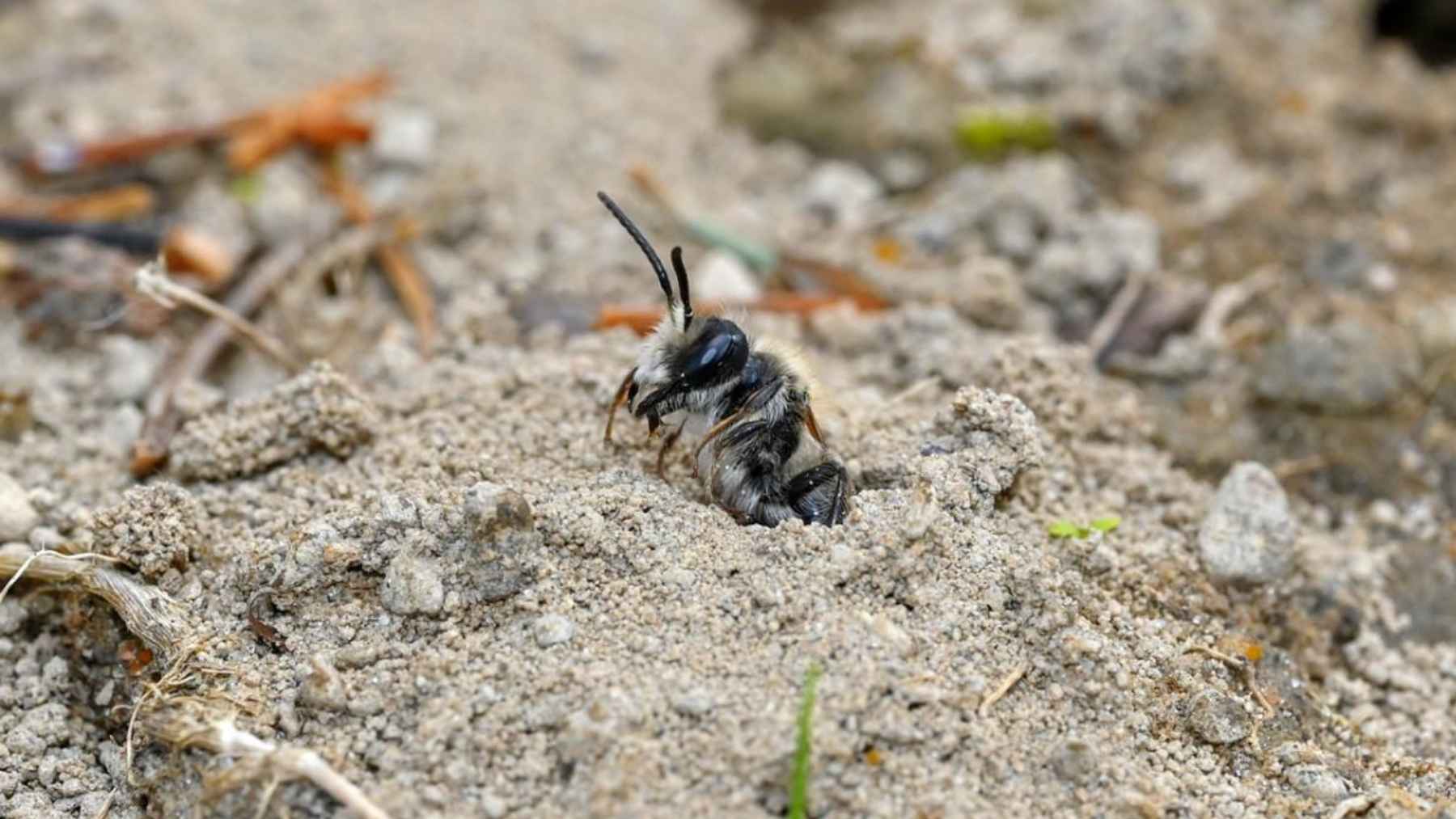
Most people picture bees inside a hive, moving together like one busy team. However, about three-quarters of bee species are solitary ground nesters, which means each female mostly lives on her own and digs her nest in soil. Bryan N. Danforth called it “the most common lifestyle for bees.”
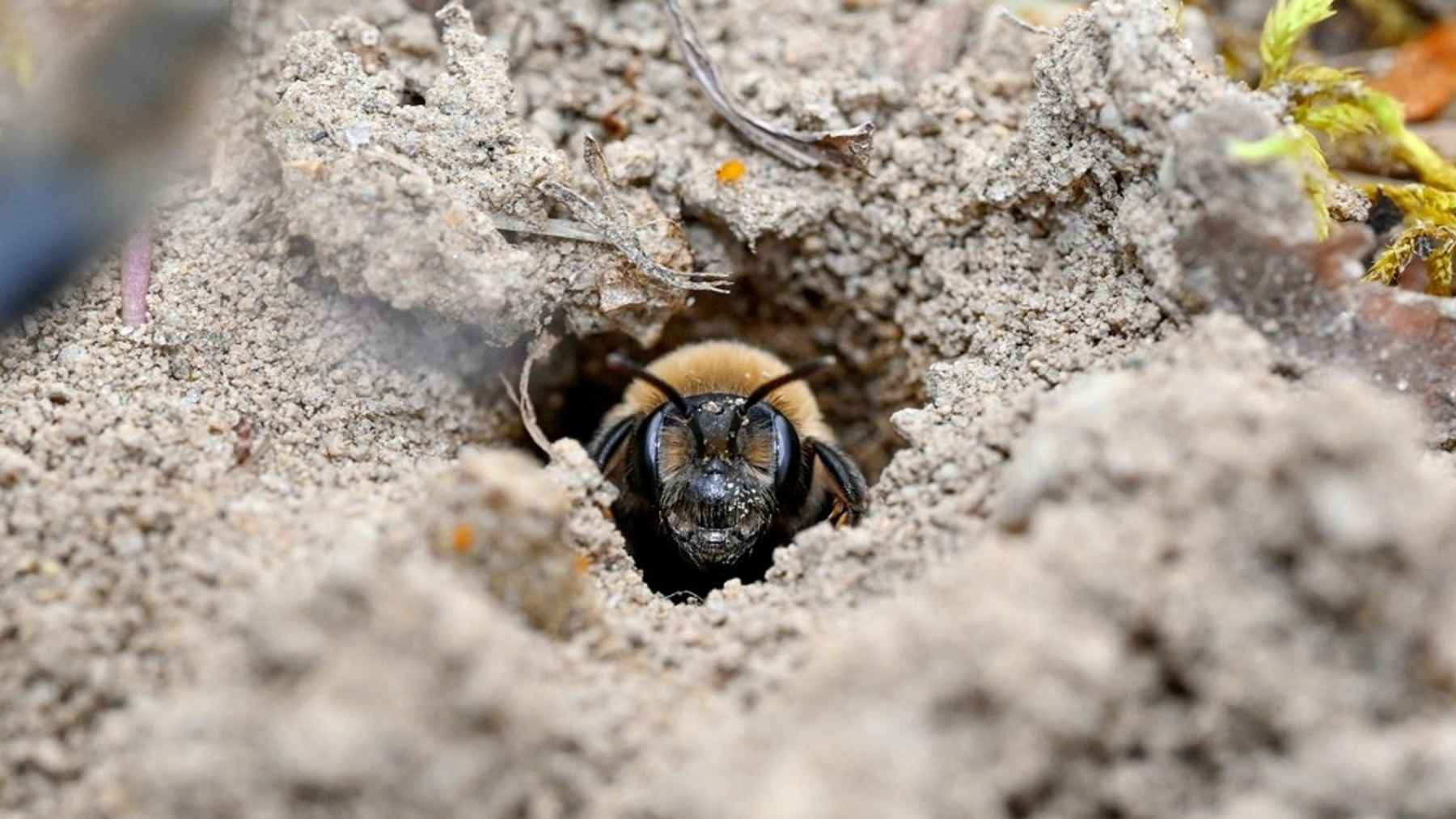
The species at the center of this story is Andrena regularis, also known as the regular mining bee. Females dig small underground nests, build little chambers for their eggs, and stock those spaces with pollen and nectar so the young can grow. Simple, quiet, and easy to miss.
How the discovery began
The story started with Rachel Fordyce, who worked in an entomology lab at Cornell University and walked through the cemetery on her way to work. One spring day, she brought in a jar full of bees and told Danforth, “These are all over the cemetery.” That small jar opened the door to a much bigger finding.
The study was led by Steven T. Hoge, with Danforth and Fordyce among the research team. Hoge said there may be other huge bee gatherings that scientists have not found yet, but in the published record, this one stands out as “one of the largest.” And it was sitting in plain sight.
Counting millions of bees
To count bees without digging up the cemetery, the researchers used small mesh traps placed over patches of ground. From March 30 to May 16, 2023, the team collected 3,251 insects from 16 species, with regular mining bees dominating the samples.
Then came the math. By measuring how many bees emerged from each trap and applying that density to the nesting area of about 1.6 acres, the team estimated a range from 3.1 million to 8 million bees, with an average near 5.56 million. That is roughly comparable to well over 100 honeybee hives packed into a small green space.
Why these bees matter
These bees are not just living under the grass. They are also part of the food system, especially for crops such as apples, cherries, strawberries, blueberries, and cranberries. In apples, the study notes that solitary bees can deliver more pollen in a single flower visit than managed honeybees.
A good pollinator can mean better fruit growth, and these bees are active in early spring when apple blossoms need visitors. The cemetery is also only about four-tenths of a mile from Cornell Orchards, which may help explain why so many bees found the area useful.
Parasites in the nests
Life underground is not perfectly peaceful. The researchers found a brood parasite called Nomada imbricata, sometimes described as a cuckoo bee because it uses another bee’s nest instead of building its own. Its young take over the food that the host bee prepared for her offspring.
Still, the threat appeared limited at this site. The observed parasitism rate from Nomada imbricata was about 1.4 percent, while rates from a fly and a beetle were lower. That low level suggests the bee population is, for the most part, stable enough to handle these natural pressures.
Timing is everything
The cemetery bees also showed careful timing. When warm days arrived, especially around 68 degrees Fahrenheit, large numbers began emerging from the soil. Males came out first, giving them time to wait for females and improve their chances of mating.
The parasite bees emerged later and more slowly, which makes sense for their way of life. They need active host nests to use, so being late is not necessarily a mistake. In nature, timing can be the difference between survival and failure.
A sign of a healthy population
The researchers also looked at the balance between male and female bees. More males emerged by number, but once body size was considered, the total investment leaned toward females. That is important because female bees require more resources to produce.
What does that tell us? To a large extent, it suggests the population was not obviously short on food during the previous season. A struggling bee population might produce more males because they cost less energy to raise.
Why cemeteries can protect nature
A cemetery may seem like an odd place for a wildlife refuge, but that is part of the point. The ground is not plowed every season, pesticide use can be lower, and many areas stay quiet for years. For a ground-nesting bee, that kind of peace matters.
The study also adds to a broader idea that cemeteries can shelter plants, insects, birds, and other animals, especially in places where cities keep spreading. A lawn may look empty from above, but below the surface, it can hold an entire community. You just have to look down.
What happens next
Danforth warned that these nest sites need protection, saying, “These populations are huge, and they need protection.” If a nesting area is paved over, millions of important pollinators could disappear quickly. That is not just a bee problem; it is a food and biodiversity problem too.
Small choices can help, such as protecting green spaces, reducing pesticide use, and leaving some patches of bare or lightly disturbed soil where native bees can nest. At the end of the day, the cemetery discovery is a reminder that nature is often working right under our feet.
The main study has been published in Apidologie.