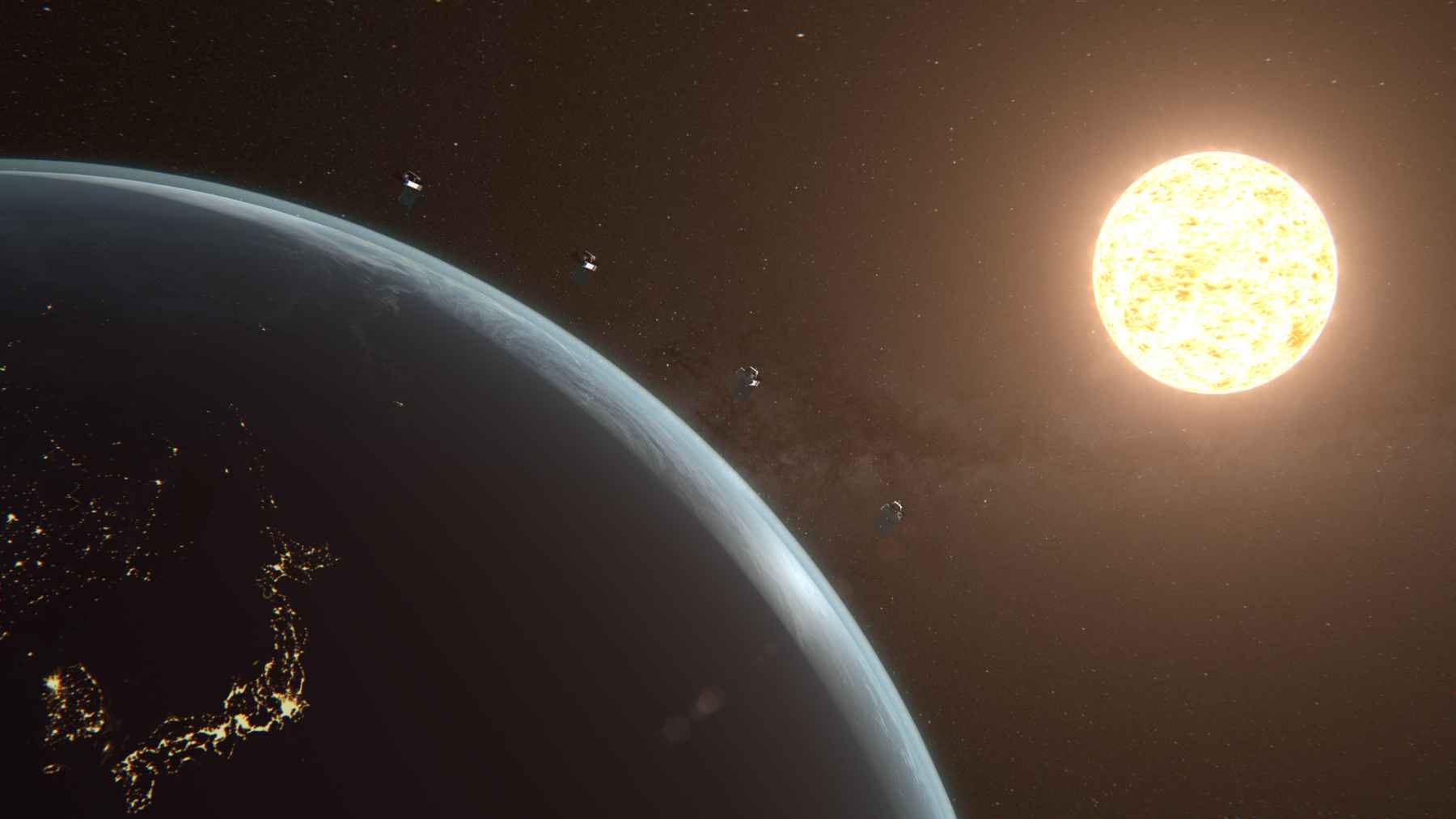
Low Earth orbit is getting so crowded that a widespread disruption could tip it into chaos. A research team behind a new metric called the “CRASH Clock” says that if collision avoidance maneuvers suddenly stopped, the expected time to a potential collision is now measured in days.
That warning lands at an awkward moment, because the Sun is in its most active phase and space weather can scramble satellite operations. So the question is not just “how many satellites are up there,” but “how resilient is the whole system when conditions get messy.”
A clock that measures orbital stress
CRASH is short for “Collision Realization And Significant Harm,” and the idea is simple. In a preprint posted on arXiv, the researchers estimate the expected time for a potential collision in low Earth orbit if tracked objects such as satellites, debris, and abandoned rocket bodies stopped maneuvering around each other.
They describe it as a stress gauge for an environment that works largely because operators keep intervening.
The Outer Space Institute now publishes a live version of that clock, and it is moving in the wrong direction. As of March 20, 2026, the site lists 3.0 days, down from 5.5 days on June 25, 2025, and far below 164 days on January 1, 2018. That is the shrinking “reaction time” the metric is trying to make visible.
One key nuance is that this is not a forecast that a collision will happen within three days. It is a hypothetical “what if” that assumes a severe loss of situational awareness, and it only counts tracked objects. Still, the authors argue it captures how dependent modern orbit has become on “errorless operations.”
Rush hour in space is now measured in seconds
The paper backs up the urgency with close approach statistics that sound almost unreal. In a June 2025 snapshot, the team estimates that objects pass within 1 kilometer, about 0.62 miles, roughly every 36 seconds across low Earth orbit. In a 2018 snapshot, it was about every 3.9 minutes.
Inside the densest layers, the pace quickens. Around 550 kilometers, about 342 miles up, the authors estimate close approaches within 1 kilometer every 22 minutes in that shell alone. That is why station keeping and collision avoidance have become routine, even if most of us never think about it while using GPS on a phone.
The workload is huge and it is not friction-free. The study cites a SpaceX report showing 144,404 Starlink collision avoidance maneuvers between December 1, 2024, and May 31, 2025, and notes that maneuver counts have historically doubled about every six months.
The authors also point to research finding position inaccuracies right after a maneuver of up to 40 kilometers, about 25 miles.
Solar storms are the stress test
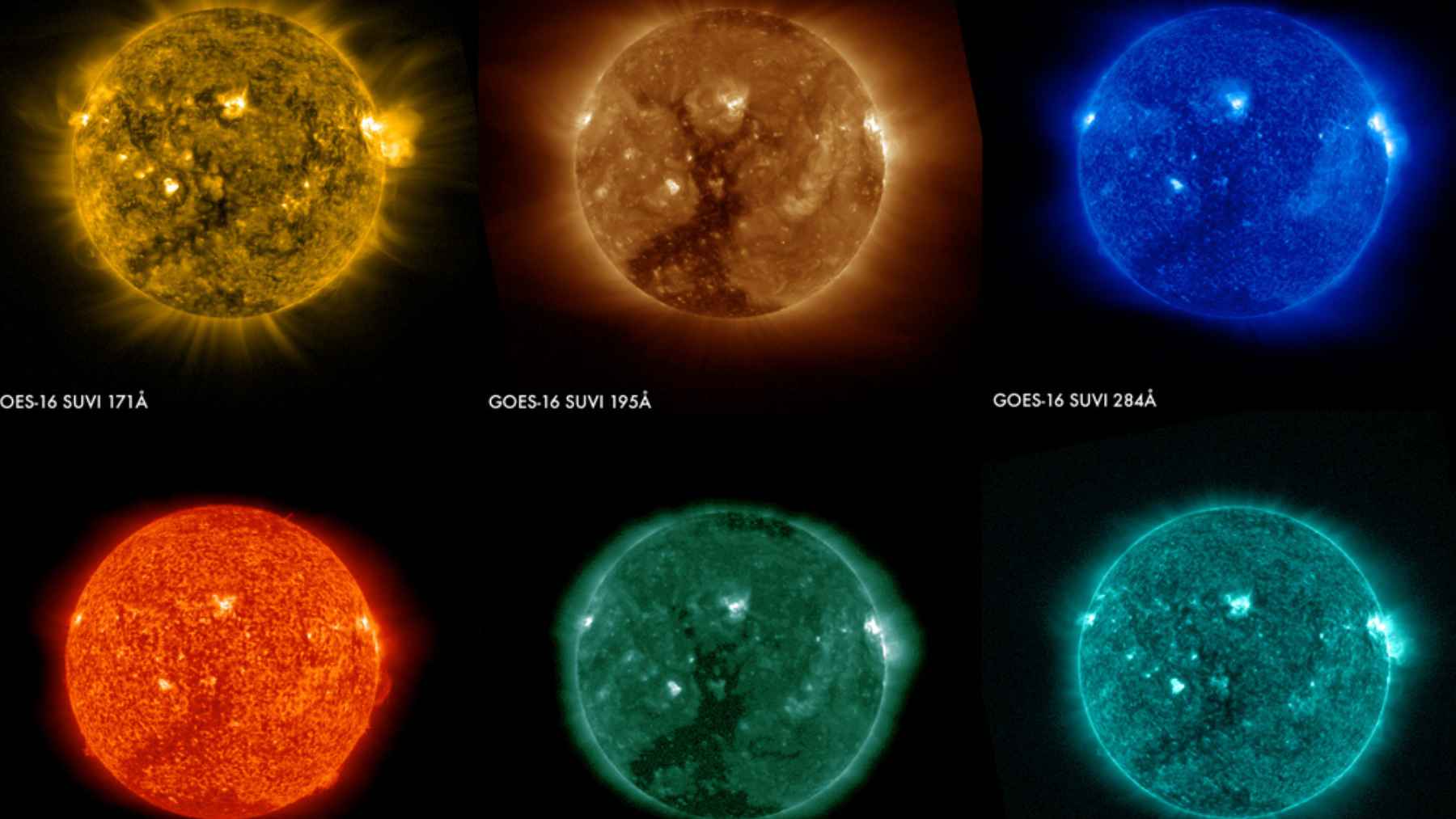
Space traffic is not only a math problem – it is also a weather problem. NASA and NOAA announced in October 2024 that the Sun had reached the “maximum phase” of its 11-year cycle, when solar eruptions become more common. Those events can heat the upper atmosphere and change the drag satellites feel.
The May 2024 storm offered a real-world preview. ESA described it as the biggest solar storm to hit Earth in over 20 years, and auroras appeared at much lower latitudes than usual. In the CRASH Clock paper, the authors say that during three days of that storm, nearly half of all active low Earth orbit satellites maneuvered because drag increased.
Now add a broader disruption, like a storm that also degrades tracking, communications, or software. What happens when the tracking picture gets fuzzy? The researchers warn that positional uncertainties in such conditions can rise to several kilometers, which can turn collision avoidance into educated guesswork in a crowded orbit.
Why one crash can pollute an orbit
A catastrophic collision is not just “one satellite lost.” It can generate a spray of debris that raises the chance of secondary and tertiary collisions, the slow-burn scenario behind what many call “Kessler syndrome.”
The authors stress that the CRASH Clock is not measuring when a runaway cascade begins, but it does measure how quickly a seed collision could become possible if control lapses.
Altitude makes the stakes higher. The team notes that modeling suggests parts of low Earth orbit above roughly 600 to 800 kilometers, about 373 to 497 miles, are already above an “unstable threshold” for long-term runaway debris growth. They add that even the main Starlink shell around 550 kilometers, about 342 miles, can fall within that runaway threshold.
But the near-term impact is more like pollution than apocalypse. The authors compare a major collision to the Exxon Valdez oil spill, with satellite operations continuing but under worse conditions and higher risk. It is a sober warning, not a panic button.
The policy choices hiding in plain sight
The study frames Earth’s orbit as a shared environment, and it highlights risks beyond collisions. Those include ground casualty hazards from reentry, optical and radio spectrum pollution, and changes to the upper atmosphere linked to launches and reentry ablation. The message is that “space sustainability” is not separate from environmental thinking on Earth.
The authors point to practical targets like strong post-mission disposal performance and the “25 year rule,” noting that some regulators are already pushing the deorbit timeline down toward five years. Better standards for sharing orbit updates and maneuver plans also matter, because the current system depends on constant coordination between operators.
At the end of the day, the CRASH Clock is a reminder that we can measure stress before a crisis, not only after. Treating launch capacity like a budget, and treating resilience to solar storms like basic safety engineering, could buy time for services people rely on every day.
The study was published on arXiv.