Ever spilled a little water near a baseboard and wondered if it matters to pests hiding in the cracks? A new study suggests it might, at least for bed bugs, which appear to treat wet surfaces like a hard boundary they would rather not cross.
In motion-tracking tests, the insects turned away from damp areas most of the time and sped up when fleeing. That instinct could help explain why some liquid treatments do not behave the way people expect once they hit the floor. It is a small detail, but it may matter in apartments, hotels, and dorm rooms where bed bugs can spread quickly.
Why water can look dangerous to a bed bug
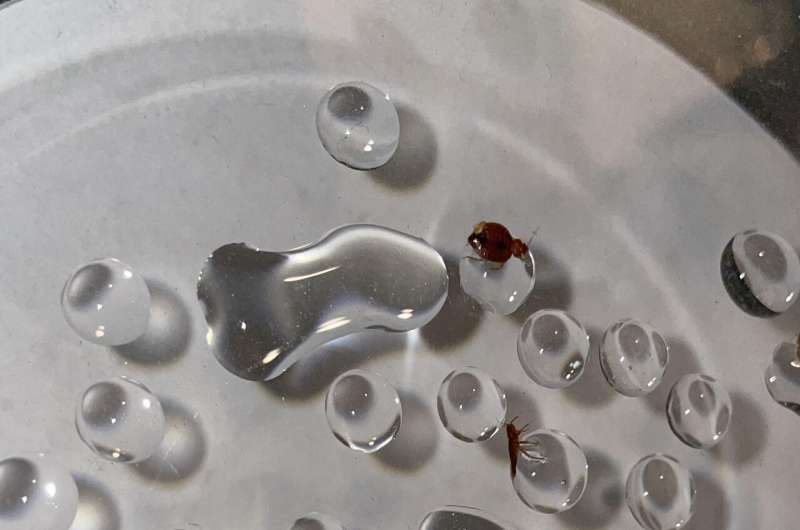
In a press release, Dong-Hwan Choe at the University of California, Riverside said bed bugs have flat bodies and tiny breathing openings called spiracles, so water can trap them and block breathing. “If they physically contact a body of water, they’ll get stuck to its surface, blocking their respiratory openings,” Choe said.
The team also traced the discovery to a small feeder leak that dampened paper in a colony vial, and he said the bugs were “actively avoiding” the wet patch, even though it was soaked with blood.
At the scale of an insect, water does not always behave like it does in a glass. Surface tension can cling to a small body, and that makes escape harder than you would think. It is the same physics that lets some insects skate across puddles, but it can also pin them in place.
This kind of built-in avoidance has a name – negative hydrotaxis. In plain English, it means an animal tends to move away from moisture, almost like it is reading wetness as a warning sign.
How the motion–tracking test worked
Postdoctoral researcher Jorge Bustamante Jr. designed a simple choice test using filter paper on the floor of a small arena. One half was left dry, while the other half was treated with deionized water, meaning purified water with minerals removed.
An infrared camera recorded movement under infrared light, and software traced each bug’s path across the surface. The team compared adults and nymphs, which are younger bed bugs, to see whether age or sex changed the response.
The setup sounds basic, but the goal was precise. The researchers wanted numbers on time, distance, and speed, not just a general impression that bed bugs “do not like” dampness.
What the numbers showed
In the tests, bed bugs spent significantly less time on the wet side and walked shorter distances there, and the effect grew as more water was applied. Most approaches, about 86.9%, ended with a turn away without touching the wet zone, usually around 0.23 inches from the boundary.
When they fled, bed bugs moved about 38% faster than they did when approaching, and nymphs tended to turn back from farther away than adults.
What is driving that fast U-turn? The study frames it as an avoidance response to a potential hazard like drowning, not a random quirk. The speed jump fits with a simple idea that once they sense danger, they switch from exploring to escaping.
The age difference is also a clue. If younger bed bugs react sooner, it may mean their survival depends on steering clear of moisture before contact, since they are smaller and easier to trap.
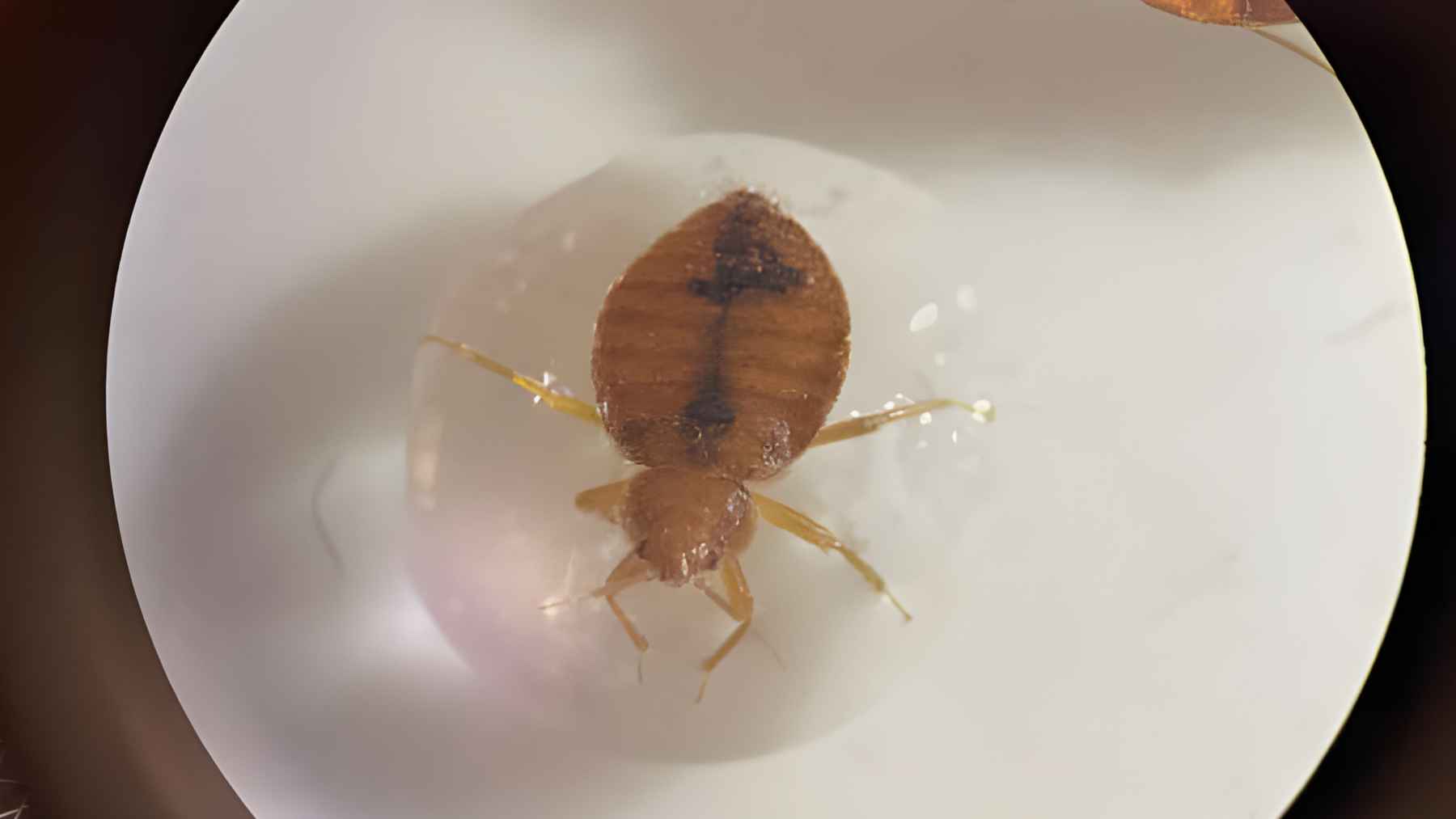
A magnified bed bug becomes stuck on a water surface, illustrating how moisture can block movement and trigger avoidance behavior.
Why this matters for sprays and pest control
Controlling bed bugs is already complicated by chemistry. A 2017 review in the journal Parasites and Vectors describes how many bed bug populations have developed resistance to multiple insecticides, which can make some products less effective over time.
Now behavior enters the picture. A wet, freshly treated surface may not just be “treated,” it may be avoided, which can push surviving bugs into new hiding places like wall voids, furniture seams, or the next room. In practical terms, that means a liquid that works on contact might still fail if the bugs do not walk through it.
Other studies point in the same direction, even if the triggers are different. A 2015 study in the journal Insects found that bed bugs prefer rougher resting surfaces, suggesting that texture and contact cues can help determine where they settle after a disturbance.
What it means for everyday life
If you are thinking about DIY fixes, the takeaway is not that water alone solves an infestation. The U.S. Environmental Protection Agency says steam can reach cracks and fabrics, but it cautions that forceful airflow can cause bed bugs to scatter, which is the opposite of what you want.
That matters because bed bugs often hide in seams and crevices, and scattering can make the next inspection feel like a guessing game.
The health stakes are usually about comfort, not disease. The U.S. Centers for Disease Control and Prevention notes that bed bugs are not known to spread diseases to people, though bites can itch and disrupt sleep.
Still, the moisture-avoidance finding offers a useful reminder. So what does a wet spot really do? It may steer them away, not wipe them out, and that is why careful, step-by-step control tends to work better than quick fixes.
The official study has been published in the Journal of Ethology.