A routine construction check on the southern edge of Jerusalem has turned into a stone-cut mystery. Before a new neighborhood rises near Kibbutz Ramat Rachel, archaeologists uncovered a 164-foot underground tunnel carved through bedrock, with parts still blocked and no firm answer about when it was made.
The surprise is not just that the tunnel exists. It is large, carefully planned, and strangely hard to explain. Was it made for water, farming, industry, quarrying, or a project that someone simply abandoned? For now, the strongest clue may be the silence of the site itself.
A hollow became a tunnel
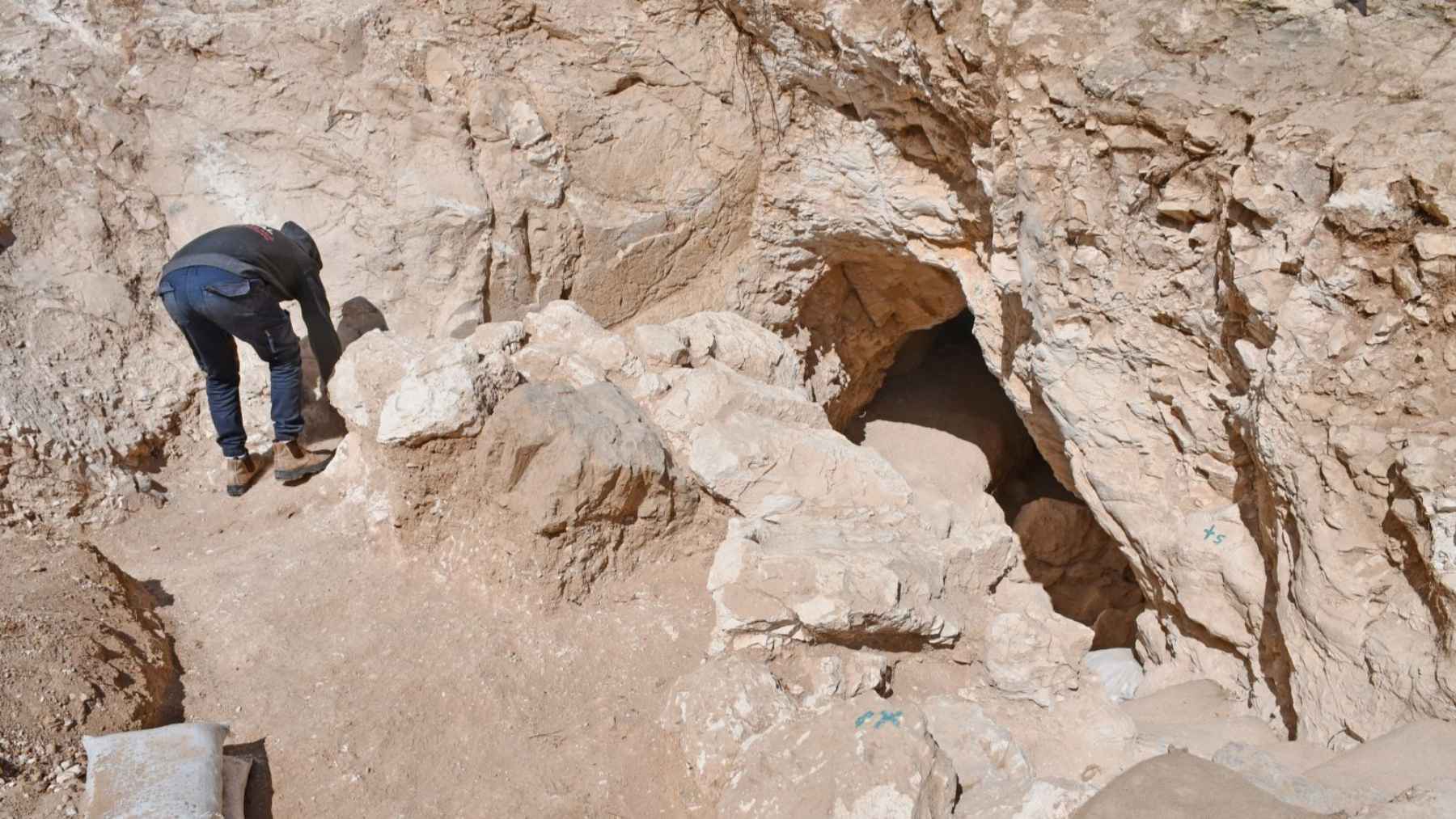
The discovery began during a preventive excavation, the kind of archaeological work done before builders move in so ancient remains are not buried or destroyed. The team first noticed what looked like a natural karstic cavity, which is a hollow formed when rock slowly dissolves over time.
Dr. Sivan Mizrahi and Zinovi Matskevich, excavation directors for the Israel Antiquities Authority, said the cavity soon turned into something much more deliberate. In their words, “this cavity developed into a long tunnel,” and some collapsed sections have kept the tunnel from revealing all its secrets.
Bigger than expected
A staircase led down from the surface to a hewn opening. “Hewn” simply means cut directly into the rock, not built with bricks or blocks.
Inside, layers of soil had piled up over hundreds, and perhaps thousands, of years. Test excavations showed that some sections reach about 16 feet high and nearly 10 feet wide, which is large enough to feel more like an underground hall than a narrow passage.
The stonework also caught the team’s attention. The excavation directors described the cutting as “meticulously” done, saying the people behind it must have had planning, labor, and resources on their side.
What it probably was not
At first glance, a water system seemed possible. Ancient cities depended on clever ways to move and store water, and Jerusalem is full of underground spaces tied to daily life.
However, the water theory ran into problems. The tunnel walls were not plastered, which would normally help hold water, and researchers reported no signs of water buildup or known underground water sources in the area.
The team also considered an agricultural or industrial use, but that idea is still unproven because the tunnel is so large and unusual compared with nearby finds. Sometimes the puzzle gets smaller, but not easier.
The chalk clue
The current leading idea is that the tunnel may have been dug to reach a chalk layer. Chalk and related soft stone could be used for building stones or for making lime, a material used in construction and plaster.
A shaft carved into the ceiling may support that idea. It could have helped bring in air or remove rubble, the kind of practical detail workers would need if they were cutting stone underground.
Still, the researchers are not calling the case closed. Another possibility is that the work was never finished, leaving behind a carefully carved space without a completed purpose.
Why Ramat Rachel matters
The tunnel sits only a few hundred yards from two important archaeological areas. One is an Iron Age public building in the Arnona neighborhood, and the other is Tel Ramat Rachel, where remains have been documented from the Iron Age through the Islamic period.
The Iron Age was a time when iron tools and weapons became widely used. In this part of the world, it also overlaps with the First Temple period, which is why any major stonework nearby gets extra attention.
Previous work at Ramat Rachel has long made the hill important to archaeologists. Tel Aviv University notes that renewed excavations were carried out there with Heidelberg University, and earlier digs found evidence of settlement across several major periods.
Modern homes, ancient stone
The new neighborhood plan, advanced by the Israel Land Authority, includes 488 housing units north of Ramat Rachel. It also includes commercial and office space, an elementary school, and kindergartens across about 14 acres.
That makes this discovery more than a lab problem. In practical terms, it is a reminder that a road, a school, or an apartment block can sit above stories no one has read yet.
Officials have said the tunnel and nearby discoveries are expected to become part of a future archaeological park inside the neighborhood. A bulldozer may open land for new homes, but in Jerusalem, it can also open a door into the past.
No date yet
Dating the tunnel is the hardest part. Archaeologists look for pottery, coins, tools, or organic material connected to construction, but the team has not found a clear object that proves when the tunnel was carved.
Some finds from the area may be old, but that does not automatically date the tunnel. A piece of pottery can fall into a place long after the place was built, which is why archaeologists are careful about what they claim.
So the word “ancient” remains cautious here. The tunnel may be hundreds or thousands of years old, but until more blocked sections are cleared or better evidence appears, the answer stays underground.
A mystery still open
Jerusalem often gives archaeologists plenty to explain. This time, it has given them a tunnel that seems to have been made with purpose, skill, and effort yet leaves no typical clues behind.
That is what makes the discovery so interesting. The tunnel is not just a hole in the rock. It is a question cut 164 feet into stone, waiting for someone to find the missing piece.
The official press release has been published by the Israel Antiquities Authority.