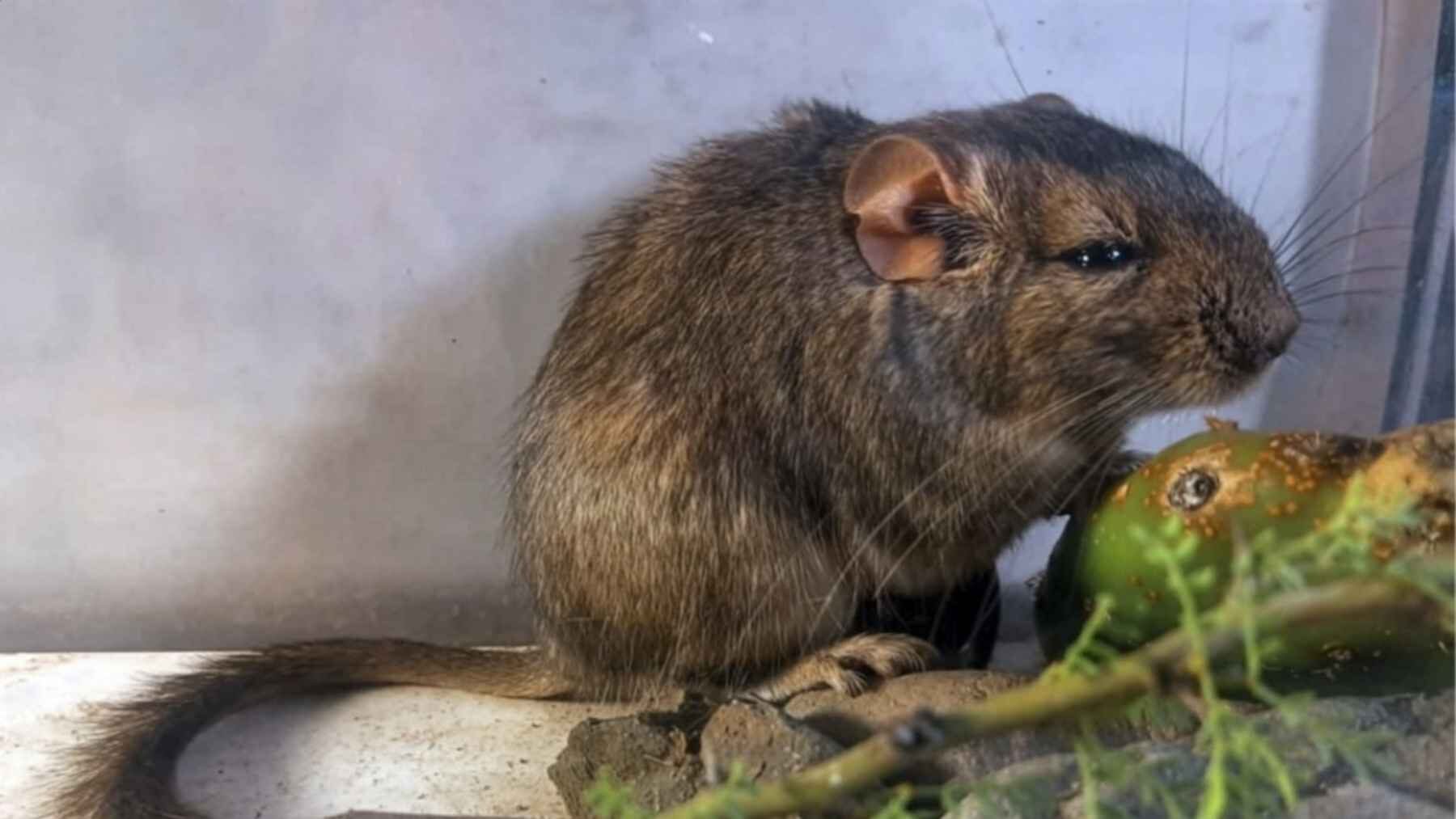
A new mammal has been identified in Argentina, and it was not found in some faraway wilderness that no one ever visits. Scientists described Apnoctomys conicetorum, a previously unknown viscacha rat from the rocky Chaco forests of Córdoba, near Parque Nacional Traslasierra, after genetic and anatomical work showed it did not fit within any known living genus.
That is the part that makes this discovery stand out. This is not simply another name added to a long species list. It is a reminder that native forests can still hold animals unknown to science, even in regions close to cities, roads, and tourist routes that many people assume are already well explored.
A new rodent in Córdoba
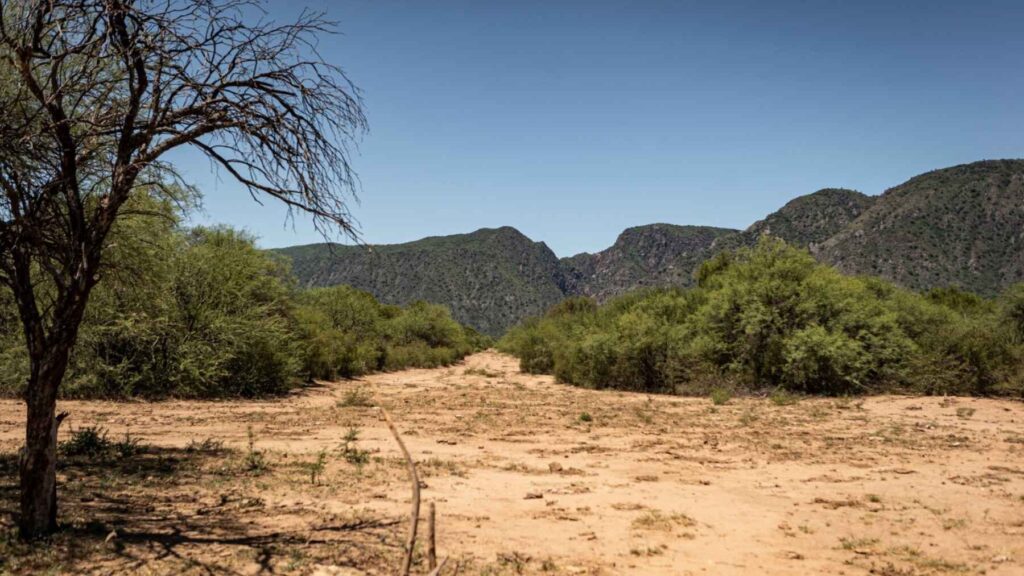
The animal was found in the Sierra de Guasapampa, in central Argentina, where rocky slopes meet Chacoan forest. The official paper describes the new taxon as a member of Octodontidae, a South American rodent family that includes degus, viscacha rats, and other small mammals with very different ways of life.
What does that mean in plain language? The Guasapampa viscacha rat belongs to a group of rodents that has adapted to deserts, forests, rocky areas, and even underground habitats. However, this animal stood apart enough for researchers to place it in a new genus called Apnoctomys.
The name also carries a nod to the people behind conservation and science in Argentina. The genus honors the Administración de Parques Nacionales, while the species name recognizes members of CONICET, including researchers, students, technicians, and office workers.
The clues were in its genes
The team did not rely on appearance alone. They analyzed a fragment of the mitochondrial cytochrome b gene and compared the animal with representatives of the Octodontidae family. The result placed Apnoctomys as a close relative of Octomys, yet not close enough to be folded into that genus.
The genetic gap was striking. The study found that the distance between Apnoctomys and other living octodontids ranged from 9.17% to 16.95 %, which the authors said falls within values usually seen between genera in this family. Effectively, the DNA was telling scientists that this was not just a slightly unusual population.
The anatomy backed that up. The animal has a long, hairy tail, grayish-brown fur on the back, a pale belly, a robust skull, smaller auditory bullae than some relatives, and distinctive tooth and skull features. Small details, yes, but in taxonomy small details can change the whole story.
A rock acrobat with a leafy diet
Apnoctomys conicetorum is not a tiny house-mouse-sized creature. The two described specimens measured about 12.5 to 14.1 in. from nose to tail, with tails about 5.9 to 7.1 in. long, and weighed roughly 4.0 to 4.2 oz.
Its home is just as important as its body. The study describes steep metamorphic-rock slopes covered by relatively undisturbed Chacoan forest, where bromeliads grow thickly on the forest floor. Researchers found cut bromeliads along runways and green plant material in the stomach of one individual, suggesting that these plants form a major part of its diet.
That image is easy to picture. A long-tailed rodent moving through rocks and crevices, feeding on tough forest plants, and leaving behind clues before scientists ever get a good look at it. No wonder early reports described it as a kind of “rock acrobat.”
Why this discovery matters
The species appears to have a very narrow range. According to the study, it occupies a strip roughly 75 miles long and about 1.9 to 3.1 miles wide, covered by montane Chacoan forest that remains in relatively pristine condition. Part of that area is protected by Parque Nacional Traslasierra and the Parque Provincial y Reserva Forestal Natural Chancaní.
That sounds reassuring at first. The researchers, however, were careful not to overstate what is known. Because information about its population, behavior, and full distribution is still limited, they suggested that Data Deficient may be the category that best fits the available evidence for now.
There is a warning there. Related octodontid species include animals listed as Critically Endangered, Near Threatened, and Vulnerable, with pressures linked to small ranges, fragmented populations, low densities, and habitat degradation. For the most part, finding a species is only the beginning of understanding how to protect it.
Fieldwork still matters
Perhaps the most surprising detail is where this happened. The authors noted that the new genus was found less than 81 miles from Córdoba, Argentina’s second-largest urban center, and near one of the country’s busiest tourist corridors. That is not exactly the edge of the map.
Even so, the species remained unknown until now. In three field campaigns, researchers captured only two specimens, after two and three consecutive nights of trapping with apple-baited traps. That helps explain how a living mammal could stay hidden in a landscape that people pass by, drive through, and visit.
The study puts it plainly when it says, “This finding highlights the importance of continuing field research, especially in areas that have not previously been surveyed.” And that may be the real lesson from Córdoba. Protecting forests is not only about saving what we already know. It is also about giving the unknown a chance to be found.
The study was published in Vertebrate Zoology.