Deep beneath the Black Hills, inside a former gold mine turned science lab, researchers have found something that sounds almost too strange to be useful. Tiny underground microbes may help turn carbon dioxide from industrial emissions into solid rock.
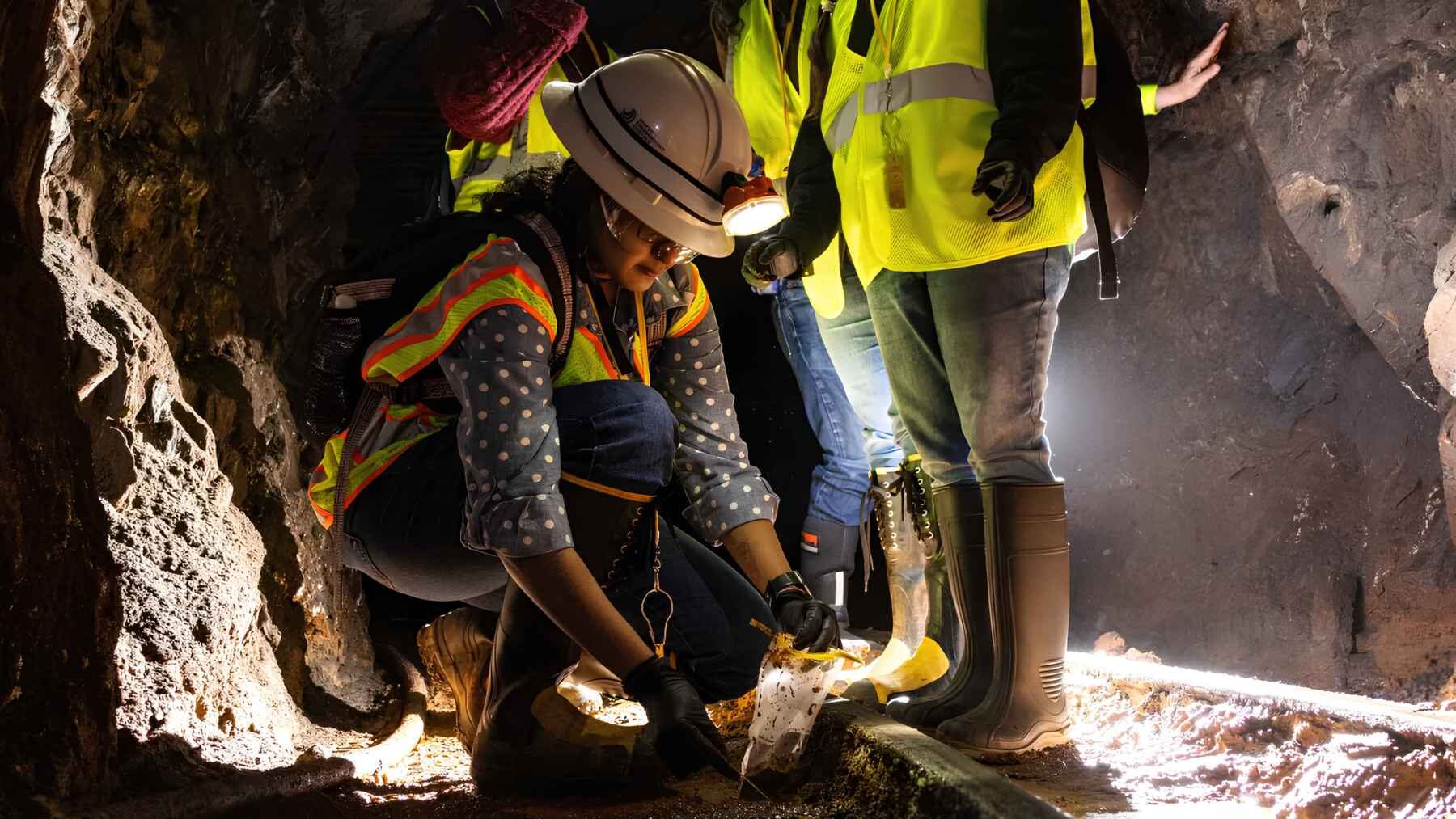
The discovery comes from work linked to South Dakota Mines and the Sanford Underground Research Facility (SURF), where researchers study life in hot water, darkness, and fractured rock nearly 4,100 feet below the surface. Instead of simply storing CO2 and hoping it stays underground, the team is exploring a tougher ending for the gas, locking it into minerals that could later be used in products like concrete.
Life in the dark
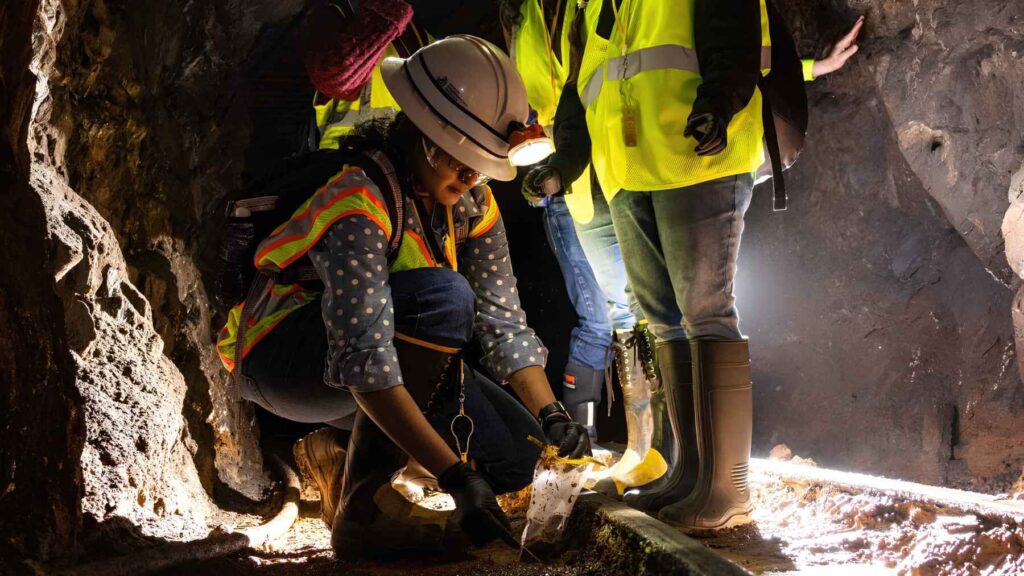
The microbes were found at SURF, a research facility in Lead, South Dakota, built inside the old Homestake gold mine. It is not exactly a cozy place to live. There is no sunlight, space is limited, and the water and rocks create conditions that would be hostile to many living things.
That is what makes the organisms so interesting. Life that survives deep underground often learns tricks that surface organisms never need. In this case, the trick is linked to carbon mineralization, a process in which CO2 becomes part of a solid carbonate mineral.
Dr. Tanvi Govil, an assistant professor at South Dakota Mines, has been studying these extreme microbes and the enzymes they produce. In practical terms, that means scientists are not trying to scoop up microbes and dump them into smokestacks. They are learning from them.
Why turning CO2 into stone matters
Carbon capture has a basic problem that is easy to understand. Capturing the gas is one step, but keeping it away from the atmosphere for a long time is another. Anyone who has watched air slowly leak from a tire gets the idea.
Traditional carbon storage often involves injecting CO2 underground. That can work, but scientists have warned that stored gas can migrate if rock layers crack, pressure changes, or geological faults create a pathway back upward. Mineralization offers a more permanent route because the carbon becomes part of the rock itself.
According to SURF’s earlier reporting on the research, natural mineralization can take years, but microbe-bearing laboratory experiments showed much faster results. One reported test produced magnesite, a carbonate mineral, in just 10 days. That is the kind of speed change that gets both scientists and industry leaders paying attention.
The enzymes are the point
The newer work is focused less on the microbes themselves and more on the enzymes they inspired. As Merle Symes of Carbon EnZero put it, “The workhorse behind all of this is the enzymes.” That simple line explains the direction of the project.
Those enzymes are being engineered to survive industrial conditions that can be rough. Power plant and factory flue gases may bring high heat, pressure, acidity, and exposure to metals. A delicate lab-only process would not last long in that kind of environment.
That’s why the deep-mine origin matters. Organisms that evolved in extreme places may offer clues for making carbon capture chemistry tougher, faster, and easier to use near the source of emissions.
From smokestacks to concrete
The proposed system is fairly direct. Industrial flue gas would move through a tank containing an enzyme solution. The enzymes would help convert CO2 into carbonate ions, which can then react with calcium to form calcium carbonate.
That mineral is familiar outside the lab. Calcium carbonate is used in materials such as cement and concrete, which means the captured carbon could become part of construction products rather than sitting in a storage site. It is not hard to see why that idea has appeal in a world full of buildings, roads, and rising electric demand.
Coal ash may also play a role. Carbon EnZero says its Carbon Lock process uses calcium from coal ash to form solid calcium carbonate, potentially turning one industrial waste stream into a useful input. That does not erase the larger climate challenge, but it could make some existing emissions easier to handle.
A mobile test comes next
The project is moving toward pilot-scale testing. Govil’s team has described a mobile enzyme-based CO2 scrubber that could be placed on a truck bed, brought to an industrial site, and connected to an emissions stream.
One planned mobile unit could process almost one U.S. ton of CO2 per day, or about 2,000 pounds. That is tiny compared with global emissions, but pilots are not supposed to solve the whole problem at once. They are built to show whether the chemistry works when the air is hot, dirty, and moving in the real world.
The company behind the commercialization effort, Carbon EnZero, lists 2026 as its beta launch period and 2027 as the target for broader commercial development. South Dakota Mines also reported that Govil won first place and $20,000 in the South Dakota Governor’s Giant Vision Business Plan Competition, giving the startup another push toward testing.
Promise with a reality check
Could this change how industries deal with CO2? Possibly. But like most climate technologies, the hard part is not only proving the science. It is building a system that companies can afford, operate, maintain, and scale.
There is also a bigger point. Carbon capture should not become an excuse to delay cleaner energy, efficiency, or lower-emission industrial processes. At the end of the day, the cleanest ton of CO2 is still the one never released.
Still, this discovery offers a rare kind of hope. In a dark tunnel under South Dakota, microbes shaped by heat, rock, and time may have handed researchers a new way to lock carbon away in plain, solid stone.
The press release was published on South Dakota Mines.