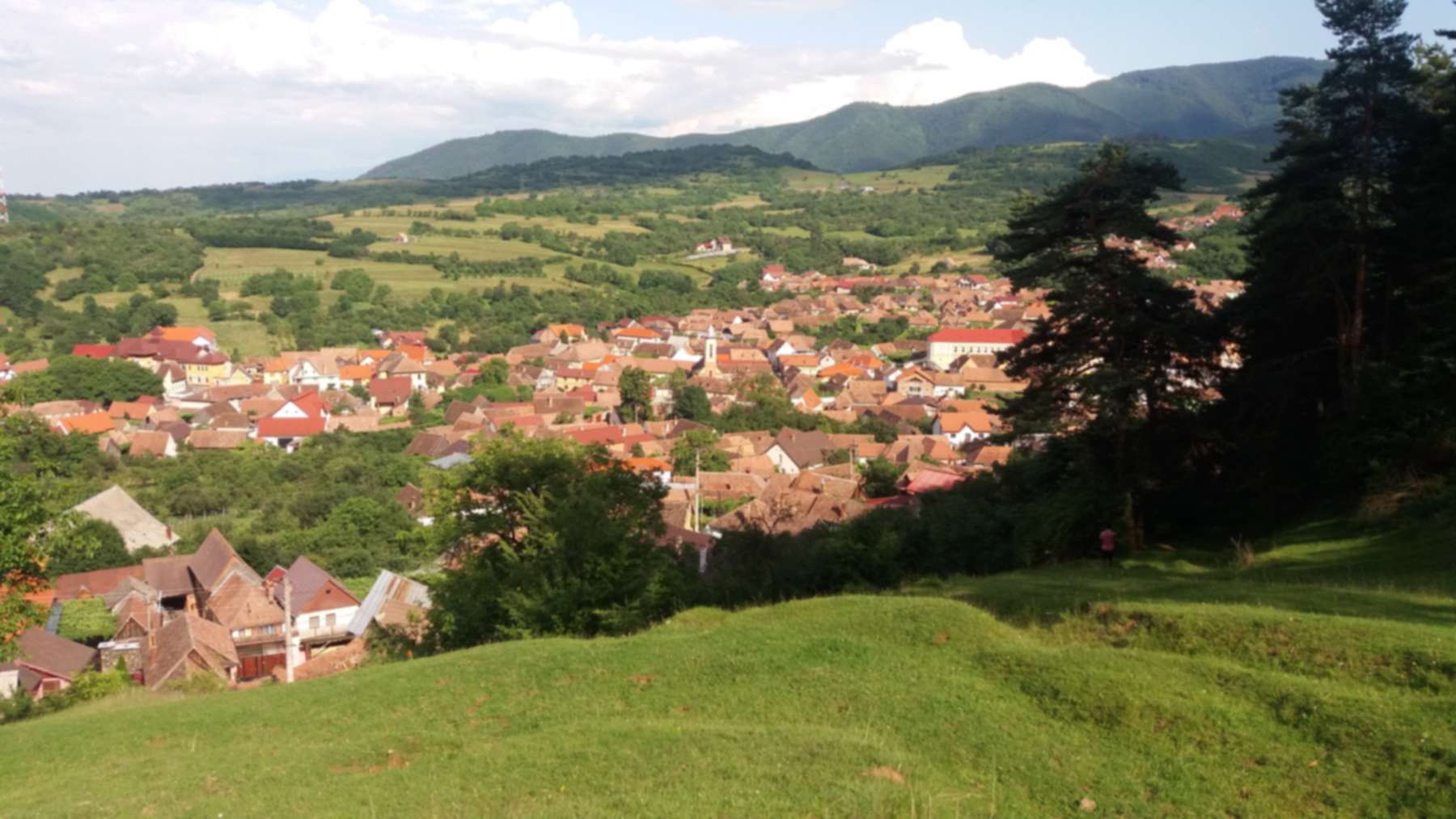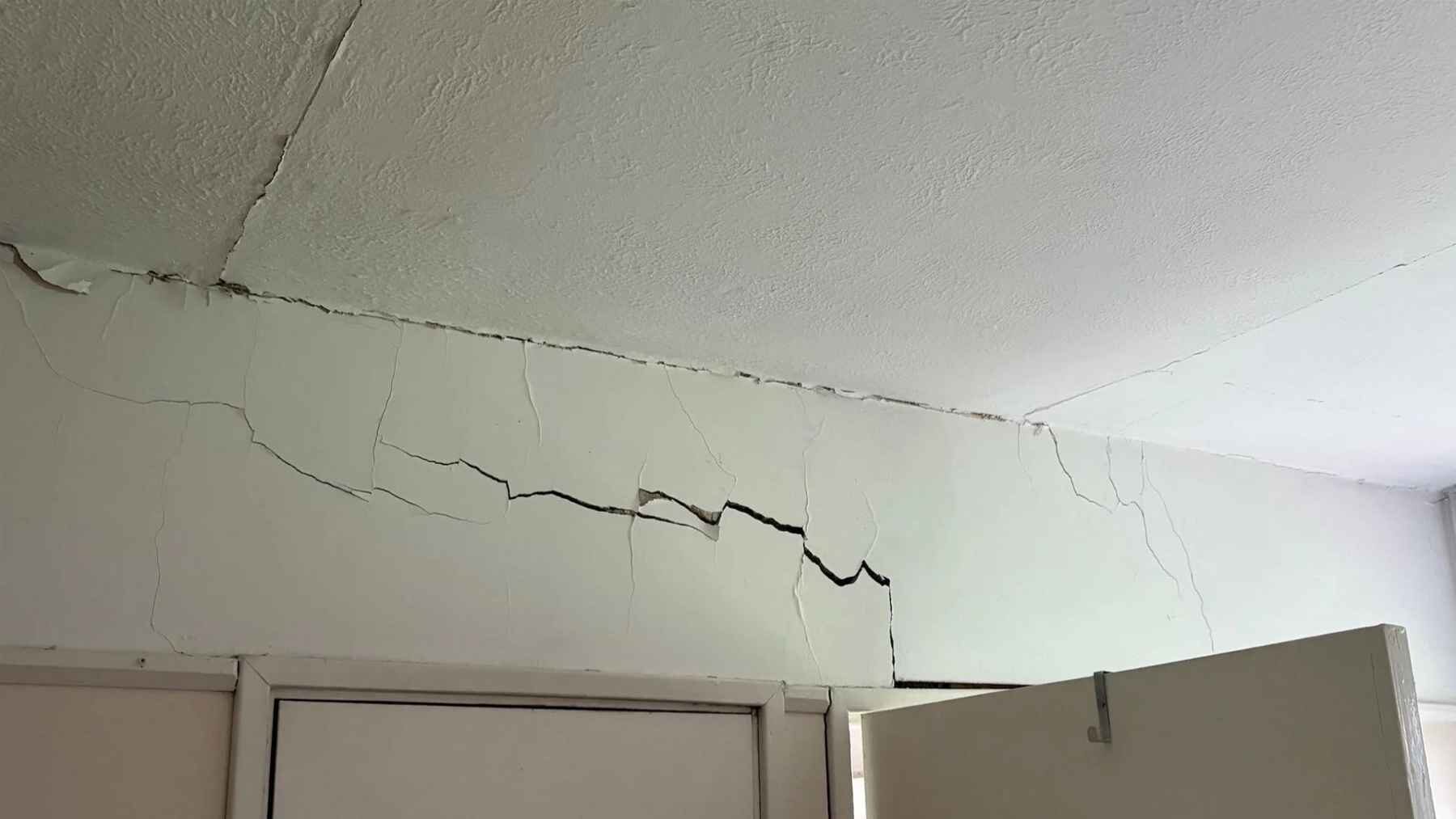
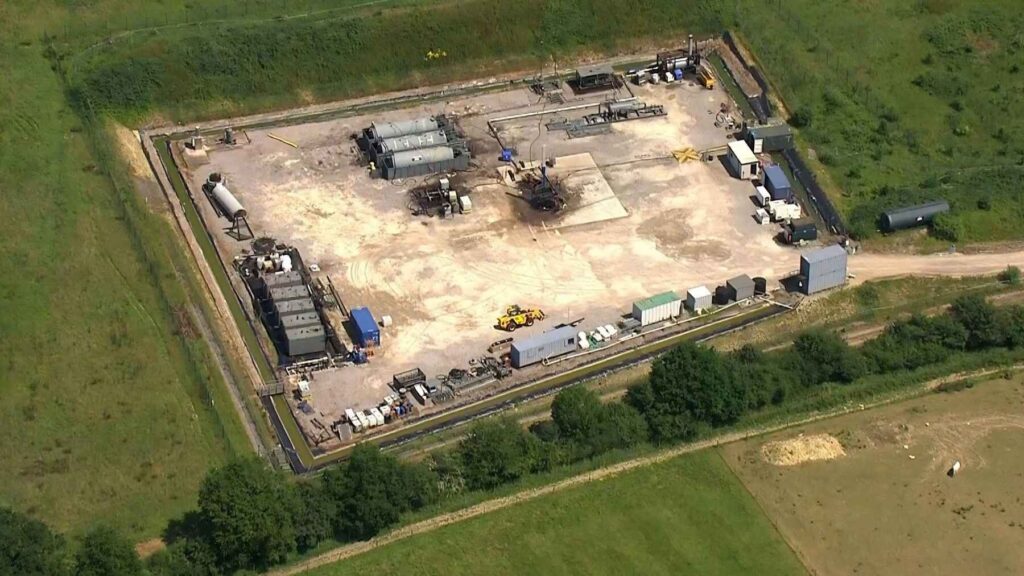
More than 100 small earthquakes shook parts of Surrey, England, in 2018 and early 2019, rattling homes around the village of Newdigate and leaving some residents with cracked walls and ceilings. Now, a new study suggests the unusual swarm may have been linked to oil extraction at the nearby Horse Hill well, about 3 to 6 miles away.
The finding is careful, not absolute. Researchers say the timing and pattern of the tremors fit a possible connection, but they cannot prove that the oil work caused them. Still, the case raises a simple question with big consequences. Can taking oil out of the ground wake up faults that were already under stress?
A village shaken awake
The earthquakes were small by global standards, ranging from magnitude 1.34 to 3.18. But small does not always feel small when a bed shakes at night or a crack appears across a ceiling.
Before the swarm, Surrey had not seen significant seismic activity for decades. Dr. Matthew Fox of University College London said the findings indicate “it is plausible that oil extraction triggered the earthquakes,” while also warning that coincidence has not been ruled out.
What the model found
The researchers did not just line up dates on a calendar and call it evidence. They built a mathematical model, ran more than one million simulations, and compared possible earthquake patterns with the timing and volume of oil extraction.
That matters because underground pressure does not always move like a light switch. The study found that extraction from one rock layer, known as the Portland units, may have been followed by earthquakes after a few days, while extraction from the Kimmeridge units may have produced fewer events after delays of several weeks.
How oil work can move faults
Oil sits inside tiny spaces in rock. When fluids are removed, the pressure inside those spaces can change, and that pressure shift may spread through the ground.
A fault is a break in rock where two blocks can move against each other. If that fault is already close to slipping, even a small change can be the final nudge. It is a bit like a door that is already half open. A light push can move it.
Why scientists still disagree
This is where the story gets complicated. An earlier British Geological Survey report noted that natural earthquakes can happen in the region, although rarely, and said the sequence had already begun before a July 2018 well-pressure operation at Horse Hill.
Imperial College London researchers also reported in 2019 that they found no direct link between the Surrey swarm and nearby oil extraction, with lead author Stephen Hicks saying, “The quakes seem to have occurred naturally.” UK Oil and Gas also disputed claims of a connection, arguing that there was “no demonstrable connection” between oil and gas operations and the tremors.
Why the new study differs
Fox and co-author Philip G. Meredith took another look at the timing problem. Their argument is that a simple same-day comparison may miss how pressure actually travels through different rock layers.
In practical terms, the ground may react slowly. Some rocks let fluids and pressure move more easily, while others are tighter and slower. That difference could explain why the earthquakes did not always happen right after extraction increased.
What changed after Horse Hill
The earthquake question is separate from the legal fight over Horse Hill, but the two now sit in the same public debate. In 2024, the UK Supreme Court ruled that Surrey County Council acted unlawfully when it approved the project without assessing emissions from the oil once burned, and the council later said commercial production had ceased at the site.
The wider issue has not gone away. In Balcombe, West Sussex, a residents’ group challenged exploratory hydrocarbon work, though the Court of Appeal later dismissed the appeal in April 2025. For communities near drilling sites, the question is not only what happens at the surface, but what may be happening quietly below it.
The lesson for future drilling
The clearest message from the Surrey case may be about monitoring. Seismometers, which are instruments that record ground shaking, were installed only after some of the larger tremors had already happened.
That leaves scientists trying to reconstruct the beginning of the story after the fact. Better baseline monitoring before drilling, pumping, or pressure testing would make it easier to tell natural background shaking from possible industry-linked movement.
Caution before confidence
For the most part, the new study does not accuse one company of causing every tremor. It points instead to uncertainty, timing, and a plausible mechanism that deserves more scrutiny.
That may sound unsatisfying, but it is how careful science often works. First comes the signal. Then comes the harder question of whether the signal is strong enough to guide public decisions.
The official study has been published in Geological Magazine.