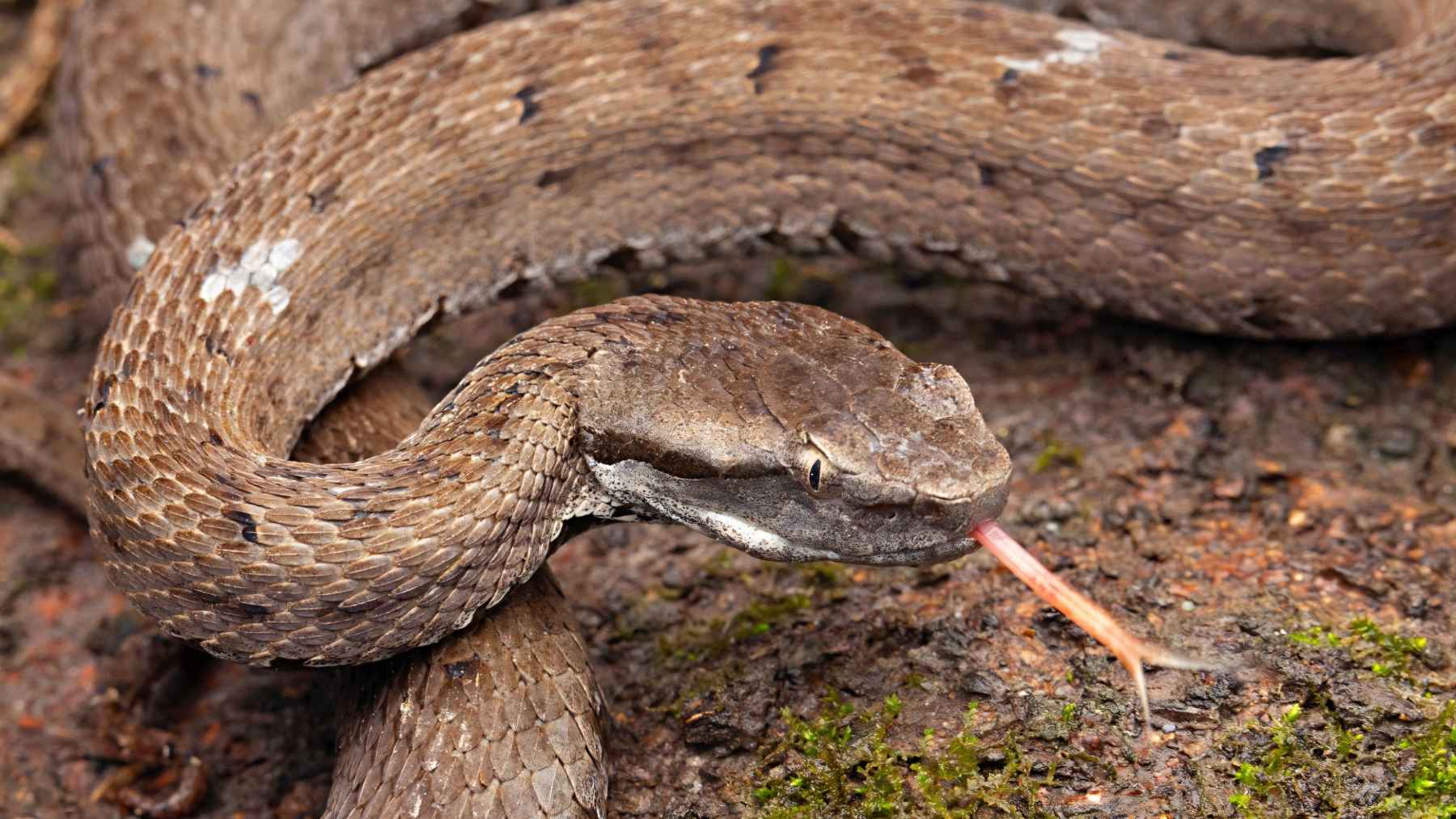
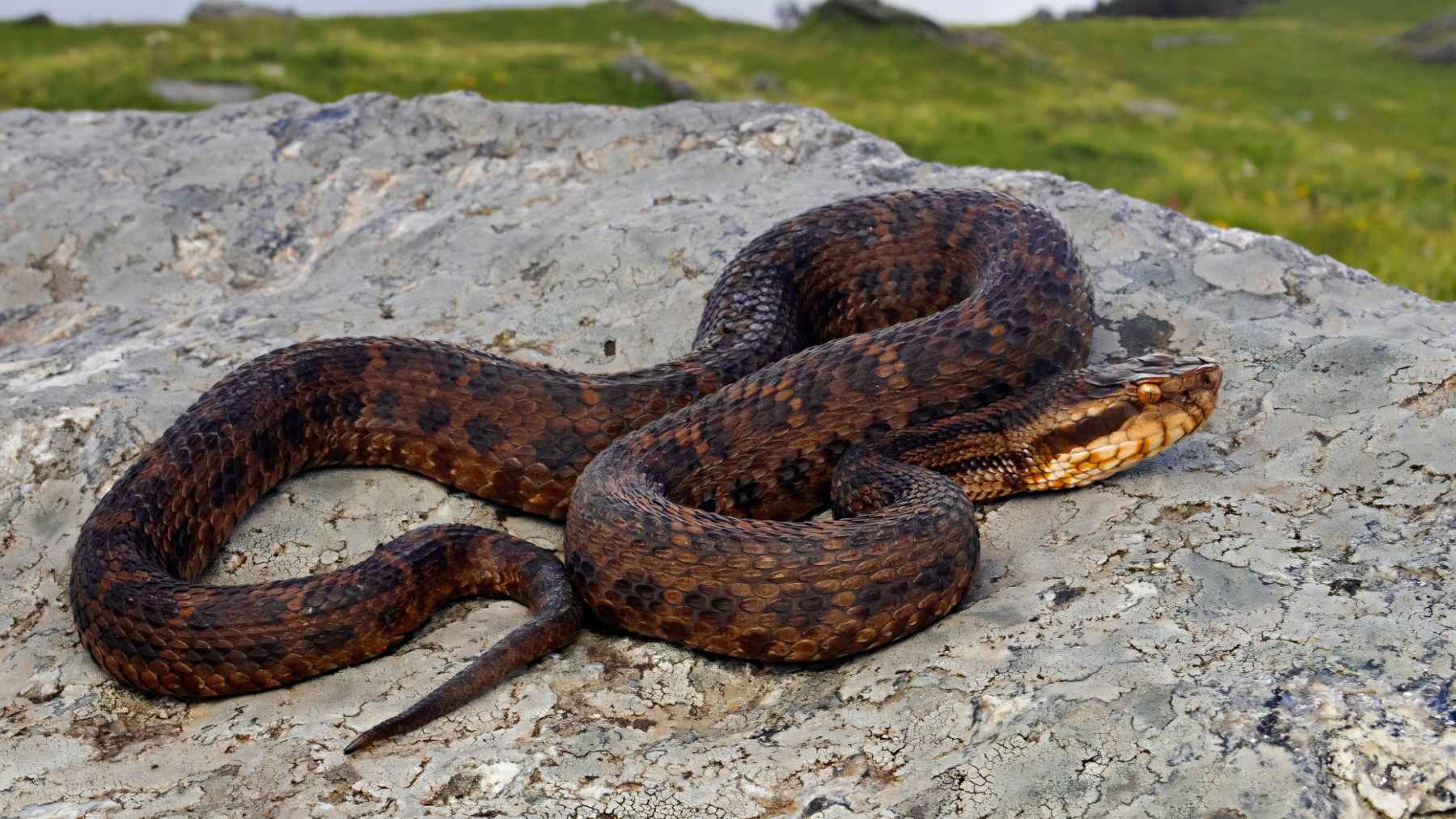
For more than 160 years, the Himalayan pit viper was treated as one wide-ranging snake across Pakistan, India, and Nepal. Now, a new study reveals a much more complex reality: five separate species, including three that science had never formally recognized.
The discovery is not just a neat naming update for snake experts. It changes how researchers understand biodiversity in one of Asia’s least explored mountain regions, and it raises a sharper conservation question. What happens when one “common” snake turns out to be several highly local animals, each living in a narrow mountain pocket?
A snake with five names
The original Himalayan pit viper, Gloydius himalayanus, was first described in 1864. Under the new revision, that species is more tightly limited to northwestern India, usually at elevations of about 3,300 to 11,500 feet.
The Chamba pit viper, Gloydius chambensis, had already been described in 2022 in India’s Chamba district. The new work expands its known range westward into the Kashmir Valley, at about 1,300 to 8,200 feet.
Then come the three newcomers. The Hazara pit viper, Gloydius hazarensis, was identified in northeastern Pakistan. The Hindu Kush pit viper, Gloydius hindukushensis, lives in the eastern foothills of the Hindu Kush in northwestern Pakistan. The Nepali pit viper, Gloydius nepalensis, is now known from western and central-western Nepal.
Why museum DNA mattered
This was not a simple case of spotting a strange snake in the wild and giving it a new name. The researchers combined modern fieldwork with historical museum specimens, fresh and old DNA, body structure, skeletal anatomy, distribution data, and ecological evidence.
That mix matters. Some of the crucial evidence had been sitting in collections for decades, even more than a century, before new genetic tools made it useful again. “Museum specimens are not just records of the past,” said Sylvia Hofmann of Museum Koenig.
In practical terms, the museum shelf became a time machine. A preserved snake collected long ago could help scientists decide what the “real” Himalayan pit viper is, and what had been mistakenly grouped under the same name.
Mountains made the split
The Himalaya and Hindu Kush are not smooth landscapes. They are broken by steep ridges, deep valleys, cold slopes, and river systems that can keep animals apart for very long periods.
The study points to major river valleys, including the Indus and Karnali, as possible historical barriers that helped separate these snake populations. Over time, that isolation appears to have allowed distinct lineages to form.
Anita Malhotra, a pit viper specialist at Bangor University who was not involved in the work, told Mongabay that the finding was not surprising because the snakes were likely separated by the “extreme topography of the mountains.” She also warned that small ranges can make them “extremely vulnerable to climate change.”
Why the names matter
Taxonomy can sound like paperwork. It is not. When scientists realize that one species is actually five, every map, risk estimate, and conservation plan has to be reconsidered.
Think of it like checking the electric bill and realizing five apartments were being counted as one household. The total may have looked fine, but the details were hiding a problem. A snake that once seemed broadly distributed may now be several species with much less room to survive.
Kartik Sunagar, a venom expert at the Indian Institute of Science who was not part of the research, told Mongabay that the discovery shows why taxonomy is central to conservation.
“If we do not recognize distinct species, we cannot accurately assess their risk or protect them effectively,” he said.
More than scary snakes
Pit vipers often get attention because they are venomous. Fair enough. But in mountain ecosystems, they are also predators, part of the food chain, and useful indicators of ecological change.
The Pensoft release notes that Himalayan pit vipers have been studied inadequately, even though they are both ecologically and medically relevant. That means better identification could matter for conservation, field biology, and future venom research.
For people living near these habitats, the message is not panic. It is awareness. Knowing which species lives where helps scientists, health workers, and local communities treat the landscape with more precision.
What comes next
The work also shows the promise and limits of museum-based DNA. New techniques can recover genetic information from specimens preserved in old ways, including formalin, but experts warn that this can be difficult, expensive, and sometimes requires destructive sampling from museum material.
Still, the payoff can be huge. By the study’s own description, the team found five well-supported lineages and genetic distances that support species-level separation, along with evidence from morphology and bones.
At the end of the day, this is a reminder that the natural world is not finished being cataloged. Even a venomous snake known since the 1800s can still surprise us.
The study was published in ZooKeys.